
By Marc Phu · Cosmetics Product Development & Ingredients · Published 26 May 2026
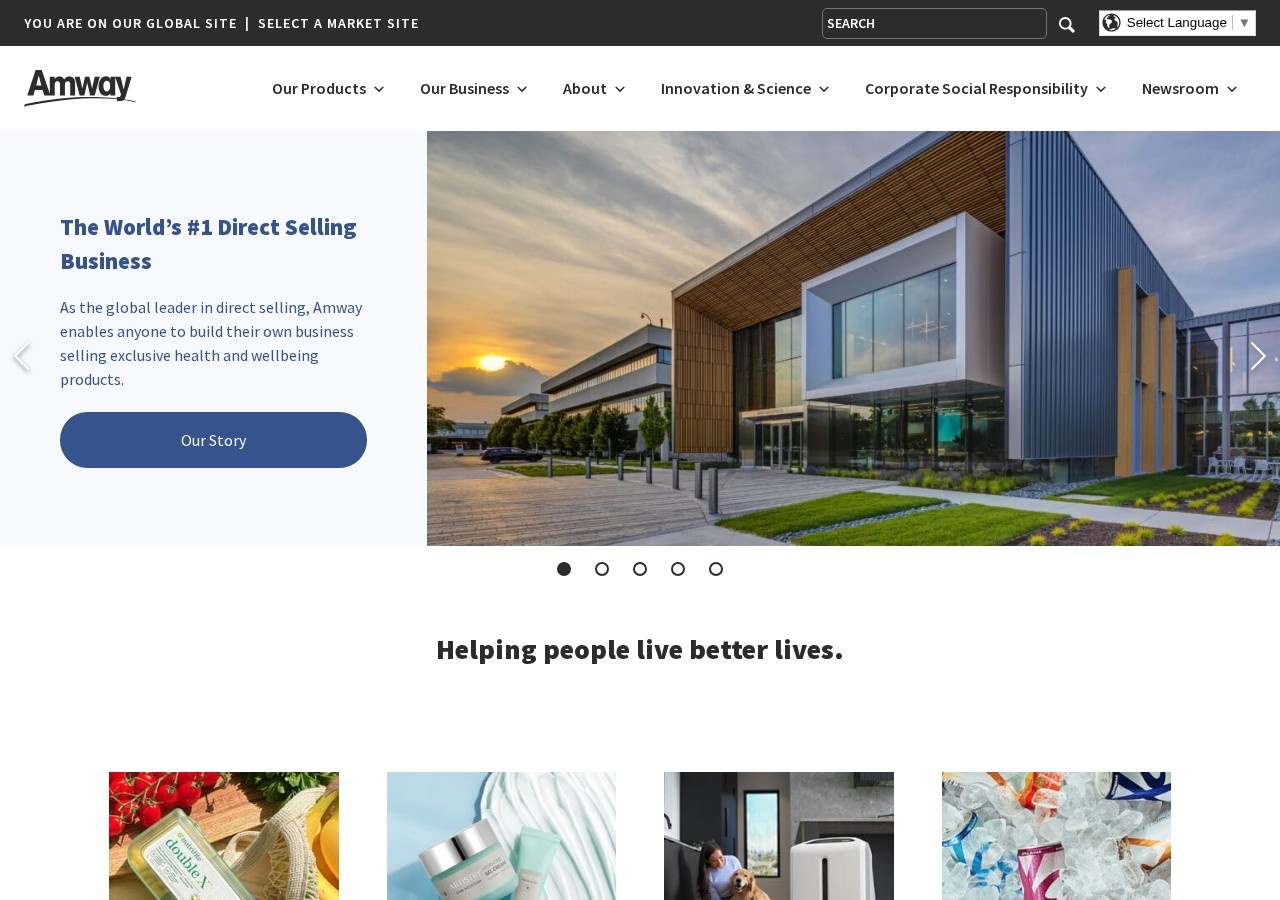
Amway is one of the few supplement companies in the world that can point to its own farmland and say, with reasonable specificity, exactly which field a given vitamin ingredient came from. Founded in 1959 in Ada, Michigan, Amway built its global nutrition business around Nutrilite, a supplement brand it eventually acquired that had insisted on controlling its own growing process since the 1930s — decades before “traceability” became an industry buzzword.
This profile looks at how Amway grew from a small direct-selling startup into the world’s largest direct-selling company, why its Nutrilite farming operation is still unusual in the supplement industry today, and what its approach to ingredient sourcing can teach brands thinking about supply chain transparency.
Key takeaways
- Amway was founded in 1959 in Ada, Michigan by Rich DeVos and Jay Van Andel and is widely reported as the world’s largest direct-selling company.
- Its flagship nutrition brand, Nutrilite, predates Amway itself — founded in 1934 by Carl Rehnborg, who insisted on controlling every stage of ingredient growing from seed to harvest.
- Amway acquired Nutrilite in 1972, inheriting its organic farming operations, and today runs nearly 6,000 acres of certified organic farmland across the United States, Mexico and Brazil.
- Nutrilite is the only global vitamin and supplement brand that grows, harvests and processes plants on its own certified organic farms, rather than sourcing botanicals through third parties.
- Its vertically integrated farm-to-supplement model is a genuinely distinctive supply chain approach worth studying, regardless of how a brand chooses to source its own ingredients.
A supplement brand built around one founder’s insistence on control
Nutrilite’s story begins earlier than Amway’s. In 1934, Carl Rehnborg founded the brand after buying a small plot of land in California’s San Fernando Valley, insisting on personally controlling the growing process of every plant used in his supplements, from seed selection through final harvest. That level of direct oversight over raw ingredient sourcing was unusual for the supplement industry at the time and remains relatively rare even today, when most supplement brands source botanical ingredients through third-party suppliers rather than growing them directly.
Amway acquired Nutrilite in 1972, gaining not just a product line but an entire farming philosophy along with it, and took the brand international as part of its broader direct-selling business built on Amway’s own 1959 founding by Rich DeVos and Jay Van Andel in Ada, Michigan.
From a Michigan garage to the world’s largest direct-selling company
Amway’s founders built the business on a direct-selling model, where independent business owners sell products directly to consumers and earn commission on their own and their downline’s sales, rather than through traditional retail distribution. Over more than six decades, that model scaled into what industry sources widely describe as the world’s largest direct-selling company by revenue, with a global network of independent distributors spanning household care, beauty, and nutrition products, anchored by Nutrilite as its flagship health brand.
The company’s headquarters campus in Ada, Michigan has grown alongside the business, today spanning more than a mile of research labs, manufacturing space, warehousing and offices — a scale that reflects decades of continuous reinvestment rather than a single large initial build.

Nearly 6,000 acres of certified organic farmland
Today, Amway operates a global agribusiness spanning nearly 6,000 acres of certified organic farmland across the United States, Mexico and Brazil, growing botanicals used in both Nutrilite supplements and Amway’s Artistry beauty line. The Trout Lake Farms in Washington State, split across a western site of roughly 401 acres and an eastern site of about 866 acres, are among the best-documented of these operations, alongside farms in Lakeview, California, tracing back to Rehnborg’s original growing philosophy from the 1930s.
Nutrilite markets itself as the only global vitamin and dietary supplement brand that grows, harvests and processes plants on its own certified organic farms, rather than purchasing botanicals through third-party agricultural suppliers. That claim, if accurate as stated, describes a genuinely unusual position in an industry where most brands, including many operating at far smaller scale, rely entirely on external growers and ingredient distributors.
Why full vertical integration in agriculture is rare
Owning and operating farmland directly is capital-intensive and operationally complex in ways that sourcing ingredients from established growers is not. It requires expertise in agriculture, not just supplement formulation and manufacturing, and ties a portion of the business’s fortunes to weather, harvest yields and farmland management in a way that purchasing from diversified third-party suppliers does not.
Most supplement brands, reasonably, choose not to take on that complexity, and there is nothing wrong with a well-managed third-party sourcing relationship. What Amway and Nutrilite’s model demonstrates is that full vertical integration into raw material production is possible at scale, and that doing so can become a defensible, hard-to-replicate point of differentiation precisely because so few competitors are willing to take it on.
Traceability as a brand asset, not just an operational detail
Nutrilite has built consumer-facing traceability tools that let customers trace specific products back to the farms where key ingredients were grown — a level of transparency that goes considerably further than the general “sustainably sourced” language common across the wider supplement industry. Making that traceability information genuinely accessible to end consumers, rather than treating it purely as an internal quality-control matter, turns a supply chain investment into a visible brand differentiator.
For OEM buyers and private label brands without the resources to own farmland, the transferable lesson isn’t about owning agricultural land specifically. It is about the underlying principle: whatever genuine sourcing transparency a brand does have is worth surfacing clearly to customers, rather than left as an internal operational detail no one outside the company ever sees.
Lessons for OEM and private label brands
Several elements of Amway and Nutrilite’s approach translate to a much smaller scale. Genuine control over ingredient sourcing, even in a modest form like a direct relationship with a specific named supplier rather than an anonymous ingredient broker, can become a meaningful point of differentiation. Consumer-facing traceability, communicated clearly, converts an internal supply-chain investment into something customers can actually perceive and value. And a founder’s original insistence on quality control, if genuinely maintained rather than diluted after an acquisition or leadership change, can remain a core brand asset for decades.
None of these require owning thousands of acres of farmland. A brand that can specifically name and describe its ingredient source, and communicates that clearly rather than defaulting to generic sourcing language, is applying the same underlying principle Nutrilite has built an entire brand identity around.
Where the company stands today
Amway remains, by most industry accounts, the world’s largest direct-selling company, with Nutrilite as its flagship nutrition brand distributed through a global network of independent business owners. Its Ada, Michigan headquarters and nearly 6,000 acres of organic farmland across three countries continue to anchor a business built on the relatively unusual premise that a supplement company should also, in effect, be a farming operation.
Direct selling as a distribution model
Amway’s core business model, selling through a network of independent business owners rather than conventional retail, is worth understanding on its own terms separate from the Nutrilite farming story. Direct selling allows a company to expand into new markets without first securing retail shelf space or building a conventional distribution network, instead relying on independent distributors already embedded in local communities to introduce products person to person.
That model carries its own set of considerations, including the same kind of regulatory attention direct-selling compensation structures commonly attract in multiple markets, and it is not the right distribution model for every brand. But for a company entering markets where retail infrastructure is limited or expensive to access, a well-structured direct-selling or affiliate model, built around genuine product sales rather than recruitment incentives, remains a legitimate and historically effective way to reach customers that conventional retail cannot easily serve.
Frequently asked questions
When was Amway founded and by whom?
Amway was founded in 1959 in Ada, Michigan by Rich DeVos and Jay Van Andel, building a direct-selling business that grew to include household, beauty and nutrition products.
Is Nutrilite older than Amway?
Yes. Nutrilite was founded in 1934 by Carl Rehnborg, decades before Amway existed. Amway acquired the brand and its farming operations in 1972.
Does Nutrilite really grow its own ingredients?
According to the company, yes — Nutrilite operates nearly 6,000 acres of certified organic farmland across the US, Mexico and Brazil and describes itself as the only global vitamin and supplement brand growing, harvesting and processing plants on its own organic farms.
What can a smaller supplement brand learn from this model?
That genuine, specific control or visibility over ingredient sourcing, even on a modest scale, can become a real point of differentiation when clearly communicated to customers rather than left as an internal detail.
Further reading
- Amway — official global website
- Amway — Wikipedia
- Amway: The Roots of Nutrilite Farms (official)
- For background on how OEM and private label brands typically get built, see our explainer on what OEM manufacturing involves.
- Our Ingredients & Formulations coverage looks at how ingredient sourcing shapes product development more broadly.
This article is an independent editorial profile based on publicly available information. All figures should be verified against the company’s current public disclosures.
About the author
Marc Phu is a China-based professional with experience related to cosmetics and the beauty industry. His background provides an industry perspective on product development, ingredients, innovation and the evolving Chinese beauty market. LinkedIn