
By Marc Phu · Cosmetics Product Development & Ingredients · Published 18 Apr 2026
Procter & Gamble began in 1837 as a partnership between a candlemaker and a soapmaker who happened to marry sisters and were talked into going into business together by their shared father-in-law. Nearly two centuries later, P&G is one of the largest consumer goods companies in the world, with a beauty division alone spanning Olay, Pantene, Head & Shoulders and SK-II, sold across virtually every country with a functioning retail sector.
This profile looks at how a Cincinnati candle-and-soap shop grew into a global manufacturing giant, how the company organises its sprawling brand portfolio today, and what its history of continuous reinvention can teach smaller brands about staying relevant across generations.
Key takeaways
- P&G was founded in 1837 in Cincinnati, Ohio by William Procter and James Gamble, whose partnership began after they married sisters and were encouraged into business together by their father-in-law.
- Cincinnati’s position as a major hog-butchering centre gave the young company ready access to animal fat, the key raw material for both soap and candles at the time.
- P&G’s Beauty division, including Olay, Pantene, Head & Shoulders, Herbal Essences and SK-II, accounted for roughly 18% of 2024 revenue.
- The company organises its portfolio into five distinct segments: Beauty, Grooming, Health Care, Fabric & Home Care, and Baby, Feminine & Family Care.
- P&G’s near two-century run reflects a pattern of continuous reinvention: raw materials, product categories and manufacturing methods have all changed completely, while the underlying company has persisted.
A partnership formed by family circumstance
William Procter, an English-born candlemaker, and James Gamble, an Irish-born soapmaker, both emigrated to the United States and settled in Cincinnati, where they happened to marry sisters, Olivia and Elizabeth Norris. Their shared father-in-law, Alexander Norris, is credited with persuading the two men to formalise their apparently complementary trades into a single business, formed in 1837.
It is an origin story built more on family circumstance than deliberate strategic vision, which makes P&G’s subsequent scale all the more notable: the company did not begin with a grand founding thesis, but with two tradesmen recognising that soap and candles shared enough raw materials and customers to make a combined operation sensible.
Why Cincinnati mattered
Cincinnati’s prominence as a major centre for hog butchering in the mid-19th century gave Procter & Gamble ready access to animal fat, the essential raw material for both soap and candle production at the time. That local resource advantage, rather than any deliberate site selection for consumer proximity, was a major reason the business could scale efficiently from its earliest years.
As demand grew beyond what Cincinnati’s original facilities could support, the company expanded manufacturing into additional locations across the United States, a pattern of following demand with production capacity that has continued in various forms throughout P&G’s history, right through to its current network of dozens of global plants.
A war economy accelerant
During the American Civil War, P&G won contracts to supply the Union Army with soap and candles, introducing the company’s products to soldiers from across the country who might otherwise never have encountered them. This kind of large-scale, geographically diverse distribution event, achieved through a government contract rather than organic retail expansion, gave the young company national brand recognition it could not easily have built through ordinary commercial channels alone at that stage of its growth.
The broader lesson, applicable well beyond wartime contracts specifically, is that large institutional or bulk distribution opportunities can sometimes deliver a scale of brand exposure that ordinary retail expansion would take years to replicate.
How the modern portfolio is organised
Today, P&G operates through five distinct business segments: Beauty, Grooming, Health Care, Fabric & Home Care, and Baby, Feminine & Family Care. The Beauty segment alone, encompassing Head & Shoulders, Herbal Essences, Pantene, Rejoice, Olay, Old Spice, Safeguard, Secret, SK-II and Native, accounted for approximately 18% of the company’s 2024 revenue.
Organising such a wide product range into clearly defined segments, each with brands serving a coherent category rather than scattered across unrelated ones, lets P&G apply category-specific expertise and marketing discipline within each segment, rather than managing dozens of brands as an undifferentiated mass.

A century and a half of manufacturing evolution
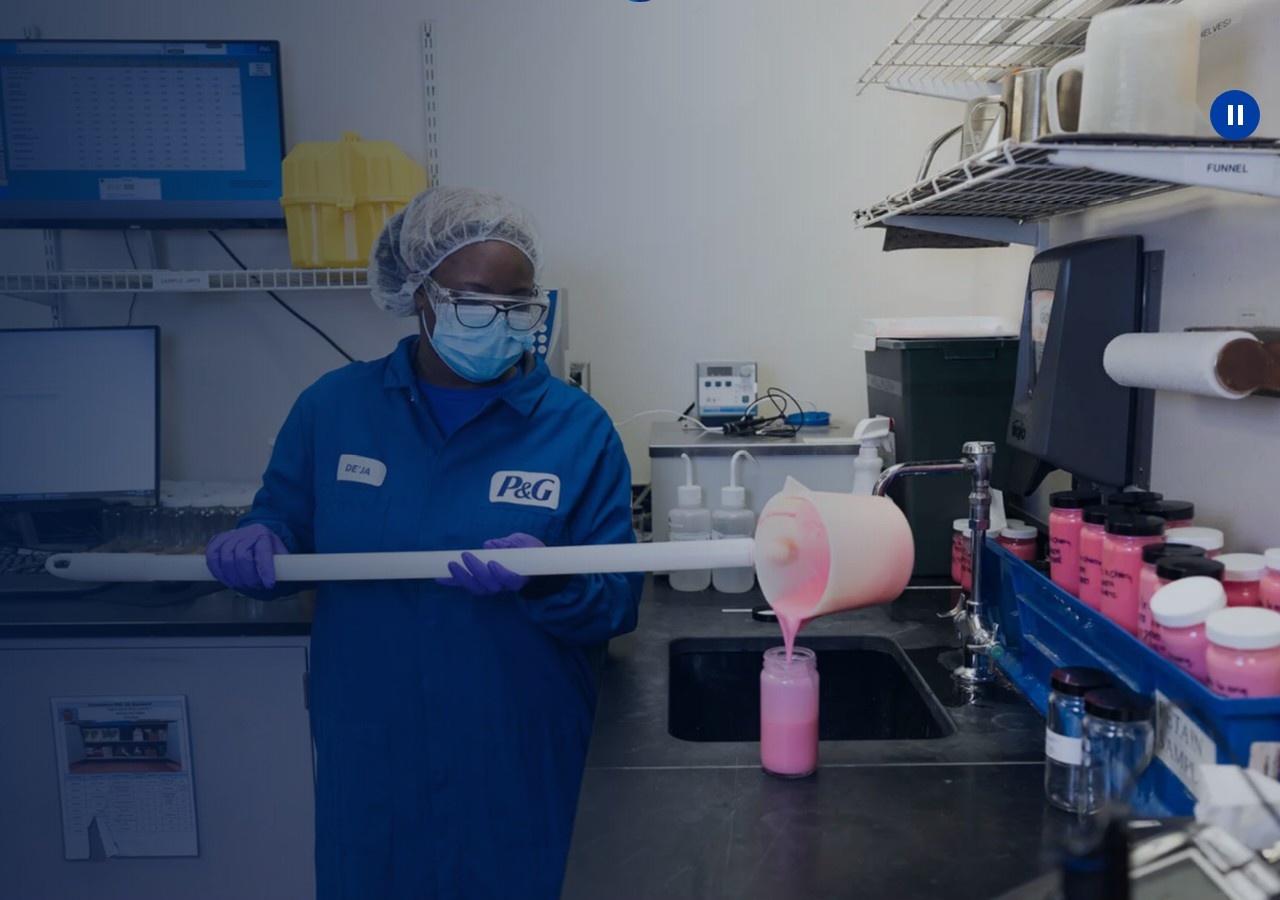
The Ivorydale plant, pictured above, illustrates how far P&G’s manufacturing footprint has evolved since its founding: from a single Cincinnati workshop using local animal fat, to a purpose-built industrial campus, to today’s network of dozens of factories spanning multiple continents and product categories that would be unrecognisable to the company’s 19th-century founders.
More recently, P&G has continued expanding its manufacturing base into new facilities, including a fabric-care plant in Coolidge, Arizona supporting brands like Tide PODS and Downy Unstopables, reflecting the same underlying pattern established in Cincinnati nearly two centuries ago: building capacity ahead of, or in step with, demonstrated consumer demand.
What nearly 190 years of reinvention actually looks like
Very few of the specific products P&G manufactured in its first decades bear any resemblance to what the company sells today, and the raw materials, manufacturing technology and consumer categories have all changed completely multiple times over. What has persisted is the underlying corporate structure and, in a broader sense, the company’s willingness to enter new categories as consumer needs evolved, rather than defending an increasingly outdated original product line indefinitely.
For any brand thinking about long-term survival rather than short-term growth, P&G’s history is a reminder that the specific products a company sells are far less durable than the underlying organisational capability to identify and enter new categories credibly as markets shift.
Lessons for OEM and private label brands
Several patterns in P&G’s history translate to a much smaller scale. A resource or logistics advantage in a company’s home location, even a modest one, is worth building into an early cost structure rather than ignored in favour of a more fashionable but logistically inconvenient base. Large institutional or bulk distribution opportunities, where available, can deliver brand exposure that ordinary retail expansion cannot match in the same timeframe. And organising a growing product range into clearly defined, internally coherent segments, rather than a scattered brand list, helps a company apply focused expertise to each category it serves.
None of these require P&G’s nearly two-century history or global scale. A newer brand that understands its own logistics advantages, seeks out larger distribution opportunities deliberately, and organises multiple product lines with real internal coherence is applying the same underlying principles in miniature.
Where the company stands today
Procter & Gamble remains one of the largest consumer goods companies in the world, with its Beauty segment alone encompassing several globally recognised brands across hair care, skin care and personal care. Its manufacturing network, which began with a single Cincinnati workshop dependent on local animal fat, now spans dozens of plants across multiple continents supplying products to nearly every retail market on earth.
Managing brand competition within one company
An unusual feature of P&G’s portfolio strategy, particularly in categories like laundry and hair care, is that the company has historically allowed some of its own brands to compete directly against each other on the same retail shelf, rather than consolidating each category around a single flagship name. This internal competition can seem inefficient at first glance, but it lets each brand team optimise for a specific consumer segment without compromise, and it means the company captures a sale regardless of which of its own brands a shopper ultimately chooses.
For a smaller brand operating multiple product lines within the same category, this is a useful reframe: two of a company’s own products competing for the same customer is not necessarily wasteful, provided each is genuinely optimised for a distinct segment rather than being redundant copies of one another.
Frequently asked questions
When was Procter & Gamble founded and by whom?
P&G was founded in 1837 in Cincinnati, Ohio by William Procter and James Gamble, who became business partners after marrying sisters and being encouraged into the venture by their shared father-in-law.
What brands are part of P&G’s Beauty division?
The Beauty segment includes Head & Shoulders, Herbal Essences, Pantene, Rejoice, Olay, Old Spice, Safeguard, Secret, SK-II and Native, and accounted for roughly 18% of 2024 revenue.
Why was Cincinnati significant to P&G’s early growth?
Cincinnati was a major hog-butchering centre in the 19th century, giving the company ready access to animal fat, the key raw material for both soap and candle production at the time.
What can a smaller brand learn from P&G’s nearly 190-year history?
That the specific products a company sells are far less durable than its underlying capability to identify and credibly enter new categories as markets and consumer needs shift over time.
Further reading
- Procter & Gamble — official U.S. website
- Procter & Gamble — Wikipedia
- P&G U.S. Manufacturing Locations (official)
- For background on how OEM and private label brands typically get built, see our explainer on what OEM manufacturing involves.
- Our OEM Manufacturer category covers other contract manufacturers and industry leaders worth knowing.
This article is an independent editorial profile based on publicly available information. All figures should be verified against the company’s current public disclosures.
About the author
Marc Phu is a China-based professional with experience related to cosmetics and the beauty industry. His background provides an industry perspective on product development, ingredients, innovation and the evolving Chinese beauty market. LinkedIn