By Marc Phu · Cosmetics Product Development & Ingredients · Published 27 May 2026
The story of Amorepacific begins with a woman selling camellia oil door to door in a Korean village in the 1930s. Madame Dokjeong Yun’s small camellia-oil business was taken over by her son, Sungwhan Suh, who formally founded the company as Taepyeongyang Chemical Industry in Seoul in 1945. Eight decades later, Amorepacific is South Korea’s largest cosmetics company and one of the ten largest beauty companies in the world, with more than 30 brands including Sulwhasoo, Laneige and Innisfree.
This profile traces how a single ingredient, camellia oil, seeded a beauty conglomerate, how the company built its manufacturing base around a distinctive “Factory” visitor experience, and what its approach to architecture and brand storytelling can teach other companies about making manufacturing itself part of a brand’s identity.
Key takeaways
- Amorepacific traces its origins to Madame Dokjeong Yun’s camellia-oil business in the 1930s, formally founded as Taepyeongyang Chemical Industry by her son Sungwhan Suh in Seoul in September 1945.
- The company is South Korea’s largest cosmetics company and ranks among the ten largest cosmetics companies in the world, with more than 30 brands including Sulwhasoo, Laneige, Etude, Cosrx and Innisfree.
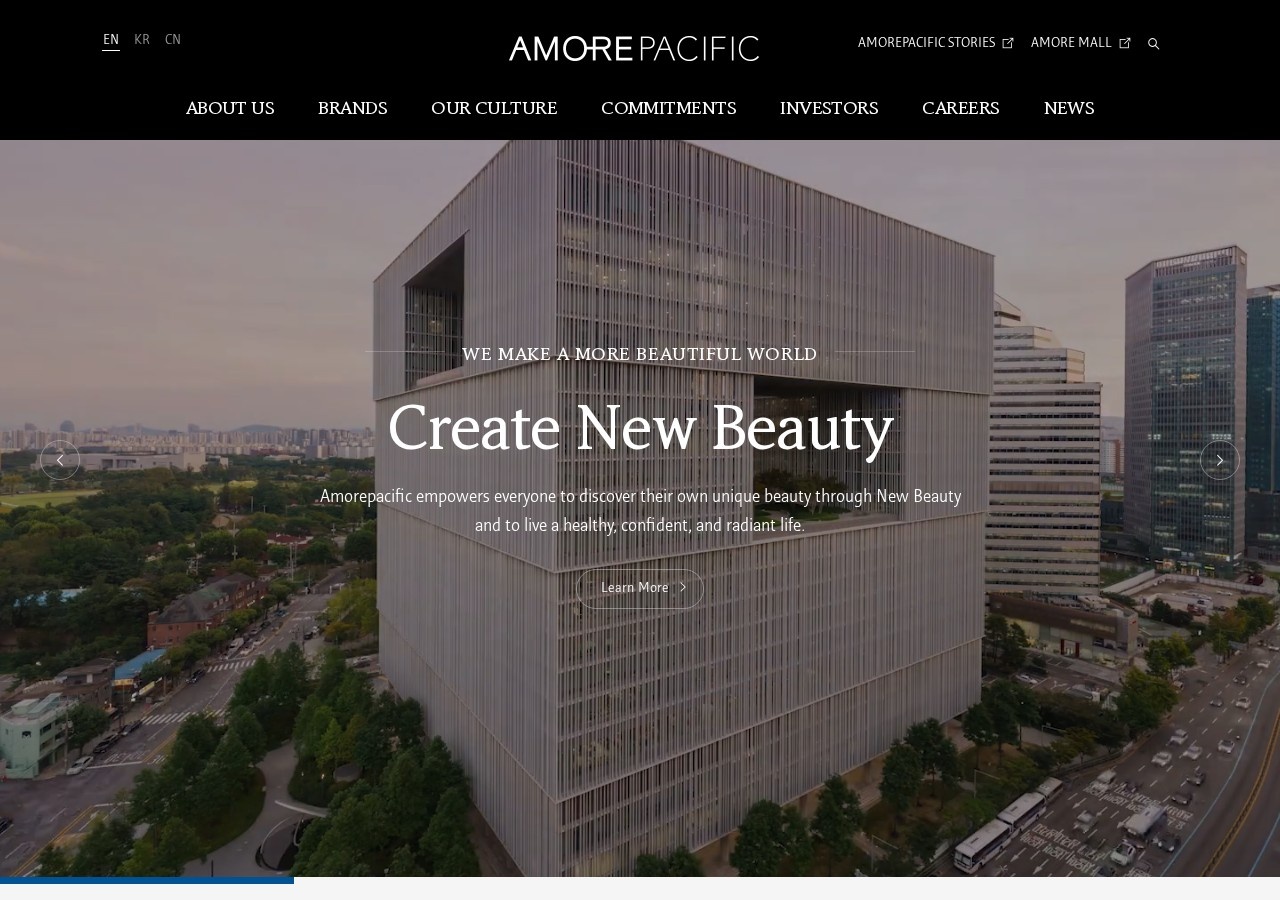
- Its Global Headquarters, opened in 2018 in Yongsan, was designed by David Chipperfield Architects around the concept of white porcelain symbolising Korean beauty.
- Core manufacturing sits at Osan Amore Beauty Park, upgraded to a “smart eco-factory” in 2025, which includes a dedicated visitor-facing “Factory” experience built around Amorepacific’s product-development philosophy.
- Treating a working factory as a piece of deliberate brand architecture, rather than purely an operational facility, reflects a broader lesson about manufacturing transparency as a trust-building asset.
From door-to-door camellia oil to a formal company
Long before Amorepacific existed as a company, Madame Dokjeong Yun was selling camellia oil, a traditional Korean beauty ingredient, in the village of Kaesong. Her son, Sungwhan Suh, took over the business and formally established it as Taepyeongyang Chemical Industry, meaning “Pacific Ocean” in Korean, in Seoul in September 1945, timing that placed the company’s founding right at the end of Japanese colonial rule in Korea.
Building a global beauty conglomerate from a single traditional ingredient and a family sales business is a genuinely different origin story from many Western beauty giants founded around a synthetic chemistry breakthrough. It reflects a pattern worth noting: a company’s eventual global scale does not require an equally large-scale founding moment, only a genuine product insight that can compound over decades.
Building a 30-plus brand portfolio
Amorepacific today operates more than 30 beauty, personal care and health brands, including the luxury skincare label Sulwhasoo, the K-beauty mainstay Laneige, the youth-oriented Etude, the acne-focused Cosrx, and the naturals-positioned Innisfree, among others. This breadth lets the company address distinctly different consumer segments, from luxury department-store shoppers to mass-market younger consumers, under separate identities rather than stretching a single brand across incompatible price points.
The company is now widely described as the largest cosmetics company in South Korea and one of the ten largest globally, a scale built substantially through organic brand development within the group rather than relying primarily on acquiring already-established outside brands, a notably different growth pattern from several Western beauty conglomerates covered elsewhere in this series.
A headquarters designed around a beauty concept
In 2018, Amorepacific opened its Global Headquarters in Yongsan, on the same site where the company’s foundations were laid in 1965, designed by David Chipperfield Architects around the concept of white porcelain, a material closely associated with traditional Korean aesthetics and beauty. Building a new global headquarters explicitly on the historical foundation site, rather than relocating to an entirely new location, reflects a deliberate choice to physically anchor the company’s modern identity to its own history.
For any brand thinking about how physical spaces communicate identity, Amorepacific’s approach illustrates a broader principle: a headquarters or flagship facility can be designed as a genuine expression of brand philosophy, not merely a functional office building.
Osan Amore Beauty Park: manufacturing as brand experience
Amorepacific’s core manufacturing facilities are located at Osan Amore Beauty Park, established in the 1970s and upgraded to what the company describes as a “smart eco-factory” in 2025. Within the complex, a dedicated visitor-facing “Factory” area, opened as part of the site, is explicitly designed to let visitors experience Amorepacific’s product-development philosophy directly, rather than treating manufacturing purely as a back-office operation hidden from the public.
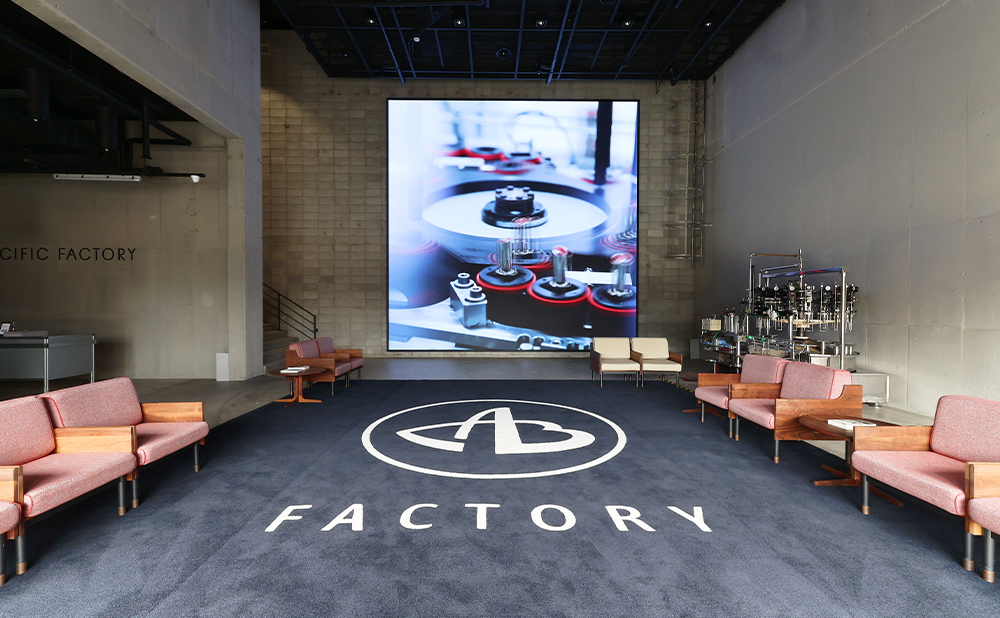
This mirrors an approach seen elsewhere in this series with Shiseido’s factory-tour concept in Japan, and it reflects a broader industry pattern worth studying: manufacturers willing to open production facilities to genuine public visibility, rather than keeping them entirely closed, are making a deliberate bet that transparency builds more consumer trust than it risks in operational disruption.
Building a company archive alongside production
Within Osan Amore Beauty Park, Amorepacific also built a dedicated archive building in 2015, marking the 70th anniversary of the company’s 1945 founding, specifically to enable more efficient and systematic management of the company’s historical records. Placing a historical archive physically alongside active manufacturing, rather than treating company history as a separate concern from production, signals that Amorepacific treats its own institutional memory as an asset worth investing in directly, not just an occasional marketing talking point.
Lessons for OEM and private label brands
Several elements of Amorepacific’s history apply well below its own scale. A company’s founding does not need to be large or technically sophisticated to eventually support significant global scale, provided the underlying product insight is genuine and given decades to compound. Physical spaces, whether a headquarters or a factory, can be designed to actively express a brand’s philosophy rather than serving purely functional purposes. And opening manufacturing to genuine visitor experience, even in a modest way, can build a different kind of consumer trust than marketing claims alone.
None of these require Amorepacific’s current scale. A smaller brand that takes its own founding story and product insight seriously, and looks for ways — even small ones — to make its manufacturing process visible to customers, is applying the same underlying principles in miniature.
What eight decades of continuity actually buys a company
Domestic market leadership built up gradually over eight decades provides a company with institutional advantages that no amount of trend-driven export demand can replicate quickly: established retail relationships, deep consumer trust built across multiple generations of Korean households, and manufacturing infrastructure refined over decades rather than assembled hastily to meet a sudden export opportunity. These advantages compound quietly in the background, largely invisible in any single year’s growth figures, but they become decisive during periods when a newer, trend-dependent competitor faces its first serious market downturn.
Where the company stands today
Amorepacific remains South Korea’s largest cosmetics company and one of the ten largest globally, operating more than 30 brands from its Yongsan headquarters and Osan manufacturing base. Its growth from a single family’s camellia-oil business into a multinational beauty group spanning luxury, mass-market and dermocosmetic categories reflects eight decades of largely organic brand development within a single corporate structure.
Riding the wider K-beauty wave without depending on it entirely
Amorepacific’s growth has coincided with, and benefited considerably from, the broader global rise of Korean beauty products and skincare routines over the past decade and a half. Unlike smaller, newer Korean beauty brands that exist almost entirely on the strength of that broader K-beauty trend, Amorepacific entered the current era of global interest already carrying eight decades of domestic market leadership, brand infrastructure and manufacturing capability built up well before international demand for Korean beauty products existed at meaningful scale.
That distinction matters for how durable a company’s growth is likely to prove: a brand built primarily on a trend inherits that trend’s eventual fluctuations directly, while a company like Amorepacific, with genuine pre-existing scale and domestic market leadership independent of the trend, is better positioned to weather any future cooling in international interest in Korean beauty specifically, since its underlying business does not depend entirely on export demand to remain viable.
Frequently asked questions
When was Amorepacific founded?
The company was formally founded as Taepyeongyang Chemical Industry in September 1945 in Seoul by Sungwhan Suh, building on his mother Madame Dokjeong Yun’s earlier camellia-oil business.
What brands does Amorepacific own?
More than 30 brands including Sulwhasoo, Laneige, Etude, Cosrx and Innisfree, spanning luxury, mass-market and dermocosmetic categories.
Where does Amorepacific manufacture its products?
Core manufacturing is based at Osan Amore Beauty Park in South Korea, established in the 1970s and upgraded to a smart eco-factory in 2025.
Can the public visit an Amorepacific factory?
Yes, in a limited sense — Osan Amore Beauty Park includes a dedicated “Factory” visitor experience designed to showcase the company’s product-development philosophy.
Further reading
- Amorepacific — official corporate website
- Amorepacific Corporation — Wikipedia
- Amorepacific: Our History (official)
- For background on how OEM and private label brands typically get built, see our explainer on what OEM manufacturing involves.
- Our OEM Manufacturer category covers other contract manufacturers and industry leaders worth knowing.
This article is an independent editorial profile based on publicly available information. All figures should be verified against the company’s current public disclosures.
About the author
Marc Phu is a China-based professional with experience related to cosmetics and the beauty industry. His background provides an industry perspective on product development, ingredients, innovation and the evolving Chinese beauty market. LinkedIn