
By Marc Phu · Cosmetics Product Development & Ingredients · Published 22 Jun 2026
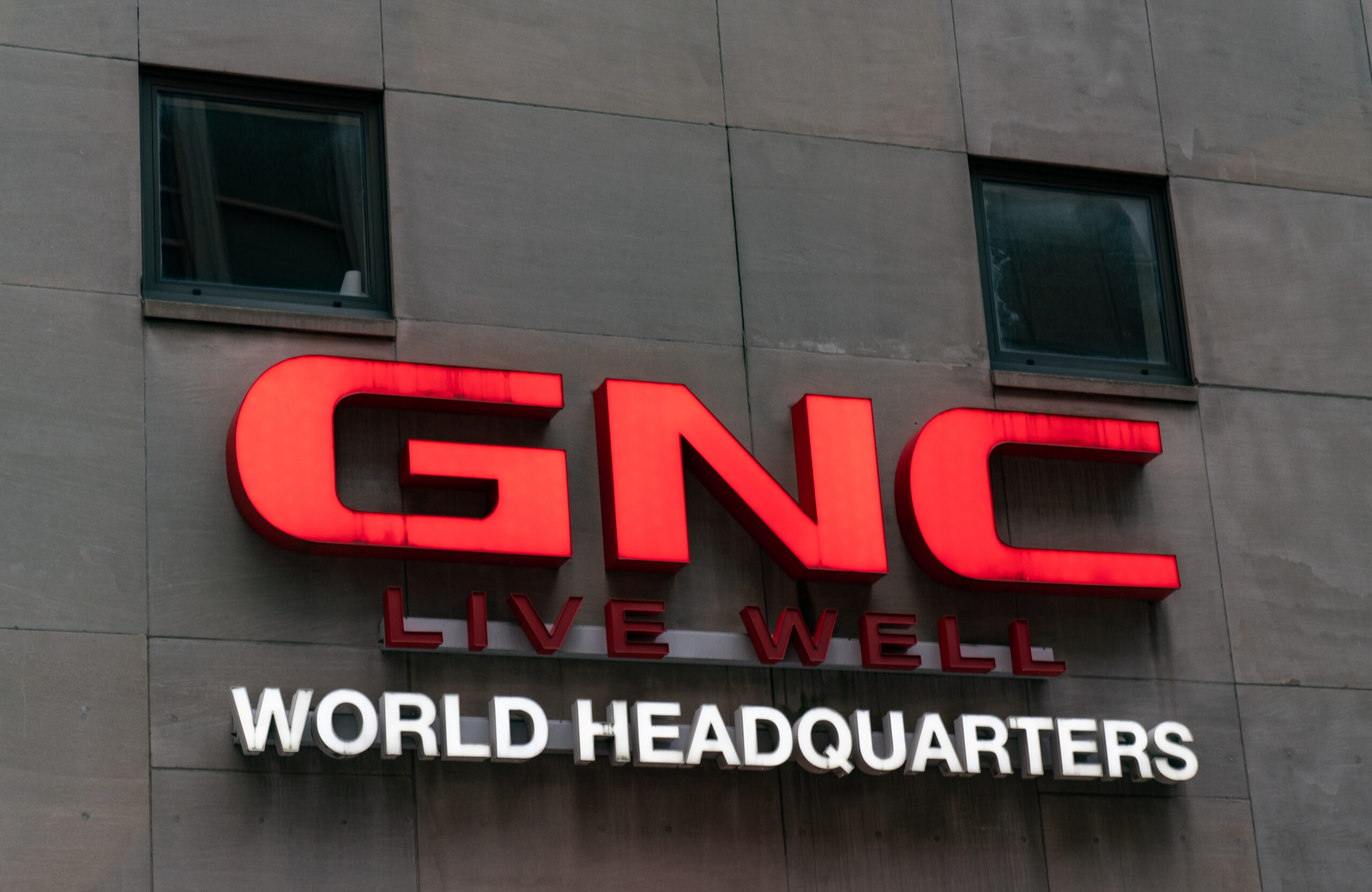
David Shakarian made $35 on his first day running a small Pittsburgh health food store in 1935, originally named Lackzoom. Within six months he had opened a second location. Nine decades later, GNC, or General Nutrition Centers, is one of the most recognisable names in specialty nutrition retail, still headquartered in downtown Pittsburgh with its own manufacturing subsidiary producing proprietary supplement products.
This profile traces GNC’s growth from a single Pittsburgh storefront into a vertically integrated nutrition retailer, why the company chose to build its own manufacturing capability rather than relying entirely on outside suppliers, and what that decision can teach other retail-facing brands about when in-house production is worth the added complexity.
Key takeaways
- GNC was founded in 1935 by David Shakarian, who opened a small Pittsburgh health food store originally named Lackzoom, making $35 on his first day.
- The company has remained headquartered in downtown Pittsburgh for nine decades, resisting a considered relocation in 1990 through a public/private effort to retain it there.
- In the 1970s, Shakarian opened factories in Pennsylvania, North Dakota, South Carolina and Minnesota to manufacture GNC’s own proprietary products rather than relying solely on third-party suppliers.
- Proprietary products made by GNC’s manufacturing subsidiary, General Nutrition Products, account for more than half of the company’s total revenue.
- GNC’s retail-plus-manufacturing model is a distinct structure from purely retail-focused nutrition chains, giving it direct control over a majority of the products sold under its own name.
From a Pittsburgh storefront to a national retail chain
David Shakarian’s first store, opened in 1935 under the name Lackzoom, generated $35 in sales on its opening day, a modest start by any measure, but one that gave him confidence to open a second location within six months. That early willingness to reinvest quickly in expansion, rather than waiting to fully prove out a single location over years, set a pattern of relatively rapid store growth that would characterise the company for decades afterward.
The company’s continued Pittsburgh headquarters is itself a notable piece of its history: in 1990, GNC considered relocating away from downtown Pittsburgh, and it took a coordinated public and private effort to retain the company’s headquarters in the city, an unusual level of civic investment in keeping a single retailer’s head office in place.
The decision to manufacture, not just retail
A pivotal choice in GNC’s history came in the 1970s, when Shakarian opened factories in Pennsylvania, North Dakota, South Carolina and Minnesota specifically to manufacture the company’s own products, rather than relying entirely on third-party suppliers for everything sold under the GNC name. This decision to vertically integrate into manufacturing, unusual for a company that had built its identity primarily as a specialty retailer, gave GNC direct control over product quality, formulation and cost structure for a growing share of its shelf space.
That bet paid off substantially: proprietary products manufactured by the company’s subsidiary, General Nutrition Products, now account for more than half of GNC’s total revenue, meaning the majority of what the company sells is something it makes itself rather than sources from outside suppliers.
Why a retailer chooses to become a manufacturer
Most specialty retailers, in nutrition or any other category, choose to remain purely retail-focused, sourcing products from third-party manufacturers and brands rather than building their own production capability. Doing so avoids the capital investment, regulatory complexity and quality-control responsibility that comes with manufacturing, letting a retailer focus purely on merchandising, store operations and customer experience.
GNC’s decision to build proprietary manufacturing anyway suggests the company judged that direct control over product quality and cost, and the ability to develop genuinely differentiated proprietary formulations rather than reselling widely available third-party brands, was worth the substantial added operational complexity. For a retail-facing brand considering the same question, the GNC case suggests this trade-off tends to make sense once a retailer has enough scale and category expertise to manufacture competently, rather than as an early-stage move.
Balancing proprietary and third-party products
Even with more than half of its revenue coming from its own manufactured products, GNC has continued stocking third-party brands alongside its proprietary lines, giving customers a choice between GNC’s own formulations and other established supplement brands within the same store. This hybrid approach lets the company capture margin and differentiation from its own products while still offering the brand variety and customer choice that a purely proprietary-only retailer might struggle to match.
This balance, rather than an all-or-nothing choice between proprietary manufacturing and pure retail, is a useful model for any brand weighing whether to develop its own manufactured products alongside continuing to stock or distribute other suppliers’ goods.
Nine decades in one city
GNC’s continuous Pittsburgh headquarters across nine decades, through multiple ownership changes, industry cycles and a considered relocation that was ultimately reversed through civic effort, reflects a level of geographic stability that is genuinely uncommon for a company of its retail scale and national footprint. That stability likely reflects accumulated institutional knowledge, workforce relationships and civic ties that would be costly to rebuild elsewhere, even where a different location might offer some operational advantage.
Lessons for OEM and private label brands
Several elements of GNC’s history apply at a smaller scale. Vertically integrating into manufacturing is a decision worth making deliberately once a brand has genuine category scale and expertise, rather than as an early-stage move before that capability is proven. Balancing proprietary products with continued access to other established brands can capture the benefits of both differentiation and customer choice, rather than forcing an all-or-nothing decision. And geographic stability in a company’s operational base, while not always the cheapest option available, can preserve institutional knowledge and relationships that are genuinely costly to rebuild elsewhere.
None of these require GNC’s national retail scale. A smaller brand considering whether to develop its own manufactured product line alongside distributing others’, or weighing whether to relocate operations purely for short-term cost savings, is working through the same underlying trade-offs GNC faced at each stage of its growth.
Where the company stands today
GNC remains headquartered in downtown Pittsburgh, operating as a specialty nutrition retailer with its own vertically integrated manufacturing capability through subsidiary General Nutrition Products. Proprietary products account for more than half of total revenue, reflecting a decision made in the 1970s to manufacture rather than rely purely on third-party supply, a structural choice that continues to define the company nearly five decades later.
What retail-facing manufacturers can learn from GNC’s storefront network
GNC’s national network of physical storefronts gives its manufacturing subsidiary a genuinely unusual advantage compared with a manufacturer selling purely through third-party retail or e-commerce channels: direct visibility into which proprietary products are actually selling well in specific locations, in close to real time, through a company-owned retail footprint rather than relying entirely on external retail-partner sales data. That tight feedback loop between manufacturing and retail, both owned by the same company, can meaningfully shorten the time between noticing a product trend and adjusting production to match it.
For a manufacturer without its own retail network, the transferable lesson is less about owning stores specifically and more about the underlying principle: whatever sales-data feedback loop a brand does have access to, whether through a retail partner, an e-commerce platform or direct-to-consumer channel, is worth actively monitoring and acting on quickly, since speed of response to real demand signals is often what separates a well-run proprietary product line from a poorly managed one.
Frequently asked questions
When was GNC founded and by whom?
GNC was founded in 1935 by David Shakarian, who opened a small Pittsburgh health food store originally named Lackzoom.
Does GNC manufacture its own products?
Yes. Since the 1970s, GNC has operated its own manufacturing facilities through subsidiary General Nutrition Products, which now accounts for more than half of the company’s total revenue.
Where is GNC headquartered?
In downtown Pittsburgh, Pennsylvania, where the company has remained continuously since its founding, including through a considered relocation in 1990 that a public/private effort ultimately reversed.
What can a retail-facing brand learn from GNC’s manufacturing decision?
That vertically integrating into manufacturing tends to make more sense once a retailer has genuine category scale and expertise, and that balancing proprietary products with continued third-party brands can capture benefits of both approaches.
Further reading
- GNC — official website
- GNC — Wikipedia
- GNC: The GNC Story (official)
- For background on how OEM and private label brands typically get built, see our explainer on what OEM manufacturing involves.
- Our OEM Manufacturer category covers other contract manufacturers and industry leaders worth knowing.
This article is an independent editorial profile based on publicly available information. All figures should be verified against the company’s current public disclosures.
About the author
Marc Phu is a China-based professional with experience related to cosmetics and the beauty industry. His background provides an industry perspective on product development, ingredients, innovation and the evolving Chinese beauty market. LinkedIn