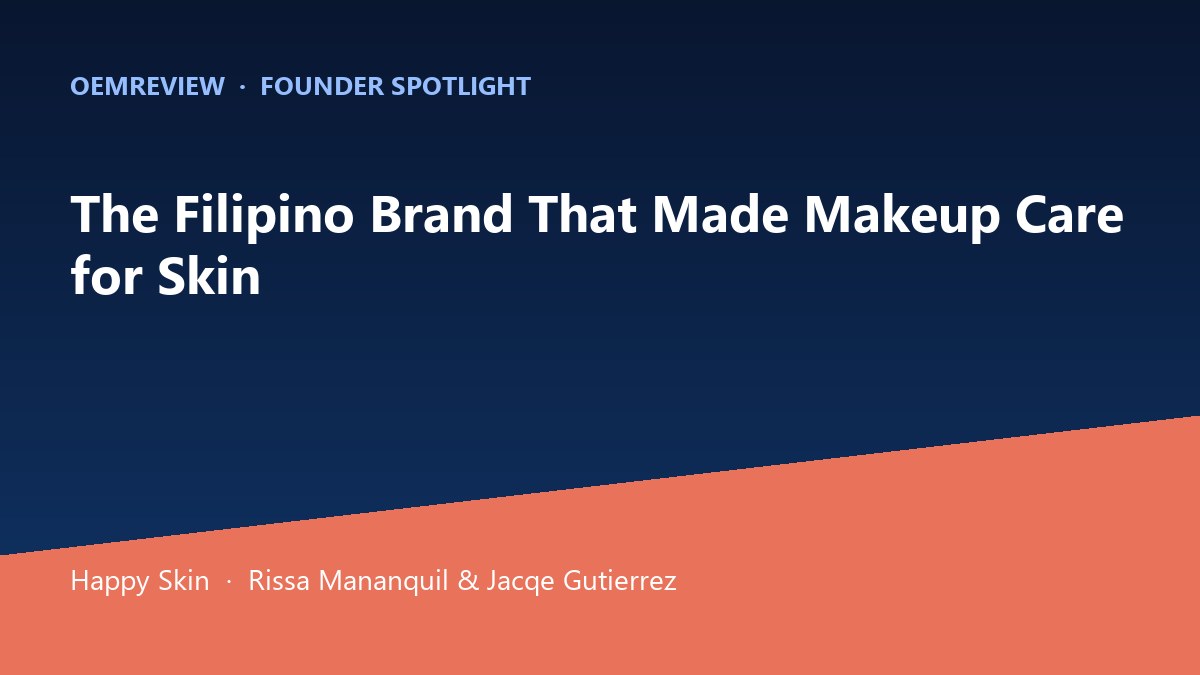
OEMReview’s Founder Spotlight series revisits publicly published interviews with consumer-product founders and draws out the manufacturing and product-development lessons most relevant to OEM and private-label brand owners. This edition looks at Happy Skin, the Filipino makeup brand co-founded by Rissa Mananquil-Trillo and Jacqe Yuengtian-Gutierrez.
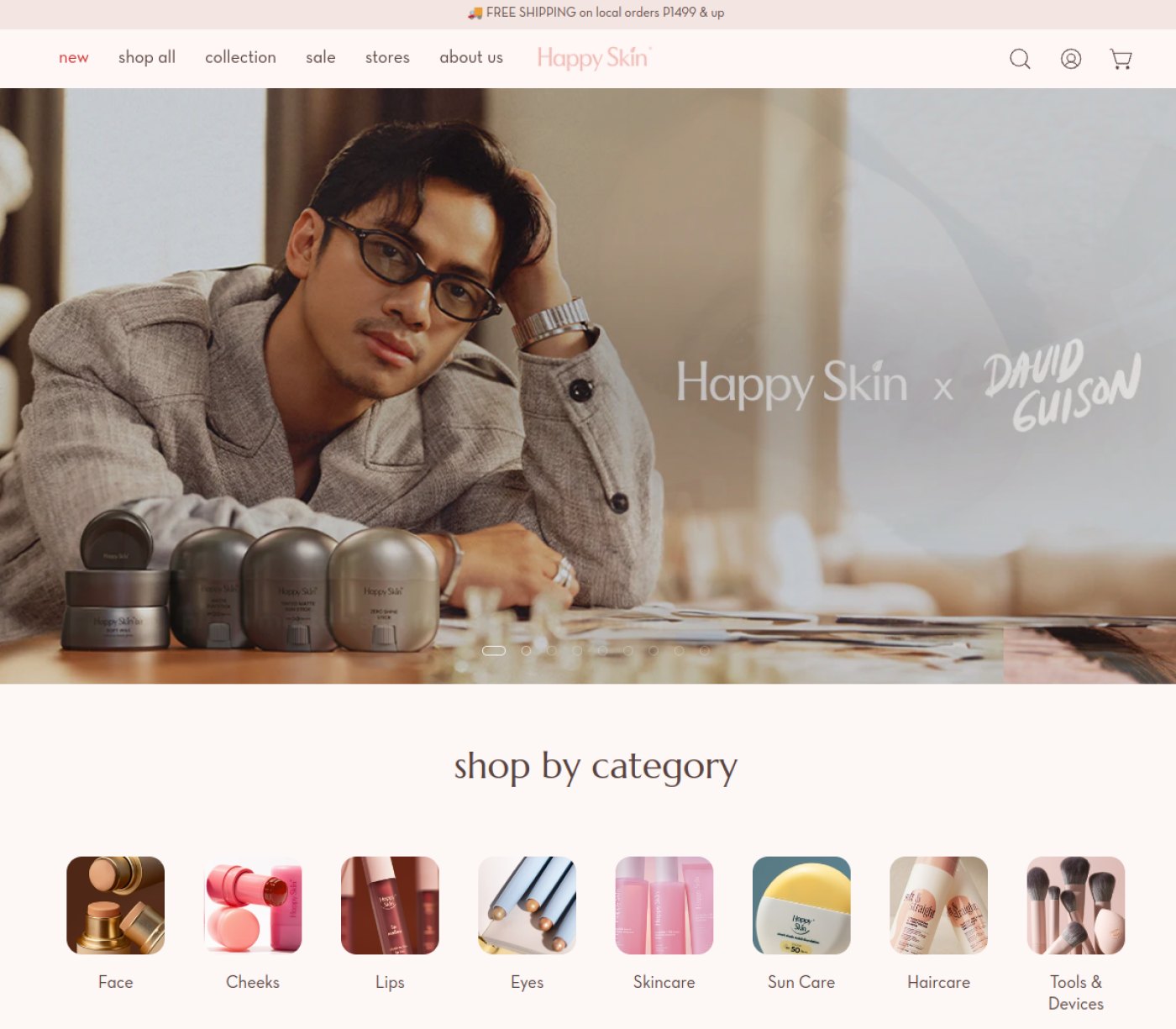
Makeup that doesn’t punish your skin
Happy Skin launched in the Philippines in October 2013 with a proposition its founders felt local women had been waiting for: makeup that actively cares for the skin underneath. Co-founder Jacqe Yuengtian-Gutierrez brought roughly eight years inside Unilever beauty brands; co-founder Rissa Mananquil-Trillo brought a model’s front-line view of the industry. Together they targeted a real anxiety — Filipinas who avoided makeup for fear it would ruin their skin.
The product idea lives in the formulation brief
“Skin-caring makeup” is only a slogan until a manufacturer can build it. Happy Skin’s answer was to formulate colour cosmetics around skincare-grade ingredients — reported to include Japanese tea leaf, cherry blossom, hyaluronic acid and argan oil — so that products remained gentle enough for sensitive skin while still performing as makeup.
That hybrid ambition is a demanding brief: the actives have to survive in a colour-cosmetic base, stay stable, and deliver a real skin benefit rather than a marketing one. The founders are described as meticulous collaborators who iterated closely on developing and adjusting products — the kind of hands-on partnership with formulation that a category-creating product requires.
Happy Skin was built on a single idea — that women shouldn’t have to choose between looking good and caring for their skin.
What OEM & private-label brand-builders can learn
- Category creation happens in the formula. “Skincare-infused makeup” needed real actives engineered into a colour base. If your positioning is a hybrid, your OEM brief — not your ad — is where it succeeds or fails.
- Industry insiders make sharper briefs. A background inside a global beauty company gave Happy Skin’s team a realistic view of what a manufacturer can and can’t deliver. Experience shortens the development loop.
- Solve a specific fear, not a vague desire. “Afraid makeup will ruin my skin” is a concrete problem a formulation can answer. The tighter the consumer problem, the clearer the product spec.
- Stay meticulous through iteration. Category-defining products rarely come out right on the first sample. Budget for multiple development rounds with your manufacturer.
Written by Dee Truong for OEMReview. Brand names are used for identification and commentary only. Read more at Vulcan Post.
About the author
Dee Truong is a Vietnam-based professional with experience in the beauty and consumer-product sector. Her interests include product development, market trends and the commercial side of bringing consumer products from concept to market. LinkedIn