Vinh Hoan Corporation (HOSE: VHC) is the company most investors mean when they talk about Vietnamese pangasius. Founded in 1997 in Cao Lanh in the Mekong Delta and listed on the Ho Chi Minh Stock Exchange, Vinh Hoan is Vietnam’s largest pangasius (tra catfish) exporter and one of the most vertically integrated seafood groups in Southeast Asia, controlling everything from broodstock and fish feed to fillet processing, collagen extraction and ready-to-eat foods. It booked VND12,021 billion (about US$457 million) of revenue in 2025 and is targeting VND14,000 billion in 2026. This Companies to Watch report explains why the next 12 months matter: Vinh Hoan is spending about VND1.52 trillion (roughly US$58 million) on expansion just as its biggest market, the United States, has turned from growth engine to headwind.
Key Takeaways
- Vinh Hoan Corporation (HOSE: VHC), founded in 1997, is Vietnam’s largest pangasius exporter; pangasius generates about 70% of group revenue, and management told its May 2026 AGM that share could rise to 80%.
- Vinh Hoan reported 2025 revenue of VND12,021 billion and profit after tax of VND1,418 billion, and set 2026 targets of VND14,000 billion revenue (+16%) and VND1,600 billion profit (+13%), backed by a VND1,520 billion investment budget.
- For the first half of 2026, net revenue rose 9.6% to VND6,398.98 billion and profit after tax rose 3.8% to VND779.26 billion, but second-quarter profit fell 8.5% to VND493.3 billion as foreign-exchange gains disappeared and interest costs doubled (DNSE, 31 July 2026).
- Revenue fell 10% year-on-year in July 2026, Vinh Hoan’s first monthly decline of the year, before recovering 2% in August to VND1,099 billion; August US sales fell 15% while China rose 56% (Mekong ASEAN, 13 September 2026).
- Between 20 April and 15 May 2026, Vinh Hoan bought back 15 million of its own shares for about VND930 billion, cutting voting shares from about 224.4 million to 209.4 million (VnEconomy).
Company Snapshot
| Company | Vinh Hoan Corporation (Cong ty Co phan Vinh Hoan) |
| Listing | Ho Chi Minh Stock Exchange (HOSE: VHC) |
| Founded | 1997, Cao Lanh, Mekong Delta, Vietnam |
| Chairwoman | Truong Thi Le Khanh |
| CEO | Nguyen Ngo Vi Tam |
| Business model | Vertically integrated: broodstock, farming, aquafeed (FeedOne), fillet processing, by-products, collagen and gelatin, fruit and processed foods |
| 2025 revenue | VND12,021 billion |
| 2025 profit after tax | VND1,418 billion |
| 2026 targets | Revenue VND14,000 billion; profit after tax VND1,600 billion |
| Official website | vinhhoan.com |
What Vinh Hoan Does
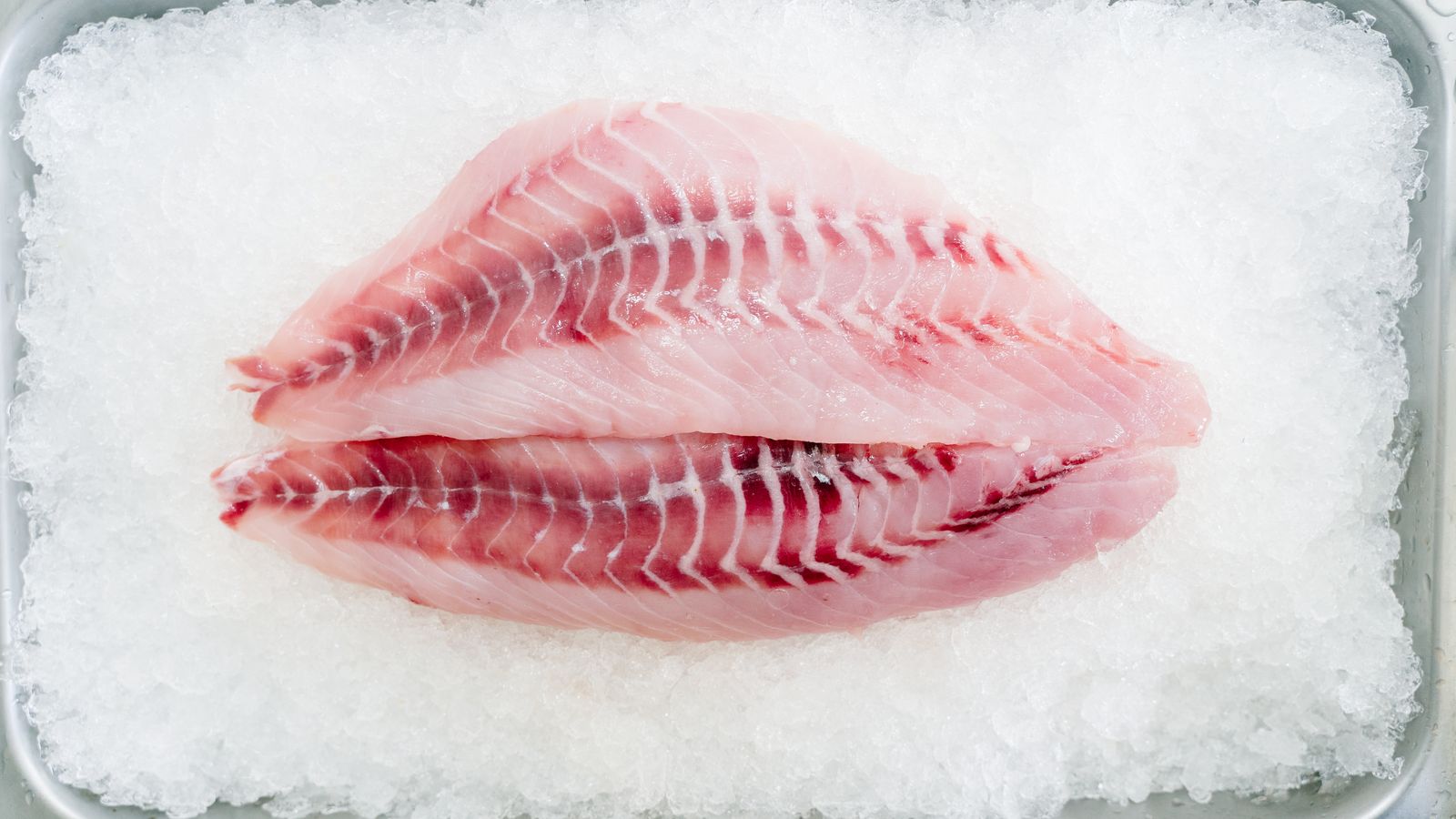
Pangasius is a freshwater whitefish farmed almost entirely in the Mekong Delta and sold around the world as a cheaper alternative to cod, pollock and tilapia. Vinh Hoan’s core business is turning that fish into frozen fillets for supermarkets, food-service distributors and restaurant chains in the United States, Europe, China and dozens of other markets. Chairwoman Truong Thi Le Khanh told shareholders at the company’s annual general meeting on 5 May 2026 that pangasius contributes about 70% of revenue, a share she described as appropriate but one that could rise to 80%, The Investor reported.
What separates Vinh Hoan from most of the 10-plus Vietnamese exporters selling pangasius into the US is how much of the chain it owns. The group breeds its own fingerlings, raises fish on its own farms, makes its own fish feed through its FeedOne subsidiary, and processes the fish in its own plants. Heads, bones, skin and other by-products, which make up as much as 65% of the raw fish by weight, go into fishmeal, fish oil, collagen and gelatin rather than being sold off cheaply. That integration matters for anyone studying food manufacturing in the region: it is the same build-versus-outsource question every brand owner faces, and our explainer on choosing a halal-certified OEM manufacturer in Malaysia covers the other side of that decision.
The collagen and surimi side-businesses
Vinh Hoan’s most interesting diversification is Vinh Hoan Collagen JSC, a 90%-owned subsidiary that extracts collagen and gelatin from pangasius skin. The plant began operating in 2015 with a design capacity of 2,000 tonnes a year and sells mainly to cosmetics and supplement manufacturers in Japan, South Korea and Thailand, the Vietnam Investment Review reported; its director said at the time that the company was the only one in the market offering such products. Because the collagen comes from fish rather than pork or beef, it also suits Muslim-majority markets, a point relevant to readers following our functional food and supplements coverage.
The company has also added a 5,000-tonne-a-year pangasius surimi line, used for products such as dumpling wrappers and protein noodles, according to VASEP. Sales director Hoa Truong has framed these launches as part of a shift from being a seafood company to a food company, in pursuit of a long-stated ambition to build a US$1 billion business, SeafoodSource reported. Fruit processing, rice-based products such as noodles and rice paper, and shrimp crackers round out the non-fish portfolio.
Financial Track Record: A Strong Q1, Then a Wobble
Vinh Hoan entered 2026 off a solid year. It reported 2025 revenue of VND12,021 billion and profit after tax of VND1,418 billion, beating its adjusted profit plan by 9.1%, according to the company’s AGM documents as reported by Doanh Nhan (Bao Phap Luat) on 10 April 2026. It paid a 20% cash dividend (VND2,000 per share) for 2025 and the board proposed a 30% cash dividend for 2026.
The first quarter of 2026 looked like the start of another record year. Revenue rose 11% to about VND2.96 trillion (US$112.4 million) and net profit jumped 38% to more than VND266 billion; CEO Nguyen Ngo Vi Tam said both volumes and selling prices had risen. The second quarter was more mixed. Net revenue rose 7.9% to VND3,444.38 billion and gross margin improved to 20.6% from 19.8%, but financial income fell 53.8% to VND51.9 billion as last year’s exchange-rate gains disappeared, and interest expense more than doubled to VND29.38 billion. Profit after tax fell 8.5% to VND493.3 billion, DNSE reported on 31 July 2026.
| Period | Net revenue | Profit after tax |
|---|---|---|
| FY2025 | VND12,021 billion | VND1,418 billion |
| Q1 2026 | VND2,954.6 billion (+11.6%) | VND266.16 billion (+37.9%) |
| Q2 2026 | VND3,444.38 billion (+7.9%) | VND493.3 billion (-8.5%) |
| H1 2026 | VND6,398.98 billion (+9.6%) | VND779.26 billion (+3.8%) |
| FY2026 target | VND14,000 billion (+16%) | VND1,600 billion (+13%) |
After six months, Vinh Hoan had delivered about 46% of its full-year profit target. That is not far off pace for a business whose second half is usually stronger, but the monthly sales data since then have made the target harder.
July and August 2026: the US cools, China heats up
In July 2026, Vinh Hoan’s net revenue fell 10% year-on-year to VND1,148 billion, its first monthly decline of 2026. August brought only a modest recovery: revenue rose about 2% to VND1,099 billion, according to Mekong ASEAN on 13 September 2026. The market split tells the story. US sales fell 15% to VND231 billion and domestic sales fell 13% to VND281 billion, while China jumped 56% to VND113 billion and the EU rose 10% to VND267 billion. By product, core pangasius revenue slipped 4% to VND535 billion, while by-products rose 21% to VND245 billion.
The company’s numbers mirror the national picture. Vietnam’s pangasius exports reached US$1.3 billion in the first seven months of 2026, up 10%, but exports to the US fell 8% to US$189 million while exports to China rose 31% to US$357 million, nearly 27.5% of the total, VietNamNet reported citing VASEP. On 12 August 2026 the US Department of Commerce also issued final anti-dumping results for the 21st review period that sharply raised duties on several Vietnamese rivals, with a Vietnam-wide rate of US$2.39 per kilogram. Vinh Hoan itself has been outside the scope of the US anti-dumping order since earlier reviews, VASEP has reported, which is one of its most valuable competitive advantages in the American market.
The VND1.52 Trillion Expansion Plan and the Buyback
Vinh Hoan’s 2026 AGM approved an investment budget of VND1,520 billion, roughly US$58 million. According to the AGM documents, the spending covers:
- Vinh Hoan Collagen: renovating and building new factory space and buying new machinery to expand the higher-margin collagen and gelatin business.
- FeedOne: a new production line at the aquafeed subsidiary, whose first mill in Cao Lanh opened in 2022 with capacity of 350,000 tonnes a year.
- Fruit and agri-food: a new line at the Thanh Ngoc fruit-processing plant and a new Hoan Ngoc agri-food project, plus a proposal to add fruit, vegetable and perennial-crop cultivation to the company’s business lines.
- Farming and plants: expanding farming areas, and upgrading the Sa Giang, Vinh Phuoc, Thanh Binh and Vinh Hoan factories.
Management also told shareholders it would focus on breeding and fingerling management, because producing its own seed fish is cheaper than buying from outside, The Investor reported. At the same time, Vinh Hoan returned cash to shareholders. Between 20 April and 15 May 2026 it bought back 15 million treasury shares at an average of VND61,988 each, about VND930 billion in total, cutting voting shares from about 224.4 million to 209.4 million, VnEconomy reported. The company also said it would keep reducing its holdings of real-estate-related securities and redirect that capital to core operations.
Why Vinh Hoan Is a Company to Watch
1. The US-to-China pivot is happening in real time
For years the US was Vinh Hoan’s most important market; in 2024 it contributed more than VND3.9 trillion, or 31.4% of revenue, according to Viet Nam News. Management says it aims to hold about 50% of the US pangasius market. But the 2026 numbers show US demand fading while China grows quickly. How fast Vinh Hoan can shift volume toward China, Europe and other markets without giving up price is the single biggest variable in its second-half results.
2. By-products are becoming a real business
By-product revenue rose 21% in August 2026 while pangasius fillets fell 4%. When fishmeal and fish oil prices are high, those by-products offset weaker fillet sales, and collagen sells at far better margins than frozen fish. The VND1.52 trillion capex plan points the money at exactly these segments.
3. Analysts already expect lower profit
In a report dated 26 August 2026, DSC Securities forecast 2026 revenue of VND13,524 billion (+12%) and profit after tax of VND1,376 billion (-9%), below the company’s own targets. If Vinh Hoan beats that lower bar, the share price has room to respond; if it misses, the buyback will have been made at a higher price than the market later pays.
Risks to Monitor
- US trade policy: tariffs and anti-dumping reviews can change pricing overnight; Vinh Hoan’s exemption from the anti-dumping order is valuable but not a shield against broader tariffs.
- Farming costs: management expects farming costs to keep rising, and the Middle East conflict has pushed up global production costs even though the region is a small share of sales.
- Currency and interest: Q2 2026 showed how quickly FX gains can disappear and interest costs can climb.
- Execution: collagen, fruit, surimi and agri-food projects are running at once, each with different customers and margins.
My Take
My opinion: Vinh Hoan is the best-run pangasius company in Vietnam, and 2026 is the year that title stops being enough. For two decades the formula was simple: own the fish from egg to fillet, stay outside the US anti-dumping order, and sell more to American food-service buyers than anyone else. That formula still works, but its most profitable market is now shrinking in front of us. A 15% drop in US sales in August, after a 10% group revenue decline in July, is not a blip I would wave away.
What I like is that the company seems to know it. The capex is not going into more fillet lines. It is going into collagen, feed, fruit and agri-food, and the August data already show by-products growing faster than fish. Collagen made from pangasius skin, sold to Japanese and Korean beauty and supplement makers, is a far better business than frozen fillets competing on price in Texas. If Vinh Hoan can make that segment a meaningful share of profit, it becomes a food-ingredients company with a fish business attached, and those trade at much better valuations than seafood exporters.
What I am less comfortable with is the VND930 billion buyback. It was done at around VND62,000 a share in April and May, before the July and August data showed US weakness. Returning cash is shareholder-friendly, but spending the equivalent of more than half this year’s VND1,520 billion capex budget on your own stock just before the cycle turned is a bet on the share price, not on the business. I would rather have seen that money in the collagen plant.
Who wins? Chinese and European buyers, who are getting more Vinh Hoan volume, and the company’s by-product customers. Who loses? Smaller Vietnamese exporters hit with sharply higher US anti-dumping duties, which actually strengthens Vinh Hoan’s position as the cleanest supplier for US buyers who stay. For ASEAN food companies, including the ones we cover in our Masan Group profile and the Bibica acquisition, the signal is clear: export-led growth to the US is getting harder, and the winners will be those that sell more value per kilo. My verdict: watch the September and October monthly sales and the Q3 results. If China and by-products keep filling the US gap, the 2026 profit target is still in reach.
Related Coverage on OEMReview
- Investment Insights: Malaysian and ASEAN M&A, profiles and companies to watch
- Masan Group: Company Profile of Vietnam’s Consumer and Retail Conglomerate
- Cocoon: Why Vietnam’s Vegan Beauty Brand Is a Company to Watch in 2026
- DXN Holdings: Why Malaysia’s Ganoderma Direct-Selling Giant Is a Company to Watch in 2026
Frequently Asked Questions
What does Vinh Hoan Corporation do?
Vinh Hoan Corporation (HOSE: VHC), founded in 1997 in Cao Lanh in Vietnam’s Mekong Delta, is Vietnam’s largest pangasius (tra catfish) exporter. It is vertically integrated across broodstock, fish farming, aquafeed (through its FeedOne subsidiary), fillet processing, by-products, collagen and gelatin, fruit processing and other processed foods. Pangasius contributes about 70% of revenue.
What were Vinh Hoan’s 2025 results and 2026 targets?
Vinh Hoan reported 2025 revenue of VND12,021 billion and profit after tax of VND1,418 billion. For 2026 it targets revenue of VND14,000 billion (up 16%) and profit after tax of VND1,600 billion (up 13%), with an investment budget of VND1,520 billion (about US$58 million).
How did Vinh Hoan perform in the first half of 2026?
In the first half of 2026, Vinh Hoan’s net revenue rose 9.6% to VND6,398.98 billion and profit after tax rose 3.8% to VND779.26 billion. Second-quarter profit after tax fell 8.5% to VND493.3 billion because financial income dropped 53.8% and interest expense more than doubled, according to DNSE.
Is Vinh Hoan subject to US anti-dumping duties on pangasius?
According to VASEP, Vinh Hoan has been excluded from the scope of the US anti-dumping order on Vietnamese pangasius fillets since earlier administrative reviews. Several rivals saw sharply higher rates in the final POR21 results issued on 12 August 2026, with a Vietnam-wide rate of US$2.39 per kilogram.
Does Vinh Hoan make collagen?
Yes. Its 90%-owned subsidiary Vinh Hoan Collagen JSC extracts collagen and gelatin from pangasius skin at a plant that began operating in 2015 with design capacity of 2,000 tonnes a year, selling mainly to cosmetics and supplement manufacturers in Japan, South Korea and Thailand. The 2026 investment plan includes expanding this business.
Why did Vinh Hoan’s revenue fall in July 2026?
Vinh Hoan’s net revenue fell 10% year-on-year to VND1,148 billion in July 2026, its first monthly decline of the year, as sales to the US and the domestic market weakened. August revenue recovered 2% to VND1,099 billion, with US sales down 15% and China up 56%.
Sources
- Vinh Hoan Corporation, official website (vinhhoan.com) and investor relations
- The Investor, Middle East revenue share limited, impact manageable: top seafood exporter Vinh Hoan (6 May 2026)
- DNSE, Vinh Hoan Q2 2026 profit declines (31 Jul 2026, Vietnamese)
- Mekong ASEAN, Vinh Hoan revenue regains growth in August 2026 (13 Sep 2026, Vietnamese)
- Doanh Nhan / Bao Phap Luat, Vinh Hoan targets VND1,600bn profit, invests over VND1,500bn (10 Apr 2026, Vietnamese)
- VnEconomy, VHC spends nearly VND930bn on treasury shares (19 May 2026, Vietnamese)
- VietNamNet, US tariffs squeeze Vietnam pangasius as China sales jump (19 Aug 2026)
- Viet Nam News, Viet Nam’s largest pangasius exporter sees decline in US market (2 Jun 2025)
- SeafoodSource, Vinh Hoan banks on new business segments in quest to build USD 1 billion company
- VASEP, Vinh Hoan adds 5,000t pangasius surimi production line
- Vietnam Investment Review, Collagen maker Vinh Hoan dares to dream big (2017)
Disclaimer: This article is for informational and editorial purposes only. It is not a recommendation to buy or sell any securities and does not constitute investment advice.