
By Dee Truong · Product Development & Market Trends · Published 13 Apr 2026
Vietnam’s cosmetics manufacturing sector has quietly become one of the more compelling alternatives in South-East Asia, particularly for brands that want ASEAN-CGMP production without the higher entry costs of some of the region’s more established hubs. The sector still isn’t as deep or as wide as Thailand’s or Malaysia’s, but the factories operating here — several with global network backing, others independently built over decades — are increasingly capable of handling export-grade skincare and personal-care programmes.
This guide profiles six OEM/ODM cosmetic manufacturers with real production capability in Vietnam — what each is known for, where it’s based, and a link to its official website so you can verify current details directly.
Key takeaways
- Kolmar Vietnam brings the global Kolmar network’s formulation expertise into a local ASEAN-CGMP factory; Saigon Cosmetics Corporation offers over fifty years of export history.
- Viet Huong, Vimac, Nayue and Kanna provide flexible OEM/ODM and private-label skincare and personal-care production for smaller and mid-sized brands.
- Most manufacturers here run ASEAN-CGMP facilities, with several also holding ISO 22716 — a solid baseline for export-focused brands.
- Every manufacturer below has an active website and an established Vietnamese production track record.
How we chose this list
We looked for manufacturers with genuine Vietnamese production capability, recognised standing in the local industry, and a live corporate website. Vietnamese cosmetics fall under the Drug Administration of Vietnam (DAV), part of the Ministry of Health, with ASEAN-CGMP the key manufacturing standard applied across the sector. This is not a paid-placement list — positions reflect scale and recognition rather than sponsorship.
1. Kanna Cosmetics
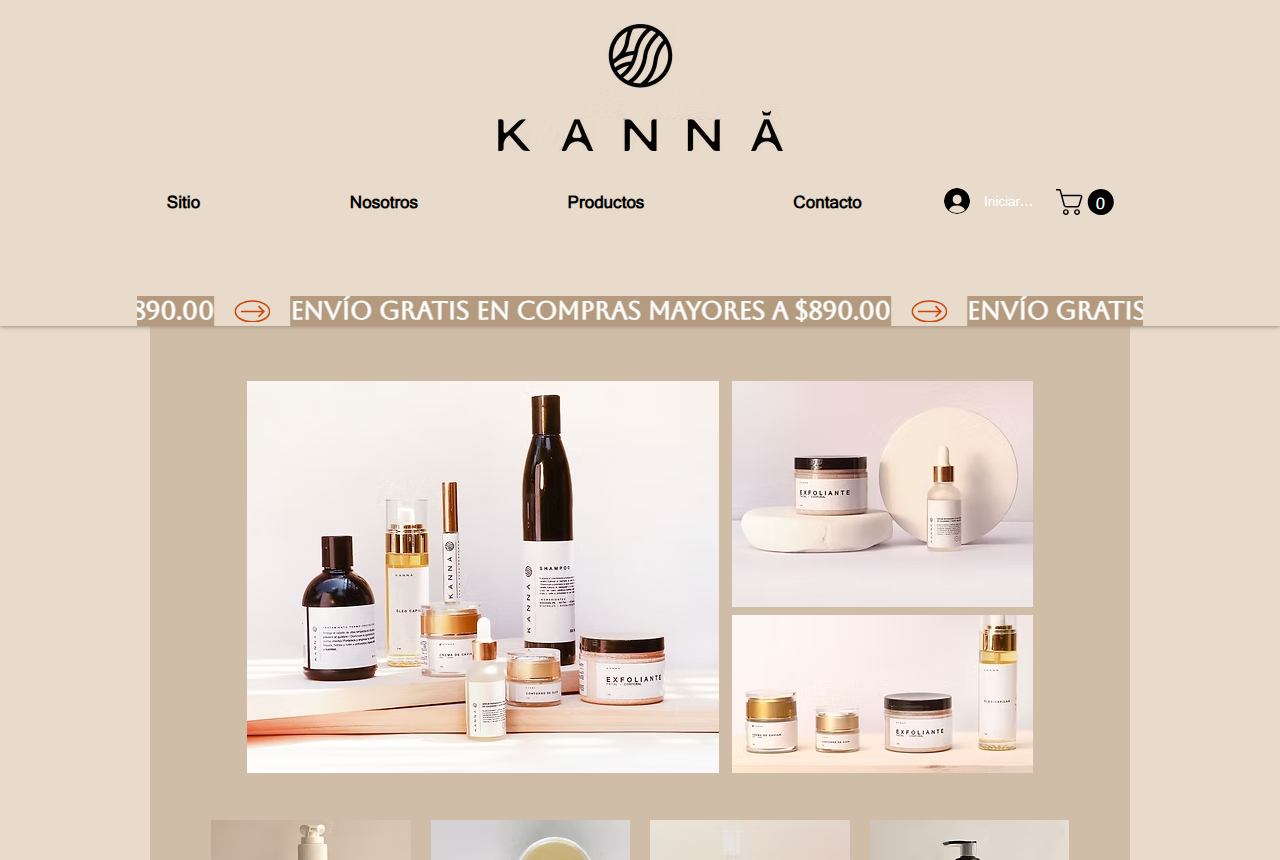
HQ: Ho Chi Minh City · Type: CGMP-ASEAN manufacturer · Best known for: Skincare & personal-care OEM/ODM
Kanna operates under CGMP-ASEAN certification with a sizeable designed production capacity, offering OEM/ODM skincare and personal-care manufacturing for both domestic and export-focused brands. Its facility scale makes it a reasonable option for brands that expect to grow order volumes over time without switching manufacturers.
2. Kolmar Vietnam
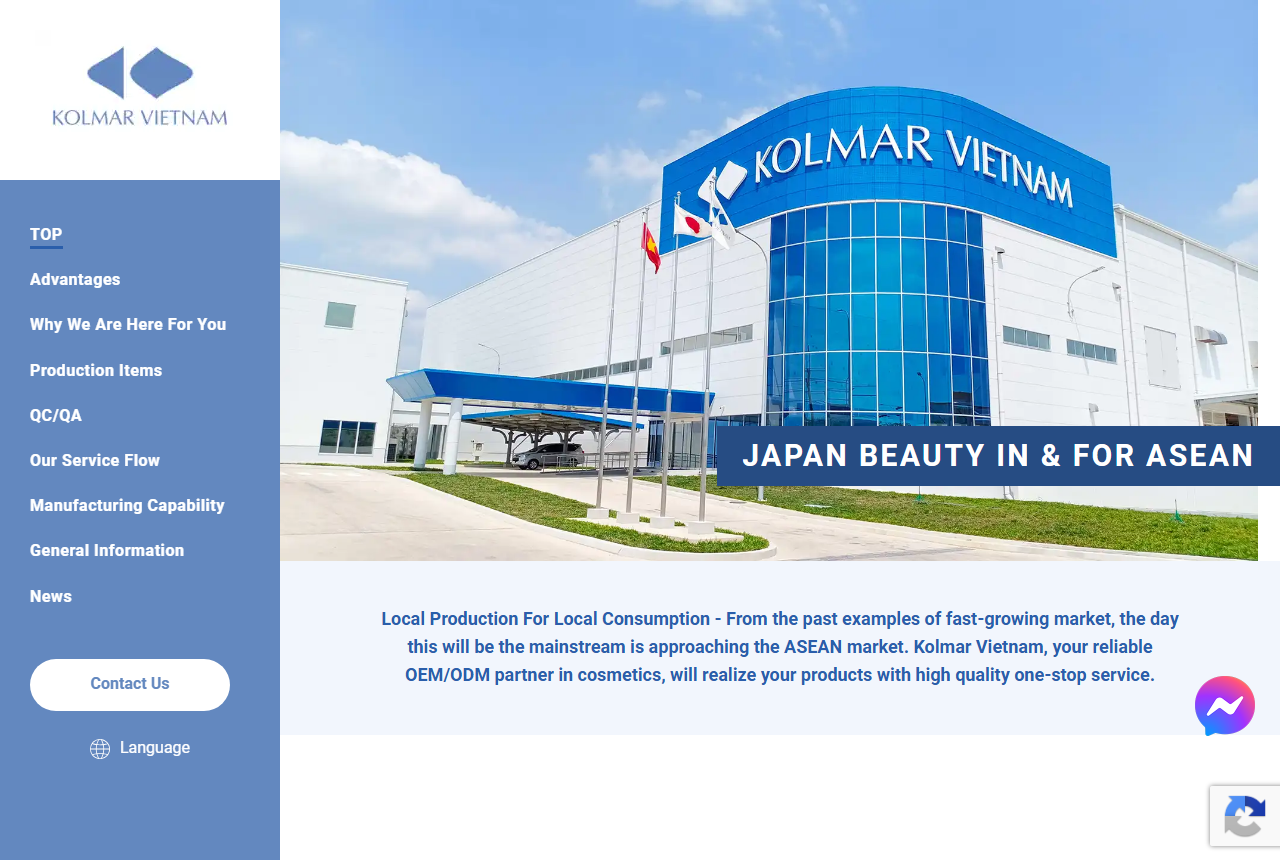
HQ: Dong Nai · Type: OEM/ODM, part of the global Kolmar network · Best known for: Korea/Japan-standard skincare production
Being part of the international Kolmar network gives this facility access to formulation know-how developed across Kolmar’s Korean and Japanese operations, applied inside an ASEAN-CGMP factory on the ground in Vietnam. For brands wanting Korea-adjacent formulation quality without importing finished product from Korea itself, this is arguably the strongest option currently operating in Vietnam.
3. Nayue Cosmetics Vietnam
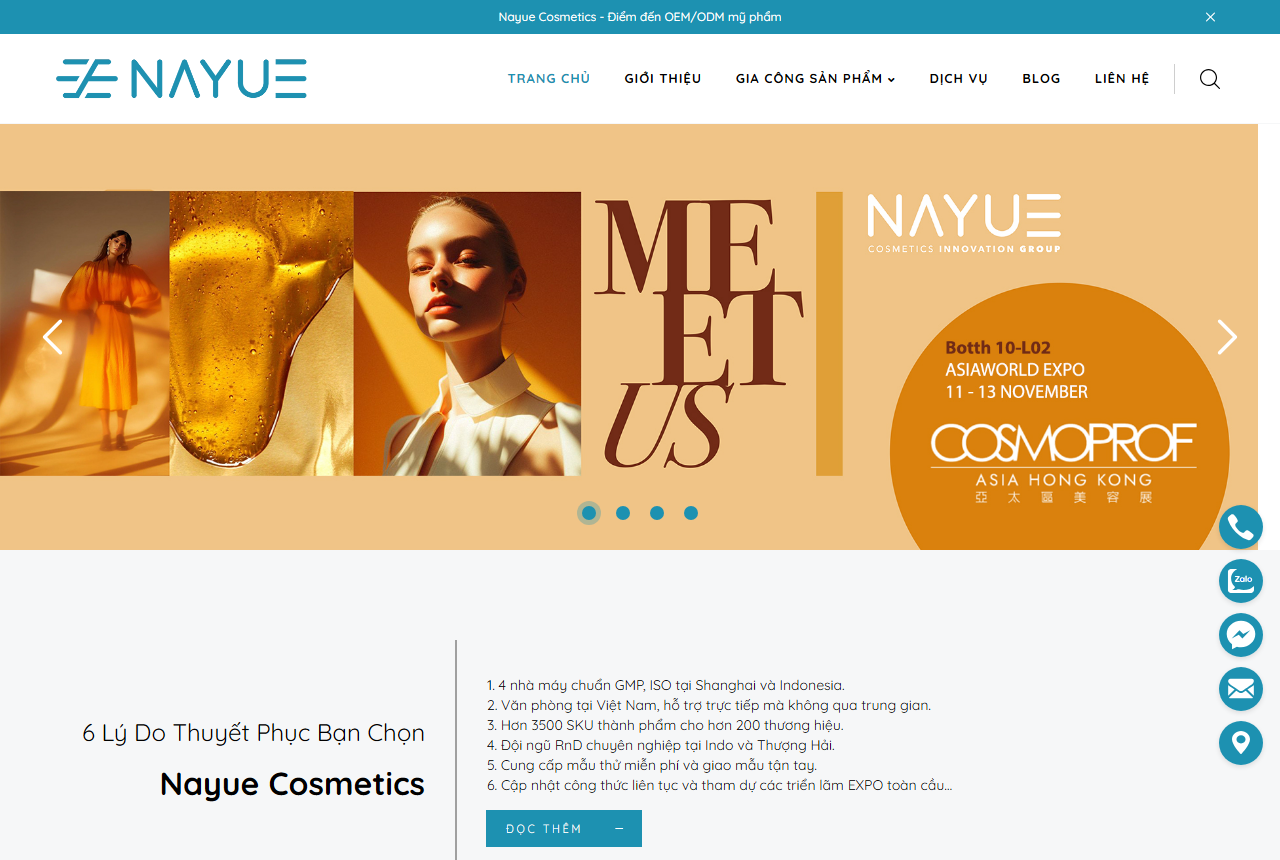
HQ: Ho Chi Minh City · Type: OEM/ODM · Best known for: End-to-end skincare & personal-care production
Nayue handles formulation, production and packaging in one workflow under ASEAN-CGMP standards, which reduces the number of separate vendors a brand needs to coordinate. That end-to-end structure tends to suit brands that would rather manage one relationship than stitch together formulation, filling and packaging separately.
Visit Nayue Cosmetics Vietnam →
4. Saigon Cosmetics Corporation (SCC)
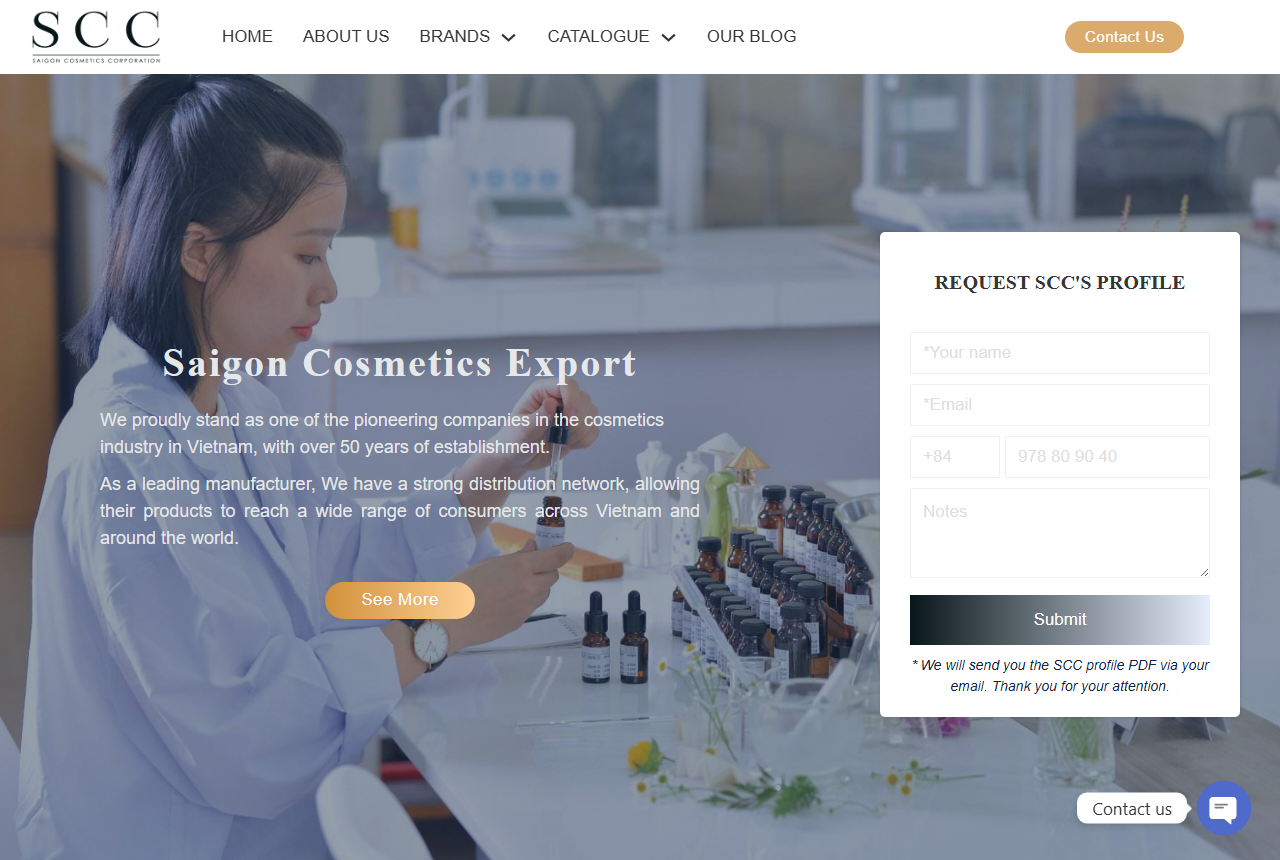
HQ: Ho Chi Minh City · Type: Manufacturer-exporter, 50+ years · Best known for: Cosmetics, personal care & perfume export
SCC is among the pioneering names in Vietnamese cosmetics manufacturing, with more than fifty years of operating history and export relationships spanning over ten countries out of its Ho Chi Minh City facility. Its category range — skincare, personal care and fragrance — combined with that export track record makes it one of the more dependable long-term partners on this list.
Visit Saigon Cosmetics Corporation →
5. Viet Huong Cosmetics
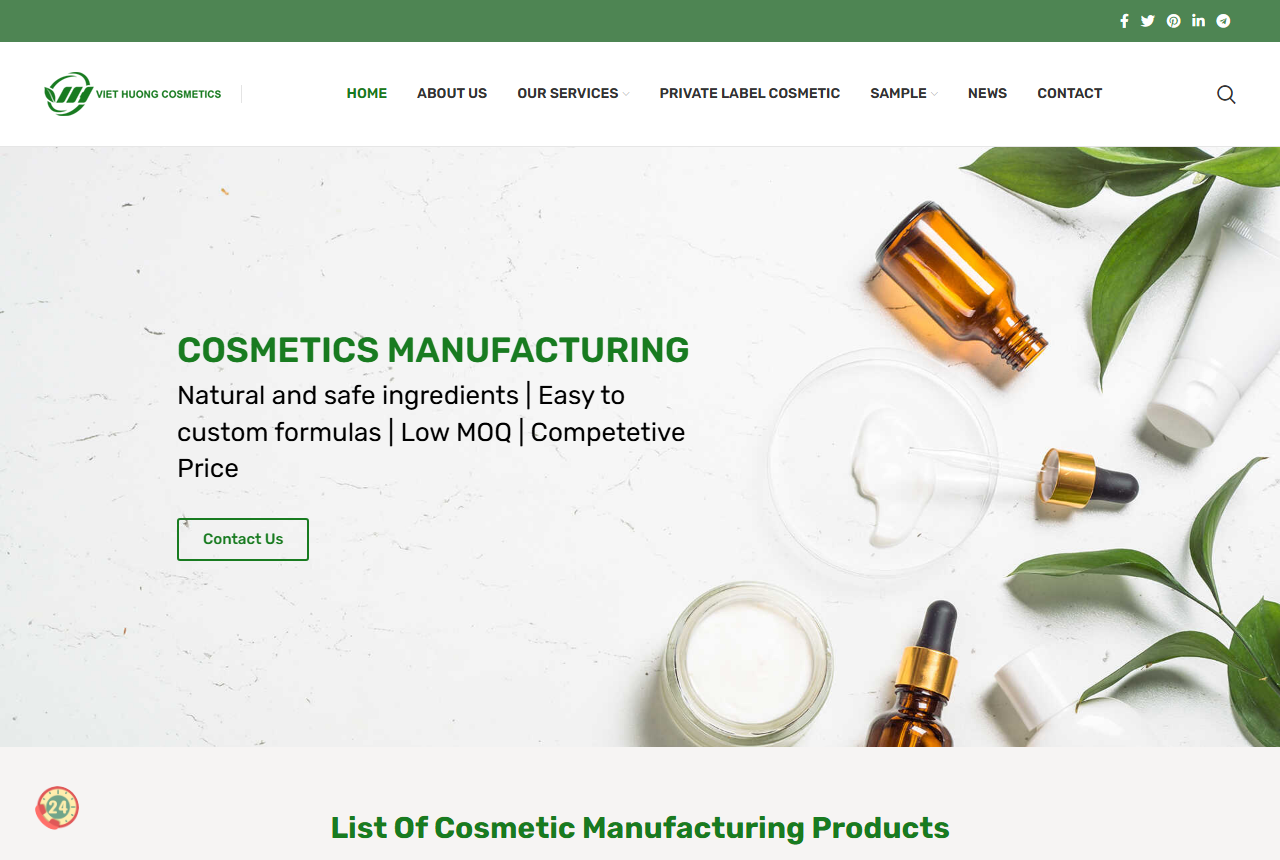
HQ: Ho Chi Minh City · Type: OEM/ODM + private label · Best known for: High-volume skincare production, large formula library
Operating from a roughly 2,300 square-metre ASEAN-CGMP and ISO 22716 facility, Viet Huong turns out around a million products a month and maintains a library of more than 300 exclusive formulas. That combination of throughput and ready formulation options makes it well suited to brands that need reliable volume without a lengthy custom-development cycle.
6. Vimac Cosmetics
HQ: Ho Chi Minh City · Type: Contract manufacturer · Best known for: Cost- and time-efficient skincare production
Vimac positions its whole service around cutting cost and turnaround time for brands, handling formulation, production and packaging under ASEAN-CGMP and Vietnam DAV requirements. For brands prioritising speed and budget over deep customisation, that operational focus is a genuine differentiator rather than just marketing language.
Sourcing considerations
ASEAN-CGMP production and DAV oversight give Vietnamese manufacturing a solid regulatory floor, but that clearance is specific to Vietnam — it doesn’t carry over automatically to wherever a brand actually sells its finished product. A Malaysian brand producing through any of the manufacturers above still needs to complete NPRA cosmetic notification before the product can legally reach Malaysian shelves, exactly as it would for a locally-made product. The same principle holds for any other export market a brand is targeting.
Before signing with a Vietnamese manufacturer, confirm current ASEAN-CGMP and, where relevant, ISO 22716 certification, ask directly about MOQs for your specific product format, and clarify who owns export documentation for your target markets. For background on how contract manufacturing works more broadly, see our explainer on what OEM means in practice, and browse further country profiles in our OEM Manufacturer archive.
Why some brands choose Vietnam over other ASEAN hubs
Vietnam’s pitch to buyers isn’t that it out-scales Thailand or out-specialises Korea — it’s that a handful of factories, several linked to international networks like Kolmar, deliver genuinely competitive formulation quality at a lower cost base than the more established regional hubs. That combination has made it an increasingly common second or third sourcing option for brands already manufacturing elsewhere in Asia who want to diversify supply chain risk without sacrificing much on quality.
The trade-off is depth: Vietnam’s OEM/ODM sector is still smaller and less specialised than Thailand’s or Malaysia’s, which means fewer niche options for categories like colour cosmetics or advanced actives. Brands with straightforward skincare or personal-care programmes tend to get the most value here; those needing highly specialised formulation may still find a better match in a more mature manufacturing hub.
What buyers should know before approaching Vietnamese factories
Vietnam’s cosmetics manufacturing sector is younger and smaller than Thailand’s or Malaysia’s, which shows up most clearly in how few large-scale, independently Vietnamese-owned players there are on any credible shortlist — several of the strongest options, Kolmar Vietnam included, are backed by international networks rather than purely domestic capital. That’s not necessarily a downside for buyers; it often means access to more mature quality-management systems than a young standalone factory could build on its own, but it’s worth knowing going in that “Vietnamese manufacturer” doesn’t always mean fully independent Vietnamese ownership.
Ho Chi Minh City dominates as the production hub for nearly every manufacturer on this list, which concentrates supply-chain and logistics infrastructure in one metro area — a practical advantage if you’re also sourcing packaging or components locally. As with any offshore manufacturing decision, a factory audit, sample production run, or a trusted local agent remains the most reliable way to confirm real capacity and quality control before committing budget, rather than relying on a company’s own website claims.
Frequently asked questions
Why manufacture cosmetics in Vietnam rather than elsewhere in Asia?
Vietnam offers competitive production costs, ASEAN-CGMP-certified factories and steadily improving formulation expertise, making it a credible alternative to more established Asian manufacturing hubs, particularly for skincare and personal-care lines with straightforward formulation needs.
How is cosmetics manufacturing regulated in Vietnam?
Cosmetics are regulated by the Drug Administration of Vietnam (DAV), under the Ministry of Health, with ASEAN-CGMP as the core manufacturing standard. Always confirm current certifications, MOQs and export documentation directly with the manufacturer rather than relying on older marketing material.
What kind of brands is the Vietnamese manufacturing sector best suited to?
Brands with straightforward skincare or personal-care formulations, and those wanting a lower-cost alternative to more established ASEAN hubs, tend to get the most value from Vietnamese manufacturers. Highly specialised categories may still be better served elsewhere in the region. Brands weighing a first Vietnamese production run alongside an existing supplier in Thailand, Malaysia or China should treat it as a supply-chain diversification move rather than a wholesale switch, at least until the relationship and quality control have been proven over a few production cycles.
Do Vietnamese manufacturers support export documentation?
Several, including Saigon Cosmetics Corporation and Viet Huong, have decades of export experience and can support documentation for multiple markets — but always verify current export capability and target-market experience directly before committing.
Is it better to work directly with a Vietnamese factory or through an agent?
It depends on your familiarity with the market. Larger, internationally-linked manufacturers like Kolmar Vietnam typically have English-speaking export teams used to working directly with overseas brands, while smaller independent factories may be easier to manage through a local sourcing agent who can handle language, negotiation and on-site quality checks on your behalf.
This article is an independent industry overview, not a paid endorsement or referral. Company details change — always verify current certifications, capabilities and MOQs directly with the manufacturer before signing a contract.
About the author
Dee Truong is a Vietnam-based professional with experience in the beauty and consumer-product sector. Her interests include product development, market trends and the commercial side of bringing consumer products from concept to market. LinkedIn