
By Julius Lim · Cosmetic Science & Skincare Development · Published 11 Jul 2026
Shampoo, conditioner, scalp treatments and styling products all live in the same manufacturing bracket: heavy on liquids and emulsions, sensitive to viscosity control, and unforgiving if a formula separates on the shelf. Malaysia’s hair care manufacturing base spans small, agile private-label houses through to corporate-scale contract plants, which gives brands at very different stages a workable path to production. This guide profiles six manufacturers active in the category and what each is realistically suited for.
Key takeaways
- Smaller, formulation-flexible players suit first-time or low-volume hair care brands.
- Larger, established plants are built for repeat, high-volume orders rather than one-off runs.
- Halal certification, MOQ and lead time vary by manufacturer and should be confirmed directly, not assumed from a website.
- Buyers selling into Malaysia still need to arrange their own NPRA cosmetic notification regardless of which factory they use.
How we chose this list
OEMReview selected manufacturers with a documented hair care production line, an operating website, and a track record verifiable through public company information. The order below is alphabetical rather than a ranking. Buyers should treat this as a shortlist for due diligence, not a final recommendation.
1. A1 Kilang Kosmetik
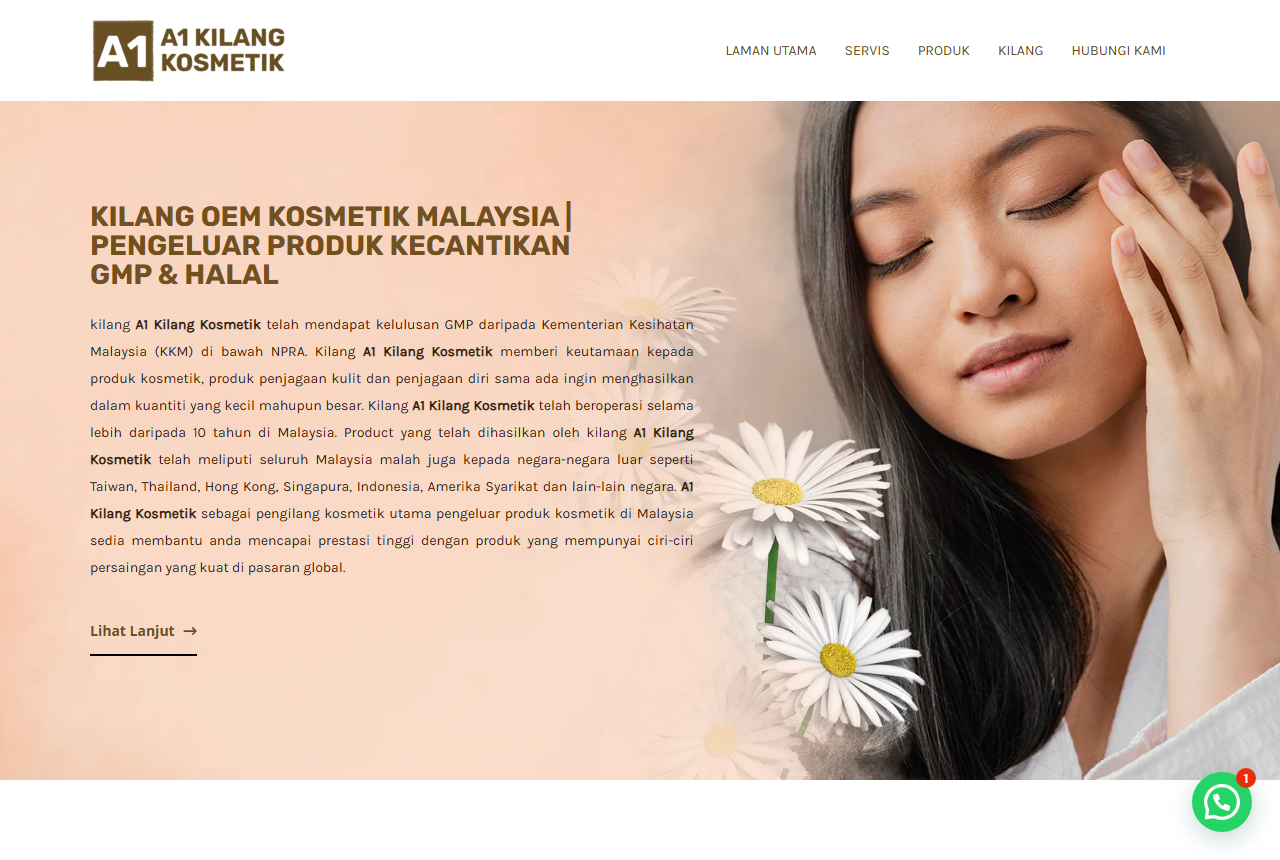
Location: Pengkalan, Perak · Focus: Halal beauty and personal care · Website: www.a1kilangkosmetik.com
A1 built its reputation with online-first and KOL-driven beauty brands rather than legacy retail names, which shows in how it structures onboarding for smaller batch runs. Its ISO 22716 cGMP line and in-house R&D support give newer hair care labels a way to get a formula tested and registered without a large in-house team.
2. Bodibasixs Manufacturing Sdn. Bhd.
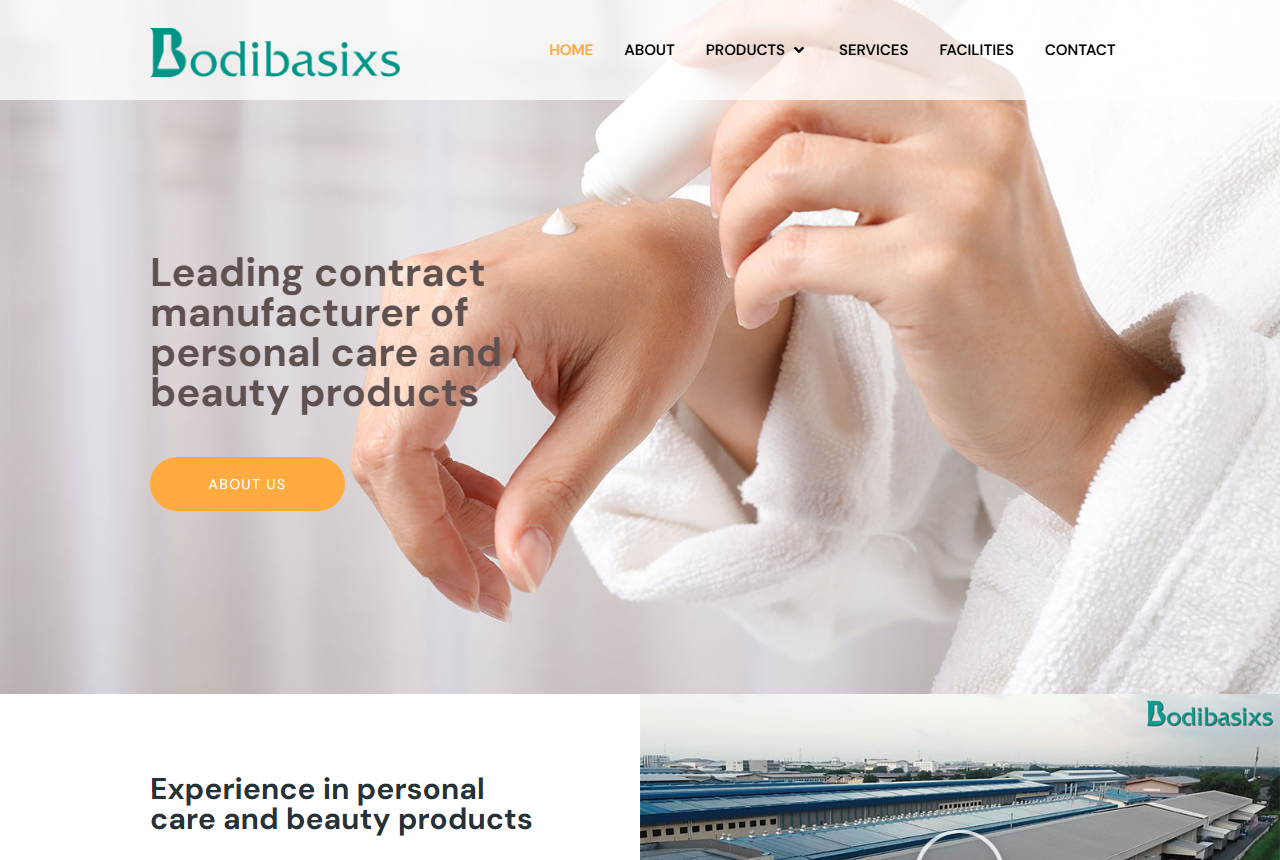
Location: Klang, Selangor · Focus: Personal, hair and home care · Website: bodibasixs.com
Backed by Japanese ownership through Nisshin Chemicals, Bodibasixs runs at a scale that suits brands with an established sales channel already moving volume, rather than a first small test batch. Its cross-category plant (hair care alongside personal and home care) can also be useful for brands planning to expand a hair range into adjacent categories later.
Visit Bodibasixs Manufacturing Sdn. Bhd. →
3. Dr Orizi (M) Sdn. Bhd. | ORIZI Group
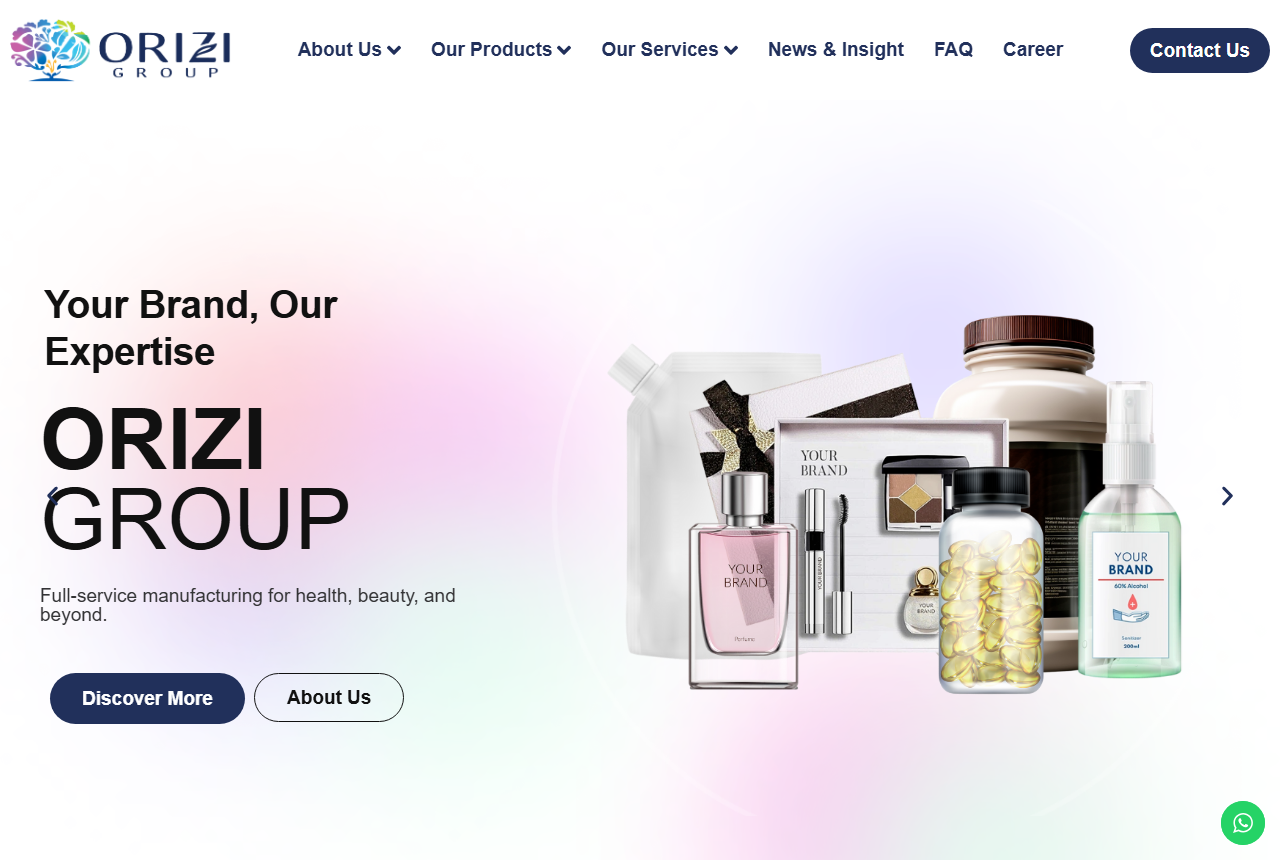
Location: Ipoh, Perak · Focus: Skincare, hair care, personal care, colour cosmetics · Website: www.orizigroup.com
Dr Orizi runs hair care within a broader OEM/ODM ecosystem rather than as a standalone line, which means a brand can develop a shampoo or treatment alongside skincare or personal care SKUs under one relationship. Its low-MOQ private label model and stated NPRA notification support make it a common starting point for brands entering hair care for the first time.
In October 2026, Dr Orizi’s parent group, ORIZI Group, was listed by ASEAN Records and ASIA Records as the largest integrated health, wellness and beauty OEM manufacturing group by number of manufacturing certifications held (24 credentials across 11 schemes).
Visit Dr Orizi (M) Sdn. Bhd. | ORIZI Group →
4. McBride Malaysia Sdn. Bhd.

Location: Klang, Selangor · Focus: Personal care and household contract manufacturing · Website: mcbride.com.my
McBride Malaysia is a subsidiary of the UK-listed McBride plc, operating since 1986 with a corporate and retailer client base rather than direct-to-consumer startups. Its scale makes it a better fit for private-label retail programmes than for a brand’s first hair care launch.
Visit McBride Malaysia Sdn. Bhd. →
5. Sky Resources Sdn. Bhd.
Location: Penang · Focus: Skincare, personal care, hair, oral, baby and body care · Website: sky-resources.com
Operating since 1991, Sky Resources has built up decades of GMP manufacturing experience across a wide category range, which gives it institutional knowledge that newer factories may lack. Its own JAKIM halal certificate (reference series from 2008) lists 24 products, all under Sky’s own brands; a further 31 Sky-made products, mostly make-up and hair care, are halal-listed under seven client brands’ own certificates (checked 15 September 2026). Its turnkey private-label service is aimed at brands that want the manufacturer to handle most of the formulation and registration process rather than bringing a finished spec.
Visit Sky Resources Sdn. Bhd. →
6. Wei Liam Costotech Sdn. Bhd.
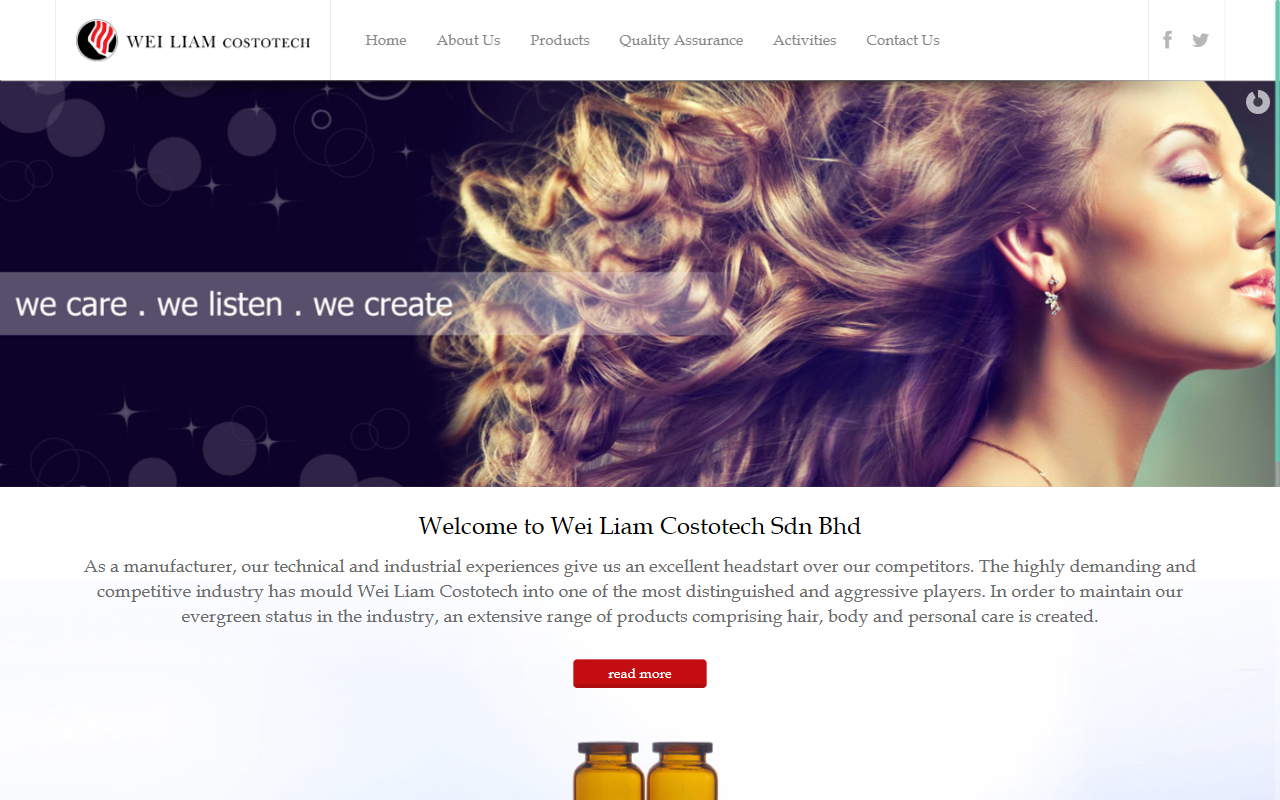
Location: Balakong, Selangor · Focus: Hair care, body and personal care · Website: weiliam.com.my
Wei Liam Costotech, based in Balakong, Selangor, makes hair, body and personal care products, and on the public registry it is Malaysia’s largest hair-care manufacturer: NPRA lists more than 400 active hair-product notifications under its name, more than any other local manufacturer, within 756 active notifications overall — 673 of them for 77 outside brand owners (September 2026). It holds a JAKIM halal certificate under the OEM scheme, valid to February 2027; ask which of your SKUs it will cover. A fit for a hair brand that wants a factory whose everyday work is shampoos, conditioners and treatments.
Visit Wei Liam Costotech Sdn. Bhd. →
What makes hair care formulation different from skincare
Brands moving into hair care after launching a skincare line sometimes assume the two categories share a similar manufacturing path. In practice, hair care brings its own set of technical demands that change how a factory approaches production. Shampoos and conditioners rely heavily on surfactant systems and cationic conditioning agents, which behave differently in a wash-off product than the emulsions used in leave-on skincare. A factory that is strong in cream and serum production is not automatically equally strong in surfactant-based formulation, so it is worth asking a prospective manufacturer directly about its hair care-specific R&D experience rather than assuming competence transfers from its skincare portfolio.
Viscosity control is another point of difference. Shampoos and conditioners need to hold a specific thickness across a range of storage temperatures, and Malaysia’s tropical climate makes this more demanding than it would be in a temperate market. A formula that separates or thins out after a few weeks in a hot warehouse is a common and avoidable failure, and it is one of the reasons stability testing matters more for hair care than buyers sometimes expect going in.
Packaging and fill considerations for hair care lines
Hair care products are typically sold in larger pack sizes than skincare — 250ml to 1L bottles rather than 30-50ml jars — which changes the filling equipment a factory needs and can affect MOQ. A manufacturer set up primarily for small-batch serum or cream filling may not have the pump-and-cap line configured for higher-volume liquid filling that shampoo and conditioner require. Buyers should ask a shortlisted factory what pack formats and closures (pump, flip-top, screw cap) it currently runs, since retooling for a new format can add cost and lead time that isn’t obvious from a general capability statement.
Preservative system choice also carries more weight in hair care because these are typically water-rich, wash-off products used in a bathroom environment with repeated water contact — conditions that are friendlier to microbial growth than a sealed skincare jar. A factory with a documented preservative efficacy testing process, and ideally a track record with Halal-compliant preservative systems if that is a requirement, is worth prioritising over one that treats preservation as an afterthought.
Timeline expectations for a first hair care production run
New brands are often surprised by how long the process takes from initial brief to shelf-ready stock. A realistic timeline for a custom hair care formula, from first meeting to first delivered batch, typically runs several months once formulation development, stability testing, NPRA notification and initial production scheduling are all accounted for. Existing ODM formulas that only need rebranding move faster, sometimes within a few weeks, since the formulation and stability work has already been done. Brands under time pressure to launch should ask upfront whether a manufacturer is proposing a custom OEM formula or an existing ODM base, since the two paths carry very different timelines even when the finished product looks similar on the shelf.
Sourcing considerations
Picking a factory from a list is the easy part; getting a hair care product to market legally in Malaysia is the harder part. Every finished cosmetic product, regardless of which OEM makes it, still needs to go through NPRA cosmetic notification before it can be sold, and this obligation sits with the brand owner, not the manufacturer. Buyers should also ask specifically about scalp-product stability testing, since hair treatments and serums are more prone to separation and preservative failure than simple shampoos, and about whether a factory’s claimed Halal status covers the specific SKU being produced, not just the facility as a whole.
Frequently asked questions
Do I need to register a hair care product with NPRA before selling it in Malaysia?
Yes. Cosmetic products, including shampoos, conditioners and hair treatments, sold in Malaysia require notification with the National Pharmaceutical Regulatory Agency (NPRA) regardless of where they are manufactured. See our regulation and compliance guides for the notification process.
What MOQ is typical for a hair care private-label order?
MOQs vary widely between the manufacturers above, from smaller batches suited to new brands to larger production runs aimed at established retail volume. Confirm the exact figure, along with lead time and unit cost, directly with each factory before committing.
Is Halal certification standard for Malaysian hair care manufacturers?
Many hold or support JAKIM Halal certification, but certification scope can differ by product line within the same factory. Ask for the certificate covering your specific formula rather than assuming a general company-wide claim applies.
What’s the difference between OEM and ODM for hair care products?
An OEM manufacturer produces to a brand’s own formula and spec, while an ODM manufacturer offers its own existing formulations that a brand can license and rebrand. Many of the companies above offer both models; see our explainer on what OEM means for more detail.
Update history: updated 14 September 2026: Eng Kah Enterprise replaced by Wei Liam Costotech, the largest hair-care manufacturer on Malaysia’s NPRA registry; entries renumbered alphabetically. Updated 22 October 2026: added ORIZI Group’s ASEAN Records and ASIA Records listing.
Verify certifications, MOQ, pricing and current capabilities directly with each company before entering a contract.
About the author
Julius Lim is a Malaysian skincare entrepreneur and cosmetic science professional with over 20 years of experience in skincare, product development and brand building. He holds an MBA and formal training in cosmetic science, with particular interest in the skin microbiome, Asian botanical ingredients and science-backed skincare. LinkedIn