
By Julius Lim · Cosmetic Science & Skincare Development · Published 11 Jul 2026
Sheet masks, serums and ampoules move fast — trend cycles in this segment can turn over in a single quarter, which puts a premium on manufacturers that can develop and launch quickly without cutting corners on stability. Malaysia has a small but capable cluster of factories set up specifically for this kind of fast-turn, lower-risk private label work. This guide profiles four of them and what separates a quick launch from a rushed one.
Key takeaways
- Custom formulation and fast-launch, template-based development are two different services — know which one you’re buying.
- Sheet mask essence stability and mask sheet material sourcing are specialist skills, not a given at every skincare factory.
- Sample and run accelerated stability testing before committing to a production order, especially for trend-driven, short-shelf-life launches.
- All finished products still require NPRA cosmetic notification before sale in Malaysia.
How we chose this list
OEMReview selected manufacturers with demonstrated sheet mask, serum or ampoule production capability, an active website and information that could be verified through public company records. Placement here was not paid for, and companies are listed alphabetically rather than ranked. Treat this as a starting shortlist, not a final decision.
1. A1 Kilang Kosmetik
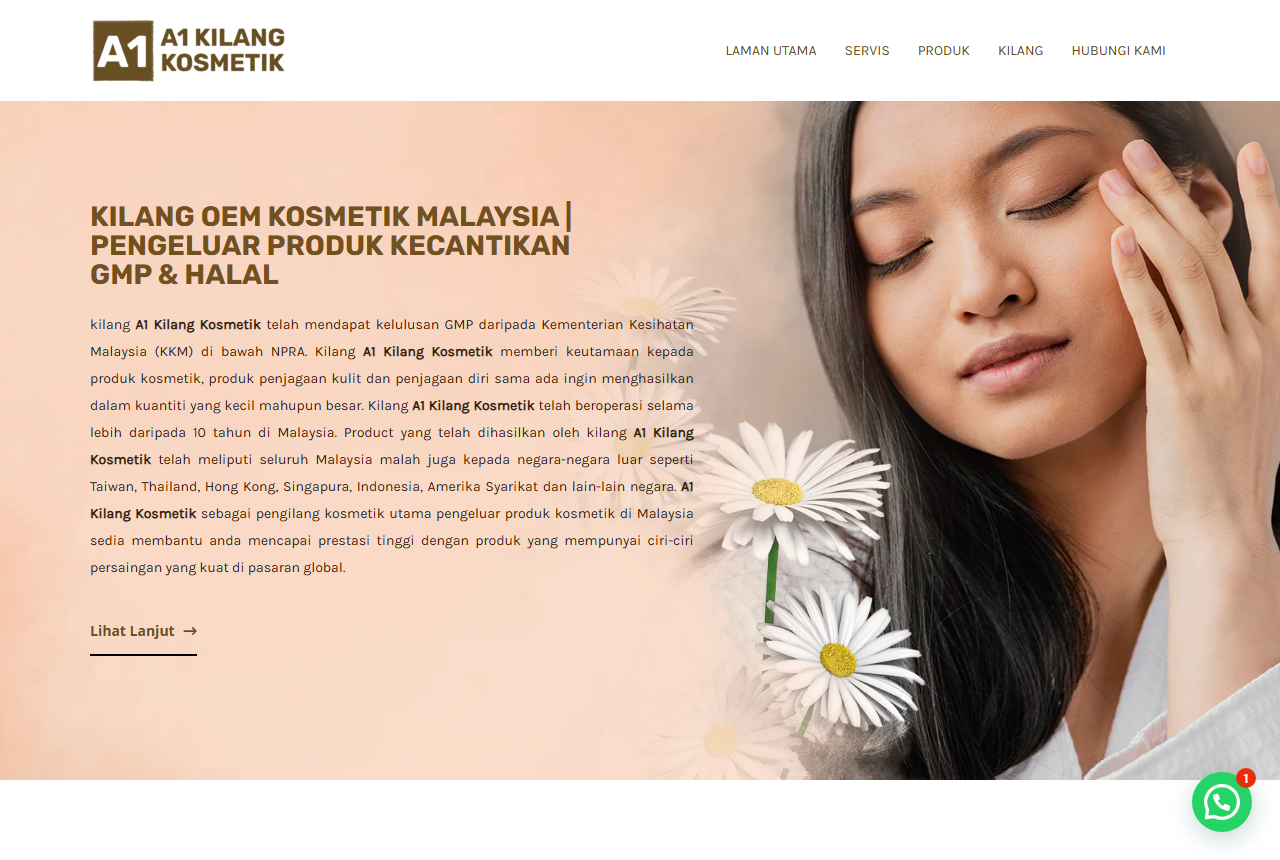
Location: Pengkalan, Perak · Focus: Halal beauty, skincare, personal care · Website: www.a1kilangkosmetik.com
A1’s client base leans heavily toward online and social-first beauty sellers, which means its process is built around getting a new SKU to market fast rather than around long enterprise sales cycles. Its ISO 22716 cGMP line and R&D support suit a brand testing a serum or mask concept before scaling into a larger order.
2. Dr Orizi (M) Sdn. Bhd. | ORIZI Group
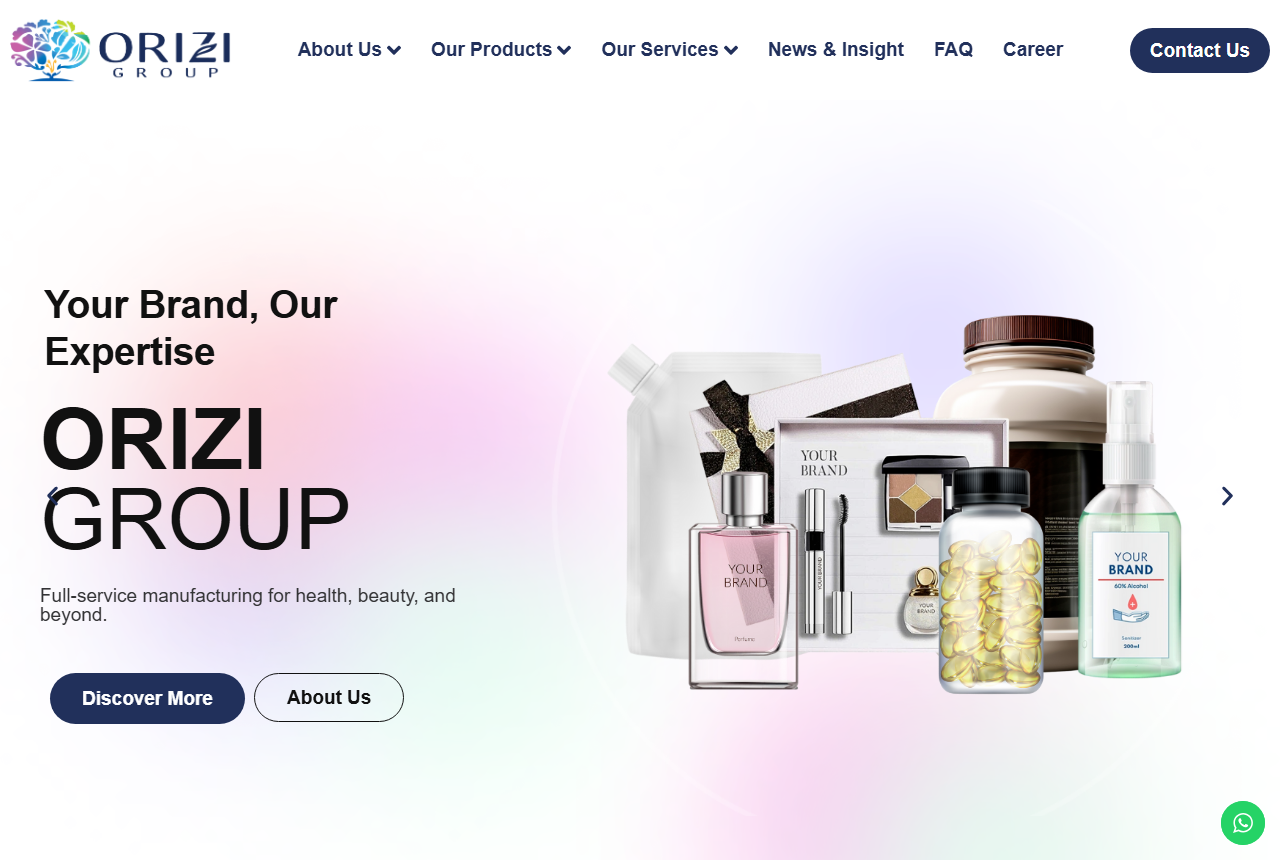
Location: Ipoh, Perak · Focus: Skincare, personal care, colour cosmetics, fragrance · Website: www.orizigroup.com
Dr Orizi’s advantage for sheet masks and serums is breadth: a brand can develop a mask essence alongside a matching serum or moisturiser under one roof, with GMP/ISO 22716 production and stated NPRA notification support built into the same relationship. Its low-MOQ private label model is aimed squarely at brands that don’t yet have the volume for a large single-product run.
In October 2026, Dr Orizi’s parent group, ORIZI Group, was listed by ASEAN Records and ASIA Records as the largest integrated health, wellness and beauty OEM manufacturing group by number of manufacturing certifications held (24 credentials across 11 schemes).
Visit Dr Orizi (M) Sdn. Bhd. | ORIZI Group →
3. MM Cosmetic Sdn. Bhd.
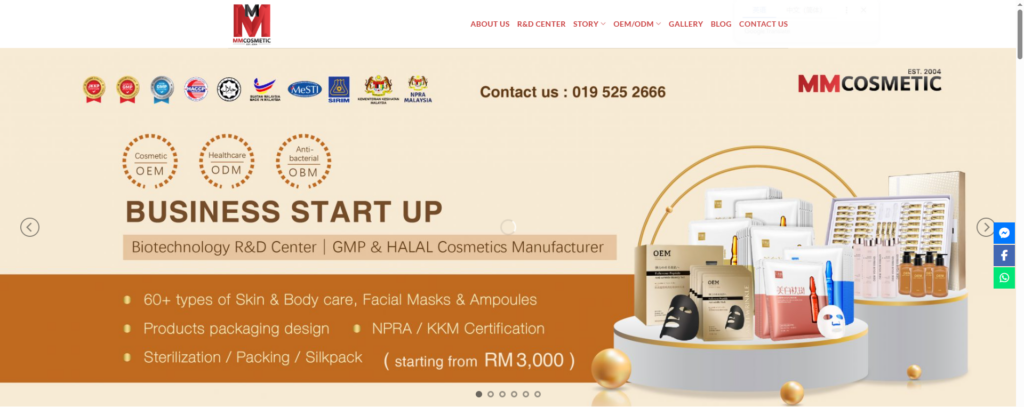
Location: Ulu Tiram, Johor · Focus: Masks, serums, ampoules, toners, sanitizers · Website: www.mmcosmeticgmp.com
MM Cosmetic markets itself specifically around ready concepts and fast private-label development, which makes it one of the more direct fits for a brand chasing a fast-moving trend rather than developing a fully bespoke formula from scratch. Its range across masks, serums and ampoules gives a brand room to expand a single launch into a small product line.
4. TCT Nutraceuticals Sdn. Bhd.
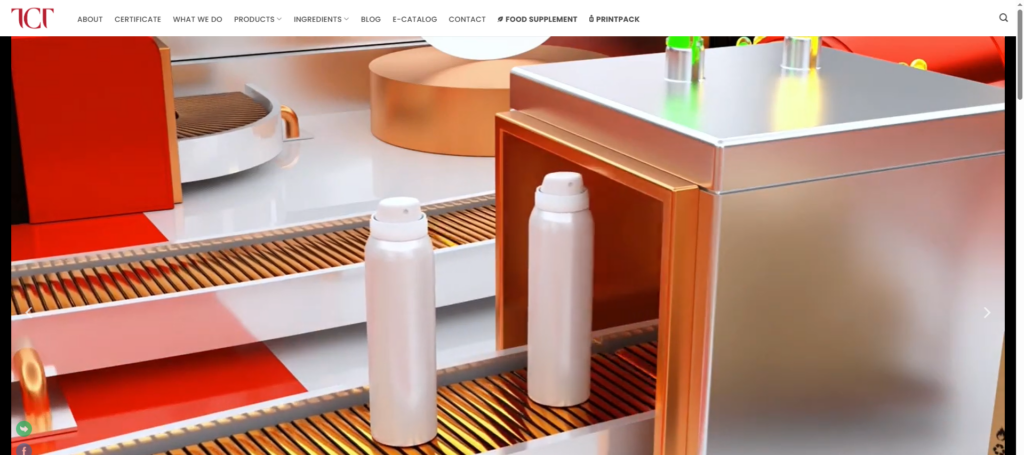
Location: Puchong, Selangor · Focus: Sheet masks, skincare, soap bars, aerosols · Website: tct.asia
TCT is one of the few Malaysian manufacturers with sheet mask production as a named specialism rather than a side offering, which matters given how specific sheet material sourcing and essence-to-sheet saturation can be. Its Bag-On-Valve aerosol capability and FDA OTC support also make it a candidate for brands planning to extend a mask line into spray-format products later.
Visit TCT Nutraceuticals Sdn. Bhd. →
Why sheet masks and serums need their own due diligence
Sheet masks carry a manufacturing risk that isn’t obvious from the outside: the mask sheet material itself (biocellulose, cotton, hydrogel and non-woven fibre all behave differently) has to be sourced reliably and consistently, and a factory that is strong in liquid skincare isn’t automatically equipped to manage this supply chain. Ask a shortlisted manufacturer directly what sheet materials it stocks or sources, and whether that sourcing is consistent batch to batch, since a material substitution mid-production run can change how a mask fits the face and how much essence it holds.
Serums and ampoules bring a different risk: these are usually formulated at higher active ingredient concentrations than a standard moisturiser, which raises the bar on stability testing and preservative efficacy. An active like vitamin C or a high-percentage niacinamide can degrade or discolour faster than a simple cream base, so accelerated stability data (typically run at elevated temperature over several weeks to simulate months of shelf life) is worth requesting before signing off on a formula, not after the first batch ships.
Working with fast-launch manufacturers without cutting corners
The appeal of a fast-launch manufacturer is speed, but speed and rigour don’t have to trade off against each other if a brand asks the right questions upfront. Confirm whether a “ready concept” formula has already passed its own stability and safety testing, or whether that testing still needs to happen once a brand’s specific packaging and branding are added — repackaging into a different container material can occasionally interact with a formula in ways the original testing didn’t cover. It is also worth asking how a manufacturer handles small trend-driven runs from a cost perspective, since a factory built for larger batches may price a short run in a way that erodes the margin advantage of moving quickly.
Halal status, where relevant, should also be confirmed at the ingredient level rather than assumed from a general facility certification, particularly for sheet masks where the essence formulation can include animal-derived collagen or other non-Halal actives unless specifically formulated otherwise.
Packaging choices that affect cost and shelf appeal
Packaging carries more weight in the sheet mask and serum category than in most other skincare formats, because the pouch, box or dropper bottle is often what drives a purchase decision at the point of sale or in a product photo, not just the formula inside. Sheet masks are typically sold in foil-lined sachets to protect the essence from oxidation and moisture loss, and the print quality and seal integrity on that sachet can matter as much to a brand’s positioning as the mask material itself. Serums, meanwhile, are commonly filled into amber or opaque glass or PET bottles with a dropper, since many active ingredients degrade under light exposure — a manufacturer defaulting to clear packaging for a light-sensitive active is a signal worth following up on.
Brands should also confirm minimum order quantities separately for packaging components and for the formula itself. It’s common for a factory’s MOQ on the liquid or mask essence to be lower than its MOQ on a custom-printed sachet or box, since packaging suppliers often have their own separate minimums. A brand that only checks the formula MOQ can be surprised later by a much higher packaging minimum that effectively sets the real order size.
Working with more than one manufacturer across a product line
Because sheet masks, serums and ampoules can each favour a different specialist, some brands end up splitting a single line across two manufacturers — for example, a serum formulated by one factory and a companion sheet mask produced by another with stronger sheet-material sourcing. This isn’t unusual, but it does add coordination overhead: launch timing, batch coding and shelf-life dating need to be tracked separately for each product, and a brand should decide upfront whether the convenience of one supplier or the specialism of two is the better trade-off for a given launch.
Sourcing considerations
As with any Malaysian OEM order, using one of the manufacturers above does not remove the brand owner’s own compliance obligations. Every finished sheet mask, serum or ampoule sold in Malaysia still requires NPRA cosmetic notification, and this responsibility sits with the brand, not the factory. Given how quickly this category trends and fades, it is also worth asking a manufacturer about minimum reorder timelines in case a launch performs better or worse than expected and volumes need to shift quickly in either direction.
Frequently asked questions
Is a “ready concept” formula safe to launch without further testing?
Not automatically. Confirm what stability and safety testing has already been completed on the base formula, and whether repackaging into your chosen container requires additional testing before launch.
Do sheet masks need different regulatory handling than serums?
No — both are cosmetic products under Malaysian rules and both require NPRA notification before sale, regardless of format.
What MOQ is realistic for a first sheet mask or serum order?
MOQs differ significantly between the manufacturers above depending on formula complexity and packaging. Confirm the number directly, along with lead time, since fast-launch categories often carry different minimums than standard skincare.
How long does accelerated stability testing take?
It typically runs several weeks at elevated temperature to simulate a longer real-world shelf life, though exact timelines depend on the formula and the manufacturer’s testing protocol. Ask for the specific timeline before finalising a launch date.
Can I split a mask-and-serum line across two different manufacturers?
Yes, and some brands do this deliberately to pair a serum specialist with a sheet-mask specialist. The trade-off is extra coordination on launch timing, batch coding and shelf-life tracking across two separate supply relationships.
This article is for informational purposes and does not constitute an endorsement of any manufacturer listed. Verify certifications, MOQ, pricing and current capabilities directly with each company before entering a contract.
About the author
Julius Lim is a Malaysian skincare entrepreneur and cosmetic science professional with over 20 years of experience in skincare, product development and brand building. He holds an MBA and formal training in cosmetic science, with particular interest in the skin microbiome, Asian botanical ingredients and science-backed skincare. LinkedIn