In June 2022, Fraser & Neave Holdings Bhd (F&NHB, Bursa Malaysia: 3689), the Malaysian maker of 100PLUS, F&N sparkling drinks and Carnation and Ideal canned milk, offered to buy out every Cocoaland Holdings Bhd share it did not already own. The offer was RM1.50 per share in cash, about RM488.15 million in total, and it turned Malaysia’s best-known gummy candy maker, the company behind the Lot 100 brand, from a listed associate into a wholly-owned subsidiary within five months. More than four years later, this Deal Retrospective looks at what F&N paid, why it paid it, what it said it would do with Cocoaland, and what the deal tells us about how Malaysia’s large food and beverage groups are using M&A to buy halal manufacturing capacity rather than build it.
Key Takeaways
- On 3 June 2022, Fraser & Neave Holdings Bhd proposed to acquire the 72.34% of Cocoaland Holdings Bhd it did not own (about 325.4 million shares) at RM1.50 per share, or RM488.15 million in cash funded by bank borrowings, via a members’ scheme of arrangement under Section 366 of Malaysia’s Companies Act 2016 (The Edge Malaysia, The Star).
- F&N already held 27.66% of Cocoaland as an associate before the offer, so the deal took its stake to 100%; the offer was about 17% above Cocoaland’s last traded price of RM1.28 on 2 June 2022 (OEMReview calculation from The Edge Malaysia data).
- The privatisation was completed on 4 November 2022 and Cocoaland was delisted from the Main Market of Bursa Malaysia on 25 November 2022, according to F&N’s own announcement.
- F&N framed halal packaged food as its “fourth pillar” of growth alongside soft drinks, dairy and its Thai business, and said it wanted to make Cocoaland East Asia’s most recognisable gummy manufacturer.
- The offer valued Cocoaland at 2.77 times its December 2021 net assets of RM243.32 million and about 17.7 times its FY2021 adjusted EBITDA of RM33.53 million (The Edge Malaysia).
Deal Snapshot
| Target | Cocoaland Holdings Bhd (gummies, candies, snacks, beverages; formerly Bursa Malaysia Main Market) |
| Acquirer | Fraser & Neave Holdings Bhd (F&NHB), part of the ThaiBev-controlled Fraser and Neave, Limited group |
| Announced | 3 June 2022 |
| Completed | 4 November 2022 (delisted 25 November 2022) |
| Stake acquired | 72.34% (about 325.4 million shares), taking F&N from 27.66% to 100% |
| Offer price | RM1.50 per share, cash |
| Deal value | RM488.15 million (about US$110 million at 2022 exchange rates) |
| Structure | Members’ scheme of arrangement, Section 366, Companies Act 2016 |
| Funding | Bank borrowings |
| Official websites | fn.com.my (Fraser & Neave Holdings, owner of Cocoaland) |
The Companies Behind the Deal
Cocoaland: Malaysia’s gummy specialist
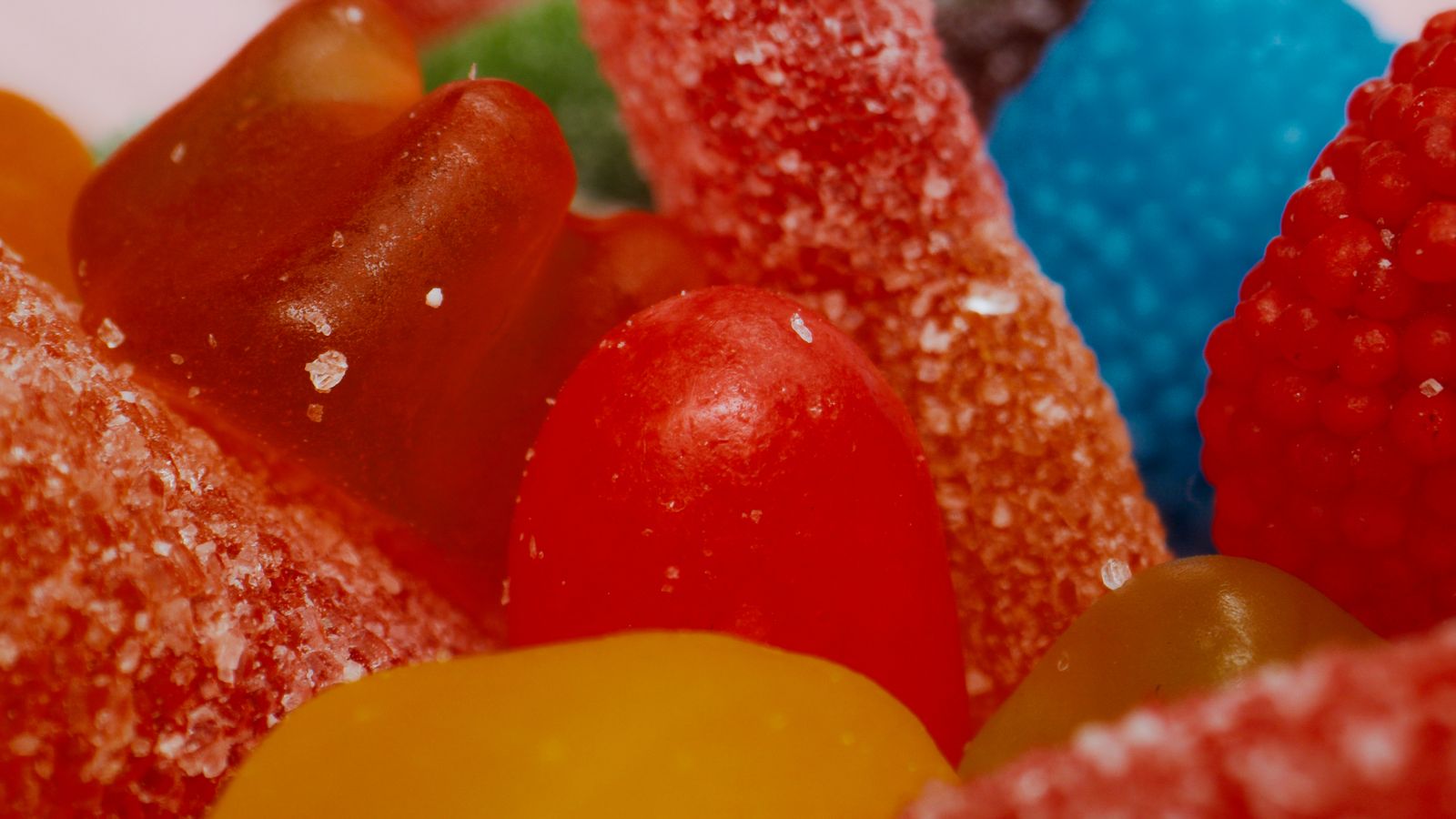
Cocoaland Holdings was built by two families, the Liews and the Laus, into a candy, snack and beverage manufacturer whose flagship Lot 100 fruit gummies became a fixture on Malaysian supermarket shelves and in export markets across Asia and the Middle East. At the time of the deal, F&N described Cocoaland as Malaysia’s largest gummy candy producer and an established contract manufacturer for local and multinational pharmaceutical customers, with four manufacturing plants in Malaysia, according to F&N’s November 2022 announcement. That contract manufacturing detail matters: Cocoaland was not only a brand owner but also an OEM supplier, the kind of business model we cover in our guides to the food, beverage and nutrition manufacturing sector.
Before the offer, Cocoaland’s largest shareholder was Leverage Success Sdn Bhd with 40.65%, or 182.87 million shares, a vehicle jointly controlled by members of the Liew and Lau families, The Edge Malaysia reported. Executive directors Liew Fook Meng, Lau Kee Von and Lau Pak Lam were among the founding-family figures named in the offer documents. Those founders were the biggest single beneficiaries of the cash exit.
F&N: a beverage and dairy group looking for a third leg
Fraser & Neave Holdings is the Malaysian-listed arm of Singapore’s Fraser and Neave, Limited, which is in turn controlled by Thai Beverage PCL. Its business has historically rested on soft drinks (100PLUS, F&N, SEASONS, OYOSHI) and dairy (Carnation, Ideal, Cap Junjung, Farmhouse), split between Malaysia and a large Thai dairy operation. Before the Cocoaland deal, packaged food was a small sideline, mainly the Sri Nona ketupat and sauces business. F&N had owned a minority stake in Cocoaland for years, but as an associate it had no control over Cocoaland’s factories, product pipeline or export strategy.
The Terms: What F&N Paid
The offer landed on 3 June 2022, after both companies requested a trading halt. F&N proposed to acquire all Cocoaland shares it did not already own, about 325.4 million shares or 72.34% of the share capital, at RM1.50 each in cash, for a total of RM488.15 million, The Star reported. F&N said it would fund the deal with bank borrowings and made clear that it did not intend to maintain Cocoaland’s listing status.
The deal was structured as a members’ scheme of arrangement under Section 366 of the Companies Act 2016. That route matters for minority shareholders: rather than a general offer that each holder accepts or rejects individually, a scheme binds all shareholders once it is approved by the required majority at a court-convened meeting and sanctioned by the High Court. As the existing 27.66% shareholder and offeror, F&N was an interested party, so approval effectively rested with the independent holders, led by the Liew and Lau families’ Leverage Success.
| Valuation metric | Value |
|---|---|
| Offer price per share | RM1.50 |
| Last traded price before offer (2 June 2022) | RM1.28 |
| Implied premium | About 17% (OEMReview calculation) |
| Price-to-book (net assets RM243.32m, 54 sen/share, 31 Dec 2021) | 2.77x |
| EV/adjusted EBITDA, FY2020 (EBITDA RM32.8m) | 18.47x |
| EV/adjusted EBITDA, FY2021 (EBITDA RM33.53m) | 17.74x |
These multiples, disclosed with the offer and reported by The Edge Malaysia, tell us F&N was not buying a bargain. Paying close to 18 times EBITDA and almost three times book value for a mid-sized confectionery maker is a full price by Bursa Malaysia standards, and it reflects a strategic buyer paying for control rather than a financial investor paying for cash flow.
Timeline: From Offer to Delisting
- 3 June 2022: Trading halt; F&N tables the RM1.50-per-share privatisation proposal.
- August 2022: Cocoaland shareholders approve the scheme of arrangement.
- 21 October 2022: Trading in Cocoaland shares is suspended.
- 4 November 2022: F&N completes the acquisition; Cocoaland becomes a wholly-owned subsidiary.
- 25 November 2022: Cocoaland is delisted from the Main Market of Bursa Malaysia.
Cocoaland’s last reported quarter as a listed company was strong. For the third quarter ended 30 September 2022, revenue rose 55.8% year-on-year to RM71.7 million and net profit climbed to RM10.6 million from RM4.1 million, despite supply chain disruptions and rising costs, Marketing-Interactive reported from F&N’s completion announcement. In other words, F&N took full ownership just as post-pandemic demand for snacks was recovering.
Why F&N Wanted 100%: The “Fourth Pillar”
F&N’s stated rationale was that the deal supported its ambition to be a stable and sustainable F&B leader in ASEAN, with halal packaged food as its fourth pillar of growth. On completion, F&NHB chief executive Lim Yew Hoe said the company saw “huge potential to grow our share in this category”, particularly in healthy and functional products, and pointed out that Cocoaland’s four plants offered ample capacity for expansion. F&N appointed Bryan Lee Chee Kong as the new managing director of the Cocoaland group and brought in a fresh professional management team.
The integration plan F&N laid out had five concrete parts, according to its November 2022 press release:
- Distribution and procurement: push Cocoaland products through F&N’s domestic distribution network and use F&N’s purchasing scale on raw materials.
- Factory space: use vacant space at Cocoaland’s plants to increase Sri Nona ketupat production.
- Beverages: expand Cocoaland’s beverage line to manufacture more F&N products.
- New categories: launch plant-based and health and wellness products under Cocoaland’s brands.
- Exports: use Cocoaland’s snacks and confectionery to broaden F&N’s portfolio for overseas expansion, especially in halal markets, with the long-term goal of making Cocoaland East Asia’s most recognisable gummy manufacturer and a leading producer of chocolate products internationally.
At the time, CGS-CIMB analyst Walter Aw noted that the acquisition would let F&N offer a broader product range in line with its plan to expand the halal food pillar. The underlying logic was simple: F&N already had trucks going to every sundry shop and hypermarket in Malaysia carrying 100PLUS and condensed milk. Adding gummies and snacks to the same routes costs very little extra.
F&N Since the Deal
Four years on, F&N is a larger and more complex group, and packaged food is now an established part of its manufacturing footprint. The company says it runs 14 manufacturing plants in Malaysia and Thailand, including four packaged food plants, and owns 37 brands across 14 categories, according to its corporate website. For the financial year ended 30 September 2025, group revenue was about RM5.2 billion and profit after tax fell 5.4% to RM514.7 million, mainly because a Thai tax incentive expired, while F&B Malaysia revenue was RM2.96 billion and the board paid a total dividend of 65 sen per share, F&N reported. F&N does not break out Cocoaland’s numbers separately, so the deal’s standalone return cannot be measured from public filings.
The bigger capital story since 2022 has been dairy rather than snacks: F&N has committed about RM1.7 billion of Phase 1 capex to an integrated dairy farm in Gemas, Negeri Sembilan, and invested about US$37.5 million in a creamer plant in Cambodia. In the third quarter of FY2026 (to 30 June 2026), net profit rose to about RM96 million even as revenue fell, with Malaysian sales growing while Thailand and Indochina were hurt by Thailand–Cambodia border closures, BusinessToday reported. That divergence strengthens the case for the Cocoaland purchase in hindsight: a Malaysian-made, halal-certified snack business is exactly the kind of asset that diversifies F&N away from its dependence on Thai dairy.
My Take
My opinion: this was one of the more sensible privatisations on Bursa Malaysia in the post-pandemic period, but it was also a clear example of a big group paying full price because building the same thing from scratch would have taken a decade. F&N could have tried to develop its own gummy and snack range. Instead, it paid nearly 18 times EBITDA for four working halal-certified factories, a household brand in Malaysia, an export book reaching Asia and the Middle East, and a contract-manufacturing business with pharmaceutical clients. For a group with F&N’s distribution muscle, that is a shortcut worth paying for.
Who won? The Liew and Lau families, clearly. They got a cash exit at a 17% premium and close to three times book value for a business that had been trading on Bursa as an under-followed small cap. Minority shareholders also did reasonably well. Cocoaland had been a steady but unspectacular stock, and RM1.50 in cash was a fair price for people who had little realistic prospect of a rerating on their own.
Who lost? Arguably, Bursa Malaysia. Cocoaland was one of very few listed pure-play confectionery manufacturers in Malaysia, and its disappearance is part of a broader pattern I keep seeing in this series: a well-capitalised parent buys out its listed associate or subsidiary because a listing brings compliance costs and minority-interest friction without bringing much benefit. We saw the same logic when Scientex took Scientex Packaging private. Each of these deals makes sense on its own terms, but together they leave Malaysian investors with fewer listed consumer manufacturers to choose from.
The “fourth pillar” language is the part I would hold F&N to. Halal packaged food is a real opportunity: the halal snack market across Indonesia, the Middle East and Muslim-majority export destinations is large, and Malaysian halal certification carries weight in those markets. But four years after completion, F&N still reports Cocoaland inside its broader Malaysian F&B segment rather than as a stand-alone pillar, and the headline growth investments have gone into dairy farms in Gemas and creamer plants in Cambodia. If packaged food is truly a pillar, I would like to see F&N disclose it as one.
For the wider ASEAN confectionery sector, the deal now looks like an early signal. Roughly two years later, Affinity Equity Partners paid more than US$1 billion for Indonesia’s Yupi gummy maker, as we explained in our Yupi buyout analysis, and Indonesia’s Momogi group then moved to buy Vietnam’s Bibica, covered in our Bibica deal report. Gummy and snack factories with halal credentials and export reach have become strategic assets. F&N bought its one early and at a lower multiple than later buyers paid. My verdict: a good deal for F&N, a great one for the founders, and a missed opportunity for Bursa investors who wanted exposure to that theme through a listed stock.
What This Means for Malaysian Food Manufacturers
For founders of mid-sized Malaysian food and confectionery companies, the Cocoaland deal sets a useful reference point. A strategic buyer with existing distribution will pay for halal-certified capacity, recognised brands and export relationships, and it will pay more if the target already runs contract manufacturing for other brands. For brand owners who rely on OEM partners, it is a reminder that ownership of those factories can change quickly, and that the new parent may prioritise its own products when capacity gets tight. Companies building a brand through outsourced production can compare manufacturing options in our food, beverage and nutrition OEM directory, and readers following consolidation in Malaysian consumer food can see how Farm Fresh bought Inside Scoop for another example of a listed dairy group buying a halal snack and dessert brand.
Not every heritage snack maker finds a buyer. In October 2026 Lee Biscuits stopped production at its Pontian factory after 92 years, as its parent group left food manufacturing. Our analysis of the Lee Biscuits closure covers what that exit means for brands that rely on contract manufacturers.
Related Coverage on OEMReview
- Investment Insights: Malaysian and ASEAN M&A, profiles and companies to watch
- Affinity’s US$1.1 Billion Yupi Buyout: The Deal That Repriced ASEAN Food Manufacturing
- Scientex Completes RM147.82 Million Buyout to Take Scientex Packaging (SciPack) Fully Private
- Farm Fresh’s RM83.9 Million Inside Scoop Deal: A 2023 Deal Retrospective
- Indonesia’s Sari Murni Abadi (Momogi) Acquires 99% of Vietnam’s Bibica
Frequently Asked Questions
Who owns Cocoaland now?
Cocoaland Holdings is wholly owned by Fraser & Neave Holdings Bhd (F&NHB). F&N completed the acquisition of the 72.34% it did not already own on 4 November 2022, and Cocoaland was delisted from Bursa Malaysia on 25 November 2022. F&NHB is itself majority-owned by Singapore’s Fraser and Neave, Limited, which is controlled by Thai Beverage PCL.
How much did F&N pay to privatise Cocoaland?
F&N offered RM1.50 per share in cash for about 325.4 million Cocoaland shares, or 72.34% of the company, for a total of RM488.15 million (about US$110 million). The deal was funded with bank borrowings and carried out through a members’ scheme of arrangement under Section 366 of the Companies Act 2016.
Why did F&N buy Cocoaland?
F&N said the acquisition supported its ambition to be a leading ASEAN food and beverage group, with halal packaged food as its fourth pillar of growth. It planned to use its distribution network and purchasing scale, add plant-based and health and wellness products, expand exports to halal markets, and make Cocoaland East Asia’s most recognisable gummy manufacturer.
Is Cocoaland still listed on Bursa Malaysia?
No. Cocoaland Holdings Bhd shares were suspended on 21 October 2022 and the company was delisted from the Main Market of Bursa Malaysia on 25 November 2022 after F&N completed the privatisation.
What brands does Cocoaland make?
Cocoaland is best known for its Lot 100 fruit gummies and candies, and it also makes snacks, chocolate products and beverages. At the time of the deal it ran four manufacturing plants in Malaysia and was also a contract manufacturer for local and multinational pharmaceutical customers.
What premium did Cocoaland shareholders receive?
The RM1.50 offer was about 17% above Cocoaland’s last traded price of RM1.28 on 2 June 2022. It valued the company at 2.77 times its net assets as at 31 December 2021 and about 17.7 times its FY2021 adjusted EBITDA of RM33.53 million.
Sources
- Fraser & Neave Holdings, official website (fn.com.my)
- The Edge Malaysia, F&N to privatise Cocoaland at RM1.50 a share (3 Jun 2022)
- The Star, F&N proposes to acquire remaining stake in Cocoaland for RM488.15mil (3 Jun 2022)
- Fraser & Neave Holdings, F&NHB to Leverage Combined Strengths with Cocoaland to Expand Share in Packaged Food (25 Nov 2022)
- Marketing-Interactive, Fraser & Neave looks to grow in health and wellness post Cocoaland acquisition (Nov 2022)
- Fraser & Neave Holdings, F&NHB Posts Resilient Performance for FY2025 (Nov 2025)
- BusinessToday, Fraser & Neave Q3 profit rose 11.5% to RM96 million despite lower revenue (31 Jul 2026)
Disclaimer: This article is for informational and editorial purposes only. It is not a recommendation to buy or sell any securities and does not constitute investment advice.