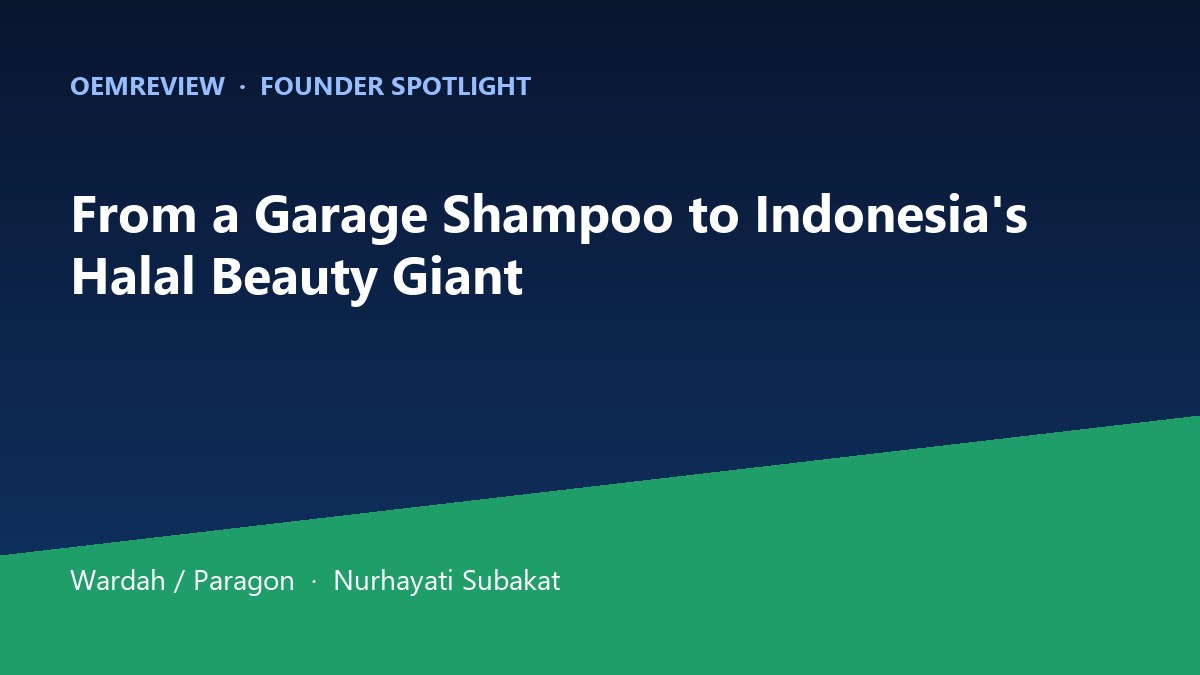
OEMReview’s Founder Spotlight series revisits publicly published interviews with consumer-product founders and draws out the manufacturing and product-development lessons most relevant to OEM and private-label brand owners. This edition looks at Wardah and its parent, Paragon Technology and Innovation — Indonesia’s largest cosmetics manufacturer, founded by Nurhayati Subakat.
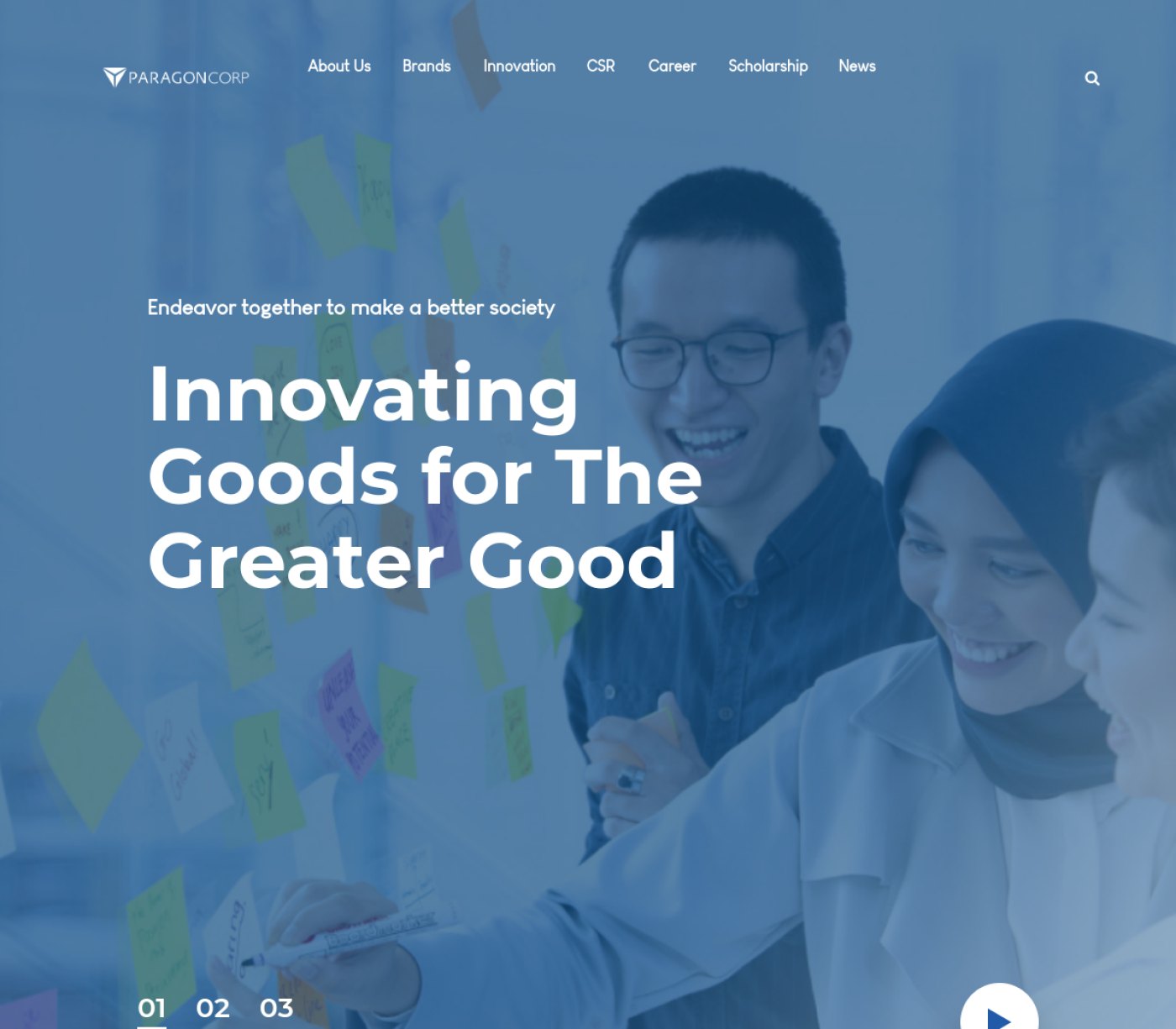
From a garage to a manufacturing group
Nurhayati Subakat trained as a pharmacist and worked in cosmetics quality control before starting her own business in 1985 — producing shampoo from her garage with a handful of staff. That small operation eventually became Paragon Technology and Innovation, today one of Indonesia’s largest cosmetics companies, with thousands of employees, multiple factories, and brands including Wardah, Make Over, Emina and Putri.
The path wasn’t smooth. A factory fire earlier in the journey brought the business to the edge of collapse under heavy losses and debt; she rebuilt with her family’s support and her employees’ commitment — a reminder that manufacturing resilience is as much about people as machines.
Halal manufacturing as a strategic decision
In 1995, Subakat launched Wardah as Indonesia’s first halal-certified cosmetics range — a bet on an underserved market that later looked visionary. “All women want to look beautiful and feel fresh, and Muslim women are no different,” she has said. “There were no halal beauty products at the time and I wanted women to have affordable access to products that were in keeping with their [faith].”
Crucially, halal here isn’t a label added at the end — it is a manufacturing discipline. Halal certification governs ingredients (no non-halal animal derivatives or ethyl alcohol), process, and segregation across the facility. Building that standard into the plant from the outset is exactly what let Wardah scale credibly and travel across borders.
“There were no halal beauty products at the time and I wanted women to have affordable access to products that were in keeping with their [faith].”
— Nurhayati Subakat, founder of Wardah / Paragon
What OEM & private-label brand-builders can learn
- Halal (or any compliance standard) is a moat when built in, not bolted on. Wardah’s early, genuine halal manufacturing became a durable advantage. If your market values a certification, design the facility and supply chain around it from day one.
- Owning production buys control — and resilience. Paragon’s vertical integration let it set its own quality and recover from disaster. For growing brands, the make-vs-outsource question is strategic, not just financial.
- Serve the customer the incumbents ignore. An entire category (affordable halal beauty) existed because no one had built for it. Underserved segments are often where a manufacturer-founder wins.
- Manufacturing resilience is human. Subakat rebuilt after a devastating fire on the strength of her team. Supplier and staff relationships are part of your production risk plan.
Written by Dee Truong for OEMReview. Brand names are used for identification and commentary only. Read more at The CEO Magazine.
About the author
Dee Truong is a Vietnam-based professional with experience in the beauty and consumer-product sector. Her interests include product development, market trends and the commercial side of bringing consumer products from concept to market. LinkedIn