OEMReview’s Founder Spotlight series revisits publicly published interviews with consumer-product founders and draws out the manufacturing and product-development lessons most relevant to OEM and private-label brand owners. This edition looks at Skin Inc, the Singapore-born personalised-skincare brand founded by Sabrina Tan.
A tech founder who rebooted skincare
Before Skin Inc, Sabrina Tan spent more than a decade in the technology industry, including roles connected to IBM, HP and Oracle. Struggling with sensitive, eczema-prone skin and a “vanity graveyard” of products that never quite worked, she concluded the problem wasn’t her — it was an industry that sorted people into a handful of skin types.
“I felt that the skincare industry was stereotyping us by skin type and ignored that each of us are unique individuals,” she has said. In 2008 she launched Skin Inc around a single idea: customise, don’t compromise.
Personalisation is a manufacturing problem, not just a marketing one
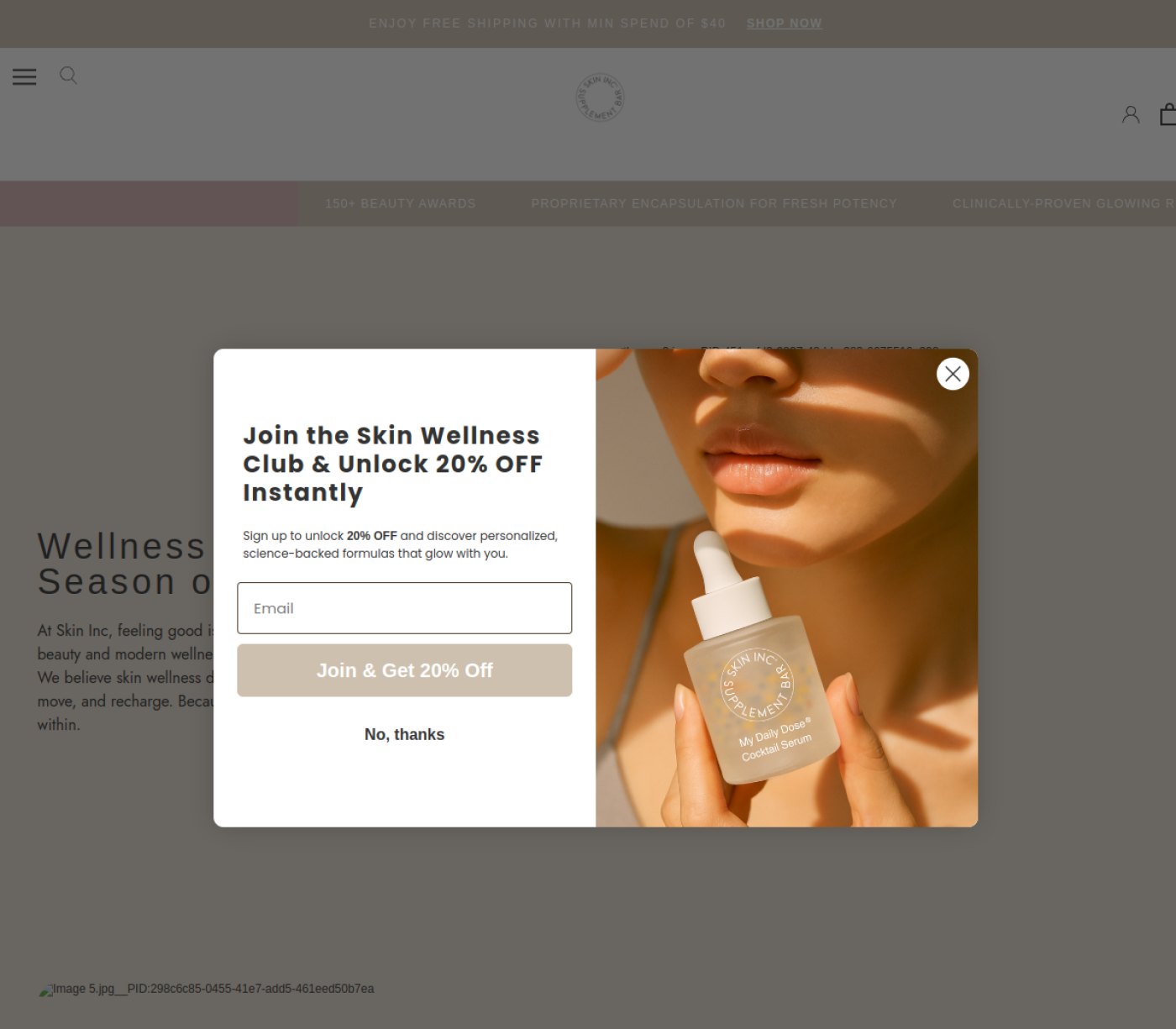
Skin Inc’s signature was a “custom serum cocktail bar” — letting a customer blend up to ten active ingredients into a serum matched to their own concerns. That sounds like a retail experience, but delivering it reliably is a supply-chain and formulation challenge: every active has to be stable, compatible and safe in combination, and the system has to be reproducible at scale.
To support that, Skin Inc built itself as a global operation from early on, with product research and manufacturing anchored in Japan — a base chosen for its skincare manufacturing rigour — while keeping its headquarters in Singapore. The brand went on to sell across dozens of cities and through retailers including Sephora and Nordstrom.
“Customise, don’t compromise.”
— Skin Inc’s founding philosophy, per Sabrina Tan
What OEM & private-label brand-builders can learn
- Choose your manufacturing base for its strengths. Anchoring R&D and production in Japan gave Skin Inc credibility and technical depth. Where your product is made is part of the product story — and its quality ceiling.
- Personalisation must be engineered upstream. A “mix your own” concept only works if the formulas are designed for stability and compatibility across combinations. Brief your manufacturer on the system, not just individual SKUs.
- A sharp point of view narrows the brief. “Customise, don’t compromise” told the factory exactly what to optimise for. A clear philosophy is a practical spec, not just a tagline.
- Founders can come from outside beauty. Tan’s tech background shaped how she thought about personalisation and systems. Domain-outsiders often see a manufacturing category’s assumptions more clearly.
Written by Dee Truong for OEMReview. Brand names are used for identification and commentary only. Read more at Beauty Insider.
About the author
Dee Truong is a Vietnam-based professional with experience in the beauty and consumer-product sector. Her interests include product development, market trends and the commercial side of bringing consumer products from concept to market. LinkedIn