By Julius Lim · Cosmetic Science & Skincare Development · Published 11 Jul 2026
Fragrance is a different manufacturing discipline from most other beauty categories: it involves working with a perfumer or fragrance house on scent composition, alcohol or oil-based carrier systems, and filling equipment that is rarely shared with skincare or colour cosmetics lines. Malaysia has a handful of manufacturers set up to handle this end-to-end, from custom scent development through to Halal-compliant filling and packaging. This guide profiles five of them for brands building a perfume or fragrance line.
Key takeaways
- Custom scent development and simple filling-and-packaging of an existing fragrance concentrate are different services with different costs.
- Halal-compliant fragrance production (typically alcohol-free or using permissible carriers) is a specific capability, not a default at every factory.
- Larger, listed manufacturers suit bigger production runs; smaller specialists suit custom or Halal-focused development.
- A finished fragrance product still needs its own NPRA cosmetic notification before sale in Malaysia.
How we chose this list
OEMReview selected manufacturers with demonstrated fragrance, perfumery or scented personal-care production, an operating website, and information verifiable through public company records. The list is ordered alphabetically rather than ranked. Use it as a starting point for due diligence, not a final decision.
1. A1 Kilang Kosmetik
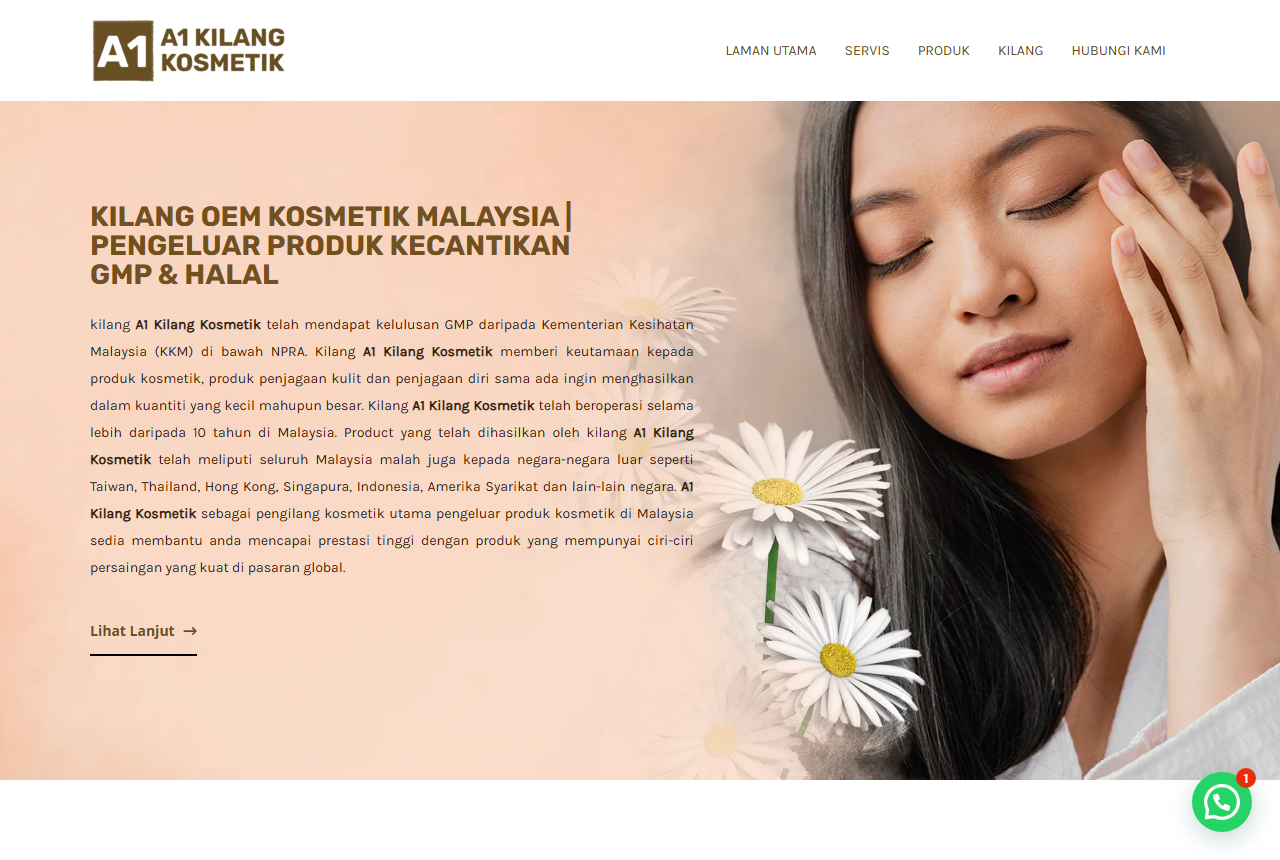
Location: Pengkalan, Perak · Focus: Halal beauty and personal care · Website: www.a1kilangkosmetik.com
A1’s focus on Halal beauty makes it a relevant option for scented personal-care products where a brand needs a fragrance element handled within an already Halal-compliant production environment, rather than sourcing scent and base separately. Its ISO 22716 cGMP line and R&D support suit smaller test batches before a brand commits to a full production order.
2. Bodibasixs Manufacturing Sdn. Bhd.
Location: Klang, Selangor · Focus: Personal care, beauty, hair and home care · Website: bodibasixs.com
Bodibasixs’ Japanese ownership through Nisshin Chemicals gives it larger-volume perfumery capacity than a boutique fragrance house, which suits a brand that already has proven demand and needs consistent large-batch output rather than small experimental runs. Its cross-category production also allows fragrance to be paired with body or personal care lines under one supplier.
Visit Bodibasixs Manufacturing Sdn. Bhd. →
3. Dr Orizi (M) Sdn. Bhd. | ORIZI Group
Location: Ipoh, Perak · Focus: Skincare, personal care, colour cosmetics, fragrance · Website: www.orizigroup.com
Dr Orizi lists fragrance as part of a wider OEM/ODM ecosystem rather than a standalone specialism, which can suit a brand that wants a scented product line developed alongside skincare or colour cosmetics rather than sourced from a separate perfumery. Its low-MOQ private label approach and stated NPRA notification support make it accessible for a first small fragrance run.
In October 2026, Dr Orizi’s parent group, ORIZI Group, was listed by ASEAN Records and ASIA Records as the largest integrated health, wellness and beauty OEM manufacturing group by number of manufacturing certifications held (24 credentials across 11 schemes).
Visit Dr Orizi (M) Sdn. Bhd. | ORIZI Group →
4. Eng Kah Enterprise Sdn. Bhd.
Location: Penang · Focus: Perfume, fragrance, personal care · Website: engkah.com
Fragrance is Eng Kah’s biggest line: 160 of the 389 active cosmetic notifications NPRA lists under its name are perfumes and fragrances, the fourth-largest fragrance book of any Malaysian manufacturer (September 2026), and in 2026 it added its own Simply EK perfume range. It produces from two plants in Bayan Lepas, Penang, having closed its Nilai plant in 2024. Its parent, Eng Kah Corporation Berhad, is listed on Bursa Malaysia; group revenue was RM31.5 million in FY2025 after five straight loss-making years, with almost no borrowings, and the annual reports are public. JAKIM’s halal directory lists two Eng Kah products, both fabric starch, so a halal fragrance brand should confirm coverage SKU by SKU. Read our Eng Kah company profile for the full financial and registry picture. Brands specifically sourcing a body spray or fragrance-mist format (rather than bottled perfume) can compare Eng Kah against two other specialists in OEMReview’s body spray and fragrance mist manufacturers review.
Visit Eng Kah Enterprise Sdn. Bhd. →
5. Intercosmetic Asia Pacific Sdn. Bhd.
Location: Sungai Buloh, Selangor · Focus: Colour cosmetics, makeup, perfumery · Website: www.intercosmeticasia.com/home
Intercosmetic pairs perfumery with colour cosmetics rather than treating fragrance as a standalone line, which can be useful for a brand wanting a signature scent to accompany a makeup range. Its global technology partnerships give it a further point of differentiation, though it does not appear in JAKIM’s halal directory (checked September 2026), so a halal-positioned brand should confirm certification before shortlisting it.
Visit Intercosmetic Asia Pacific Sdn. Bhd. →
Why fragrance manufacturing is its own specialism
Scent composition is typically handled by a trained perfumer working with a fragrance concentrate, or “juice,” built from a formula of aromatic compounds — a skill set that is distinct from the emulsion or surfactant chemistry used in skincare or hair care. Some Malaysian manufacturers develop custom concentrates in-house or through a fragrance house partner, while others work primarily with pre-existing concentrates supplied by the brand or a third party and focus on filling, dilution and packaging. Knowing which model a factory follows matters, because a bespoke scent development project carries a materially different cost, timeline and minimum order than filling an already-finished concentrate into bottles.
Carrier and format also shape the manufacturing process. Alcohol-based eau de parfum and eau de toilette formats are common globally but raise Halal compliance questions for some Muslim-majority markets, which is why alcohol-free or oil-based fragrance formats (attars, solid perfumes, and alcohol-free sprays) have a specific place in Malaysia’s fragrance manufacturing base. A brand targeting a Halal-conscious market should confirm not just whether a factory is Halal-certified generally, but specifically whether its fragrance carrier system meets that standard, since the base perfumery format is where compliance most often breaks down.
Questions worth asking before committing to a fragrance manufacturer
Fragrance concentration (parfum, eau de parfum, eau de toilette, eau de cologne) determines both scent longevity and cost, and a manufacturer should be able to advise on where a brand’s price point and positioning fit rather than defaulting to a single concentration for every client. It is also worth asking about batch-to-batch scent consistency testing, since raw aromatic materials — particularly natural extracts — can vary between harvests in ways that synthetic-only compositions do not, and a factory without a documented quality check here risks shipping batches that smell noticeably different from the approved sample.
Bottle and packaging compatibility is another area specific to fragrance: certain plastics and spray-pump components can interact with alcohol-based concentrates over time, causing leaching or degraded pump performance, so a factory experienced in fragrance filling should be able to confirm compatibility between concentrate and container before a full production run is committed.
MOQ and cost structure for a first fragrance run
Fragrance MOQs tend to be quoted separately for the concentrate and for the finished, packaged product, which can catch new brands off guard. A factory might accept a relatively small order of concentrate but still require a much larger bottling and packaging run to make the line economical, since fragrance filling equipment is often set up for batch efficiency at a certain minimum volume. It’s worth asking a manufacturer to break down its quote into concentrate cost, filling cost and packaging cost separately, rather than accepting a single bundled figure, so that the brand can see where the actual minimums and cost drivers sit.
Cost also varies significantly by concentration and complexity: an eau de toilette using a simpler, more synthetic-heavy composition will generally cost less to produce than a parfum-strength blend using natural extracts, both because of raw material cost and because higher-concentration formulas often need more extensive stability and compatibility testing before they’re approved for production.
Timeline for developing a custom fragrance
A bespoke scent, from initial briefing with a perfumer through to an approved final composition, commonly takes several months, since it usually involves multiple rounds of sample refinement before a brand signs off on the final blend. Brands under time pressure sometimes shortcut this by selecting from a manufacturer’s existing library of concentrates and applying only minor adjustments, which can compress the timeline to a matter of weeks but sacrifices some of the differentiation a fully custom scent would offer. Deciding which trade-off matters more — speed or exclusivity — should happen before a manufacturer is briefed, not partway through the development process.
Sourcing considerations
As with any Malaysian OEM order, choosing a factory from this list does not remove the brand owner’s own compliance responsibility. Fragrance and scented personal-care products sold in Malaysia still require NPRA cosmetic notification, and for Halal-market positioning, the certification should be confirmed against the specific carrier and concentrate used in the finished product, not assumed from a general facility-level Halal claim.
Frequently asked questions
Do I need a custom scent, or can I use an existing fragrance concentrate?
Both options exist. Custom scent development through a perfumer costs more and takes longer but produces a proprietary composition; using an existing concentrate is faster and cheaper but offers less differentiation. Confirm which model a manufacturer is proposing before comparing quotes.
Is alcohol-free fragrance production available in Malaysia?
Yes — several Malaysian manufacturers offer alcohol-free or oil-based fragrance formats aimed at Halal-conscious markets. Confirm the specific carrier system and its Halal certification status directly with the factory.
Does a fragrance product need NPRA notification like other cosmetics?
Yes. Fragrance and scented personal care products fall under Malaysia’s cosmetic notification requirements. See our regulation and compliance section for the process.
What causes scent inconsistency between production batches?
Natural aromatic raw materials can vary between harvests, which is why batch-to-batch scent testing matters. Ask a prospective manufacturer how it verifies consistency against an approved reference sample before a batch ships.
Update history: updated 14 September 2026: Eng Kah entry rewritten with NPRA, JAKIM and Bursa financial data. Updated 14 September 2026: Intercosmetic Asia Pacific’s halal claim removed after a JAKIM halal directory check (it is not listed). Updated 22 October 2026: added ORIZI Group’s ASEAN Records and ASIA Records listing.
Verify certifications, MOQ, pricing and current capabilities directly with each company before entering a contract.
About the author
Julius Lim is a Malaysian skincare entrepreneur and cosmetic science professional with over 20 years of experience in skincare, product development and brand building. He holds an MBA and formal training in cosmetic science, with particular interest in the skin microbiome, Asian botanical ingredients and science-backed skincare. LinkedIn