On 10 May 2024, InNature Berhad — the Bursa Malaysia-listed company best known as the operator of The Body Shop stores in Malaysia and several regional markets — announced it would buy 100% of Blu Restaurant Sdn Bhd, the holder of exclusive Burger & Lobster franchise rights for Malaysia, Indonesia and Vietnam, for RM21.25 million (about US$4.5 million). The sellers were private companies controlled by InNature’s own chairman and managing director, making it a related-party deal. More than two years later, this Deal Retrospective looks at what was bought, how it was priced, and whether a beauty retailer’s move into premium casual dining has actually paid off.
Key Takeaways
- InNature Berhad, operator of more than 120 The Body Shop stores, agreed on 10 May 2024 to acquire 100% of Blu Restaurant Sdn Bhd, the exclusive Burger & Lobster franchisee for Malaysia (excluding Genting Highlands), Indonesia and Vietnam, for RM21.25 million.
- The price valued Blu Restaurant at about 8 times its 2023 net profit of RM2.55 million, and RM14.6 million of the consideration was funded from InNature’s 2020 IPO proceeds, with the balance from internal cash, according to The Edge Malaysia.
- The sellers — Aquablu Technologies Sdn Bhd, Adventuria Sdn Bhd and Aquawalk Sdn Bhd — are linked to chairman Datuk Simon Foong and managing director Mina Cheah, who together control about 70.6% of InNature, so the deal required an independent adviser (cfSolutions Sdn Bhd) and shareholder approval at an EGM.
- On 1 December 2025, Blu Restaurant signed an addendum with B&L Operating Limited cutting its minimum commitment for new Burger & Lobster openings from six restaurants to four, as reported by BusinessToday.
- In FY2025 InNature’s Malaysian F&B business earned RM3.56 million in profit after tax, almost equal to its Malaysian retail profit of RM3.66 million, and F&B made up about 43% of group profit after tax, The Edge Malaysia reported.
Deal at a Glance
| Target | Blu Restaurant Sdn Bhd (Burger & Lobster franchisee, Malaysia) |
| Acquirer | InNature Berhad (Bursa Malaysia: INNATURE, stock code 5295) |
| Sellers | Aquablu Technologies Sdn Bhd, Adventuria Sdn Bhd and Aquawalk Sdn Bhd (linked to InNature’s controlling shareholders) |
| Date Announced | 10 May 2024 |
| Stake Acquired | 100% |
| Deal Value | RM21.25 million (~US$4.5 million at ~RM4.72/US$1) |
| Valuation | ~8x FY2023 net profit of RM2.55 million |
| Funding | RM14.6 million from 2020 IPO proceeds; balance from internal funds |
| Franchise Territory | Malaysia (excluding Genting Highlands), Indonesia and Vietnam |
| Outlets at Announcement | One — Suria KLCC, Kuala Lumpur (open since October 2022) |
| Deal Type | Acquisition; related-party transaction |
| Status | Completed; Blu Restaurant is a wholly-owned subsidiary of InNature |
| Official Websites | innature.com.my · burgerandlobster.com |
What InNature Bought
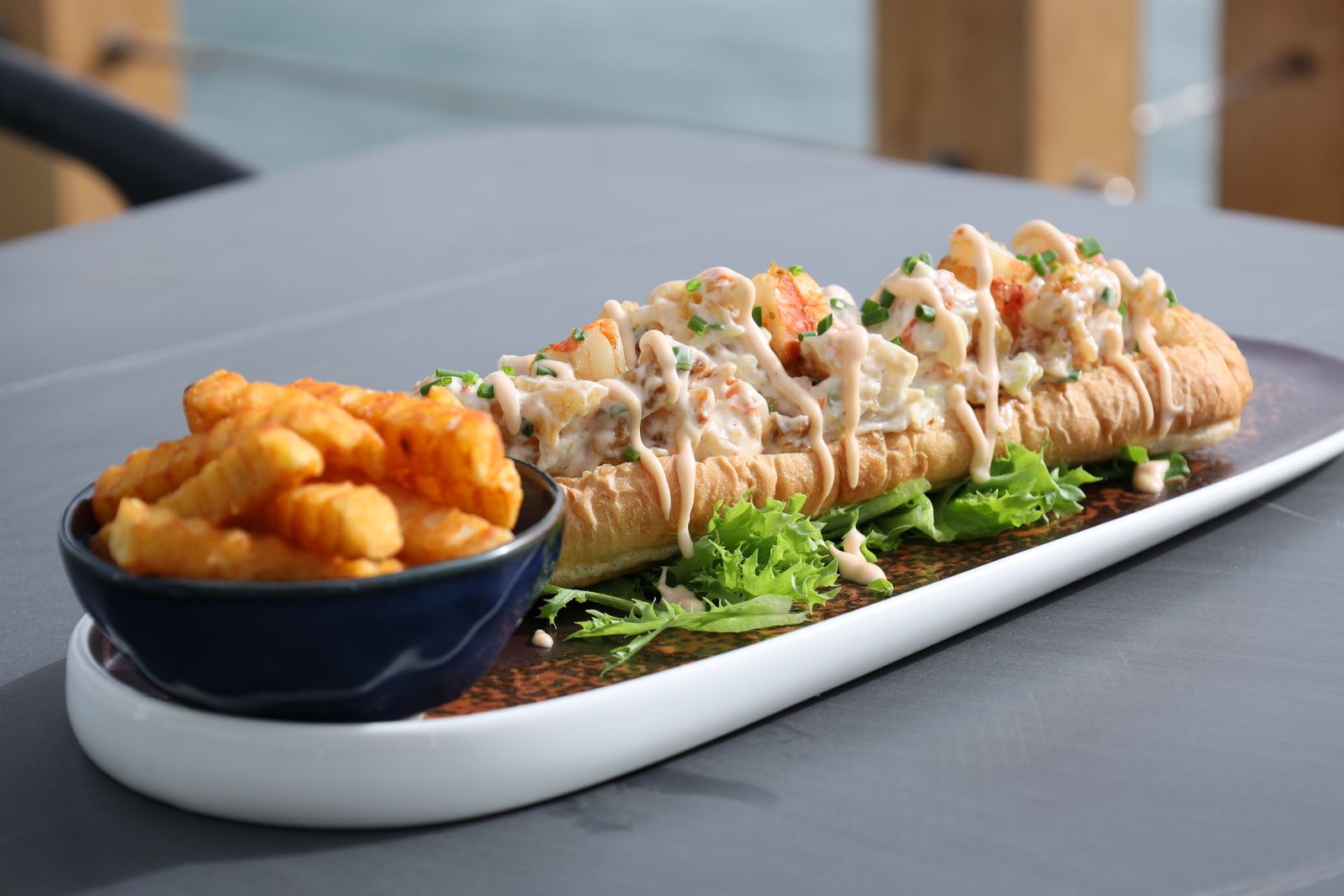
Blu Restaurant Sdn Bhd is a small company with an unusually valuable piece of paper. It holds the exclusive right to develop and operate Burger & Lobster restaurants in Malaysia, Indonesia and Vietnam, with one carve-out: the Genting Highlands outlet sits outside its franchise. Burger & Lobster is a UK-origin premium casual dining brand built around a deliberately short menu — burgers, whole lobsters and lobster rolls — and it has expanded internationally largely through franchise and development partners.
At the time of the deal, Blu Restaurant ran exactly one restaurant: the Burger & Lobster outlet at Suria KLCC in Kuala Lumpur, which opened in October 2022. That single outlet was already profitable. According to The Edge Malaysia, Blu Restaurant recorded a net profit of RM2.55 million for 2023, which is a strong number for one restaurant and reflects both the premium price point of the menu and the foot traffic of one of Kuala Lumpur’s busiest tourist malls.
So InNature was really buying two things: a proven, cash-generating flagship in KLCC, and an option to roll out a recognised international restaurant brand across three Southeast Asian markets with a combined population of more than 400 million people.
Who Is InNature Berhad?
InNature Berhad listed on Bursa Malaysia in 2020 and, until this deal, was essentially a single-brand retailer: it operates more than 120 The Body Shop stores across Malaysia and several regional markets under franchise from the UK beauty brand. That is a solid but mature business. By early 2024 InNature was dealing with slowing profits and rising costs, and The Body Shop brand itself was going through upheaval — its UK operating company entered administration in February 2024, just three months before InNature announced the Blu Restaurant purchase.
InNature is controlled by husband-and-wife founders Datuk Simon Foong, the chairman, and Mina Cheah, the managing director. According to The Edge, the couple collectively hold about 70.6% of InNature through four private entities. That concentrated ownership is central to understanding how this deal was structured.
How the Deal Was Structured
A related-party purchase from the controlling shareholders
The three sellers of Blu Restaurant — Aquablu Technologies Sdn Bhd, Adventuria Sdn Bhd and Aquawalk Sdn Bhd — are vehicles linked to Foong and Cheah. In other words, InNature’s controlling shareholders already owned the Burger & Lobster franchise privately, and sold it to the listed company they control. Under Bursa Malaysia’s listing requirements, a related-party transaction of this size needs an independent adviser’s opinion on whether the terms are fair and reasonable to minority shareholders, and the interested parties must abstain from voting. InNature appointed cfSolutions Sdn Bhd as independent adviser and put the deal to an extraordinary general meeting tentatively scheduled for 27 June 2024, as reported by The Edge.
Price: about 8 times earnings
The RM21.25 million consideration valued Blu Restaurant at roughly 8 times its 2023 net profit of RM2.55 million. For a profitable restaurant business with an exclusive multi-country franchise attached, a single-digit price-to-earnings multiple is not aggressive. By comparison, Hextar Industries paid about 12 times earnings for 51% of llaollao operator Woodpeckers Group in 2026 — see our coverage of Hextar’s RM177.5 million Woodpeckers deal.
Funding: IPO money finally put to work
RM14.6 million of the price came from proceeds of InNature’s 2020 initial public offering, with the remaining RM6.65 million or so from internally generated funds. Using IPO money meant the deal required no new borrowings and no dilution of existing shareholders. It also meant that capital raised from public investors almost four years earlier ended up flowing, in part, to the controlling shareholders as sellers — a point minority shareholders were entitled to weigh carefully.
At announcement, InNature said it expected the F&B business to contribute about 24.3% of group profit initially, rising to more than 25% over time, according to The Edge.
Why a Beauty Retailer Bought a Restaurant Brand
InNature framed the purchase as diversification into food and beverage, which was covered by The Star as the company’s formal expansion into the F&B sector. The strategic logic has three parts.
First, earnings diversification. A company whose entire profit depends on one licensed beauty brand carries concentrated risk — and 2024 showed exactly how real that risk was, when The Body Shop’s UK parent went into administration.
Second, transferable skills. Running franchised retail in premium malls is InNature’s core competence. Lease negotiation with mall landlords, staff training to a franchisor’s standards, and managing a foreign brand’s requirements all carry over from The Body Shop to Burger & Lobster, even if the kitchen does not.
Third, growth runway. The Body Shop network was already mature at 120-plus stores. Burger & Lobster, with one outlet and rights to three countries, offered a white-space rollout. At the time of the deal, InNature talked about opening another outlet in Malaysia and two each in Indonesia and Vietnam, BusinessToday reported.
What Happened Next: 2025 Franchise Revision and FY2025 Results
Expansion commitment cut from six restaurants to four
On 1 December 2025, Blu Restaurant entered into an addendum to its Development Agreement with B&L Operating Limited, the Burger & Lobster franchisor, reducing the minimum number of new restaurants it is required to open from six to four, according to BusinessToday. Development agreements typically tie franchise exclusivity to an opening schedule, so a negotiated reduction lowers the risk of losing exclusivity but also signals that the original rollout pace was more ambitious than the market or the capital plan could support.
F&B now earns almost as much as Malaysian retail
The financial payoff, however, has been clearer than the rollout. In a March 2026 feature on rising appetite for F&B deals in Malaysia, The Edge Malaysia reported that InNature’s F&B business in Malaysia generated RM3.56 million in profit after tax in FY2025, almost matching the RM3.66 million earned by its Malaysian retail business. F&B accounted for about 43% of group profit after tax, on group revenue of RM139.86 million and net profit of RM7.71 million. The Edge described the Burger & Lobster acquisition as having proved fruitful, cushioning InNature during a period of weaker retail earnings.
Put simply: the F&B share of profit ended up far above the 24.3% InNature guided at announcement — partly because the restaurant business grew, and partly because the core retail business shrank.
Deal Scorecard: Plan vs. Outcome
| Metric | At Announcement (May 2024) | Latest Reported |
|---|---|---|
| F&B share of group profit | ~24.3% expected, rising to 25%+ | ~43% of group PAT (FY2025) |
| F&B profit | RM2.55 million net profit (FY2023, Blu Restaurant) | RM3.56 million PAT, Malaysia F&B (FY2025) |
| New restaurant commitment | Six under development agreement | Four (addendum dated 1 Dec 2025) |
| Group net profit | — | RM7.71 million on revenue of RM139.86 million (FY2025) |
Where This Deal Fits in Malaysia’s F&B M&A Wave
InNature’s purchase was an early example of a pattern that has since accelerated: listed Malaysian companies from outside food service buying branded F&B operators to build multi-category consumer platforms. Hextar Industries, a chemicals group, bought control of the llaollao frozen-yogurt operator; Sagtec Global took a stake in a heritage F&B group, as we covered in Sagtec Global’s investment in Malaya Heritage; and at the larger end, private capital poured into chains such as ZUS Coffee — see ZUS Coffee’s RM250 million raise. The common thread is that branded consumer food, with predictable daily transactions, is being treated as a defensive earnings stream by groups whose core businesses are cyclical or mature. You can follow every deal in this series on our M&A & Investment Insights hub.
The InNature deal also shows how international franchise rights are increasingly held by listed holding companies rather than private F&B operators. For brand owners weighing whether to franchise, license or partner with a manufacturer in Southeast Asia, our guide to contract manufacturing explains the other side of the brand-versus-operator equation.
My Take
My take is that this is one of those deals that looked uncomfortable on day one and looks rather smart two years later — but for reasons that should still make minority shareholders think. When a company’s founders sell their own private restaurant business to the listed company they control, using IPO money, the default reaction should be scepticism. I shared it. The question was never whether Burger & Lobster at KLCC was a good restaurant; it was whether minority shareholders were paying a fair price for something the controlling family had already de-risked privately.
On the numbers, I think they were. Eight times earnings for a profitable, exclusively franchised restaurant business is a reasonable price in Malaysian F&B, where recent deals have been done at 12 times or more. And the outcome speaks for itself: F&B went from zero to about 43% of InNature’s profit in FY2025. Without Burger & Lobster, InNature’s FY2025 would have looked like a beauty retailer in slow decline. With it, the group has a second leg to stand on at exactly the moment its main licensed brand went through the most turbulent period in its history.
But I would not call it a complete win yet. The 43% figure flatters F&B partly because retail profits fell — that is a warning about The Body Shop business, not only a compliment to lobster rolls. And the December 2025 cut in the development commitment, from six new restaurants to four, tells me the regional rollout is harder than the 2024 story suggested. A premium lobster-and-burger concept works brilliantly in KLCC with tourists and expense accounts; whether it works in a second-tier Malaysian mall, or in Jakarta and Ho Chi Minh City against strong local competition, is unproven. One great flagship is not a scalable chain.
Who won? The Foong-Cheah family clearly did: they turned a private franchise into cash while keeping control of it through the listed company. Minority shareholders did reasonably well too, because the price was sensible and the profit contribution has been real. The loser, if there is one, is the narrative that InNature is simply “The Body Shop Malaysia” — that story is over. What I would watch now is simple: how many of those four committed restaurants actually open, and whether each new outlet earns anything close to what KLCC does. If they do, InNature becomes a genuine multi-brand consumer operator. If they do not, this deal will be remembered as one very good restaurant bought at a fair price — which, frankly, is still better than most related-party deals on Bursa.
Frequently Asked Questions
How much did InNature pay for Burger & Lobster Malaysia?
InNature Berhad agreed on 10 May 2024 to pay RM21.25 million (about US$4.5 million) for 100% of Blu Restaurant Sdn Bhd, the exclusive Burger & Lobster franchisee for Malaysia (excluding Genting Highlands), Indonesia and Vietnam. The price was about 8 times Blu Restaurant’s 2023 net profit of RM2.55 million.
Who owns Burger & Lobster in Malaysia?
Burger & Lobster restaurants in Malaysia, other than the Genting Highlands outlet, are operated by Blu Restaurant Sdn Bhd, which has been a wholly-owned subsidiary of Bursa Malaysia-listed InNature Berhad since InNature acquired it in 2024. InNature is also the operator of The Body Shop stores in Malaysia.
Why was the InNature Blu Restaurant deal a related-party transaction?
The sellers, Aquablu Technologies Sdn Bhd, Adventuria Sdn Bhd and Aquawalk Sdn Bhd, are linked to InNature chairman Datuk Simon Foong and managing director Mina Cheah, who together control about 70.6% of InNature. The deal therefore needed an independent adviser, cfSolutions Sdn Bhd, and approval from shareholders at an extraordinary general meeting.
How was the Burger & Lobster acquisition funded?
InNature funded RM14.6 million of the RM21.25 million price from proceeds of its 2020 initial public offering and paid the balance from internally generated funds, according to The Edge Malaysia. No new shares or borrowings were used.
How much does InNature’s F&B business contribute to profit?
In FY2025, InNature’s F&B business in Malaysia earned RM3.56 million in profit after tax, almost equal to the RM3.66 million from Malaysian retail, and made up about 43% of group profit after tax. Group net profit was RM7.71 million on revenue of RM139.86 million, The Edge Malaysia reported in March 2026.
How many Burger & Lobster outlets will InNature open?
On 1 December 2025, InNature’s subsidiary Blu Restaurant signed an addendum with franchisor B&L Operating Limited that cut its minimum commitment for new Burger & Lobster restaurants from six to four, as reported by BusinessToday. At the time of the 2024 deal it operated one outlet, at Suria KLCC in Kuala Lumpur.
Related
- M&A & Investment Insights — the full landing page for Malaysia and ASEAN consumer deals
- Hextar Industries Buys 51% of llaollao Operator Woodpeckers Group for RM177.5 Million
- Sagtec Global Acquires 40% Stake in Malaysian Heritage F&B Group Malaya Heritage Holding
- ZUS Coffee Raises RM250 Million from KV Asia, KWAP and Kapal Api
- Lotus’s Malaysia to Acquire Village Grocer Owner The Food Purveyor for RM1.66 Billion
- What Is Contract Manufacturing? A Guide
Sources
- InNature Berhad — official website
- Burger & Lobster — official website
- The Edge Malaysia — InNature to acquire Burger & Lobster operator for RM21.25m from major shareholders (May 2024)
- The Star — InNature buys ‘Burger & Lobster’ franchise, eyes expansion into F&B sector
- BusinessToday — InNature acquires Burger & Lobster franchise holder for RM21.25 million
- BusinessToday — InNature makes revisions to Burger & Lobster franchise commitment (December 2025)
- The Edge Malaysia — Rising appetite for F&B deals in Malaysia (March 2026)
Disclaimer: This article is for informational and editorial purposes only. It is not a recommendation to buy or sell any securities and does not constitute investment advice.