By Marc Phu · Cosmetics Product Development & Ingredients · Published 26 Apr 2026
Japan built its reputation on precision, and that shows up nowhere more clearly than in its cosmetics factories. The country’s manufacturers — from century-old family businesses to research-heavy conglomerates — are known for tight formulation discipline, rigorous stability testing and a level of finishing quality that few other manufacturing hubs match. That reputation isn’t cheap or fast to access, but for brands chasing a genuine “made in Japan” story, it’s often worth the trade-off.
Below we walk through ten Japanese companies that brand owners actually work with, split between contract manufacturers who will build a formula around your brief and manufacturer-brands whose own labels set the benchmark for the market. Each entry lists what the company is known for, roughly when and where it was founded, and a link to its official site so you can verify anything for yourself.
Key takeaways
- Brands wanting a dedicated OEM/ODM partner should start conversations with Toyo Beauty, Cosmetec Japan, Cosmo Beauty or Japan Natural Laboratories.
- Tokiwa is the name to know specifically for colour cosmetics — lip, pencil and mascara production for global brands.
- Unionsystem is the most accessible entry point for smaller orders, with OEM runs starting around 300 pieces.
- Shiseido, Kosé, Mandom and Naris Cosmetics are manufacturer-brands whose factories set Japan’s quality bar, though they rarely take on outside contract work.
How we chose this list
We looked for companies with an active, verifiable manufacturing operation in Japan, a track record other brands can point to, and a working corporate website in English or Japanese. Companies are ordered alphabetically rather than ranked. Treat it as a starting shortlist for your own due diligence, not a final recommendation.
1. Cosmetec Japan
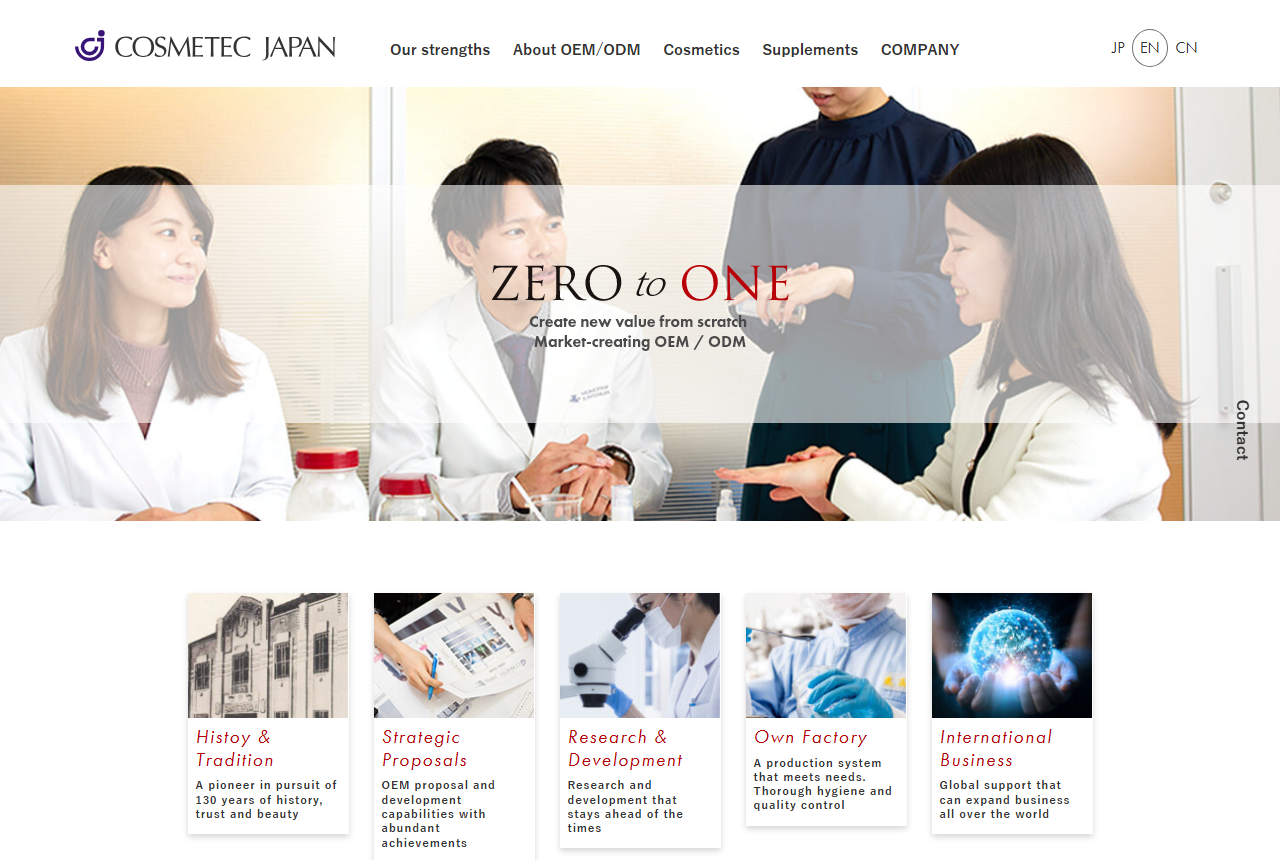
HQ: Tokyo · Founded: 1885 · Best known for: Heritage OEM/ODM manufacturing
Few cosmetics manufacturers anywhere can claim a founding date in the 1880s, which gives Cosmetec Japan an unusual depth of institutional knowledge to draw on. The company handles both OEM and ODM work across skincare and general cosmetics, and its longevity in the market is itself a form of quality signal for brands evaluating long-term partners.
2. Cosmo Beauty
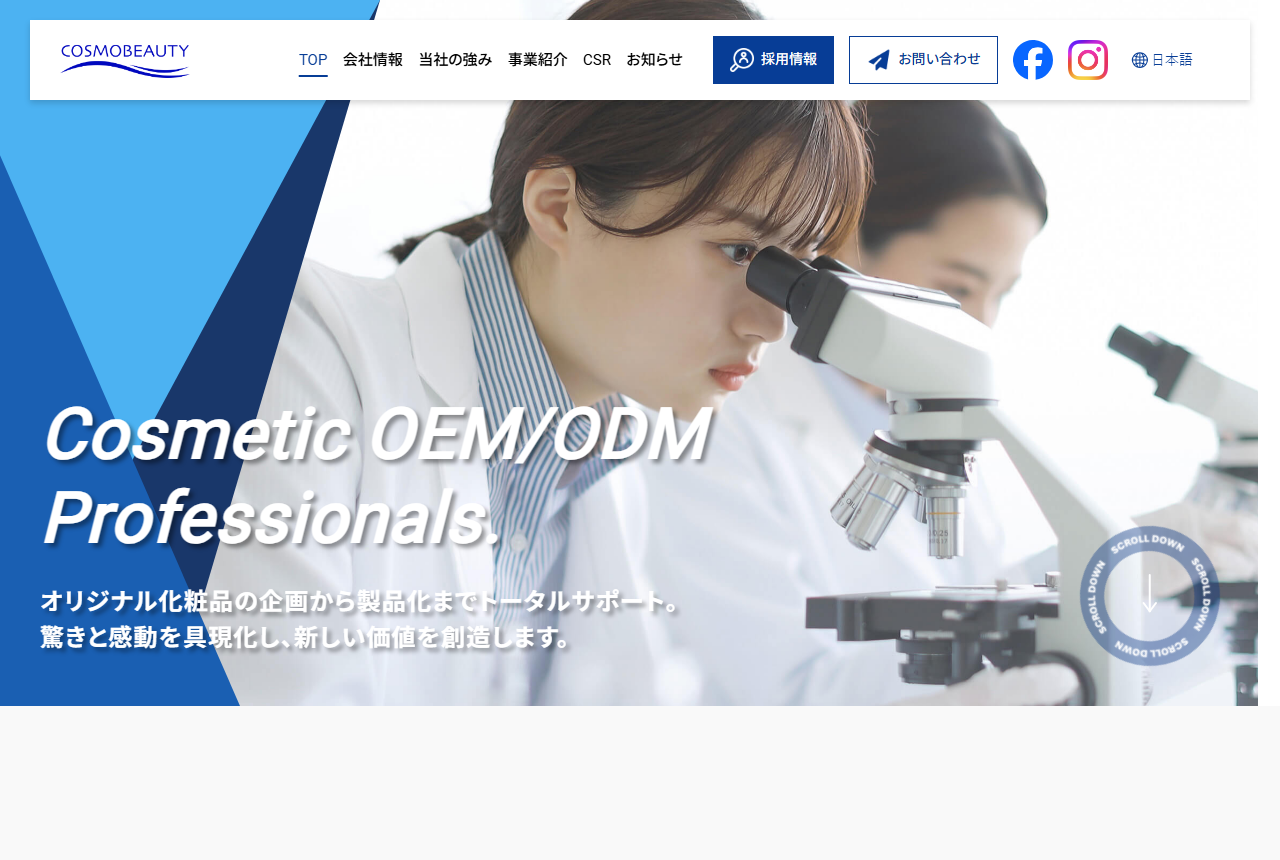
HQ: Osaka · Founded: 1969 · Best known for: ODM skincare with in-house R&D
Cosmo Beauty runs the full development chain in-house — planning, formulation, filling and packaging — which lets it move a brand’s concept through to finished product without handing pieces of the job to outside subcontractors. Its client base spans both Japanese and overseas skincare labels looking for that kind of end-to-end control.
3. Japan Natural Laboratories
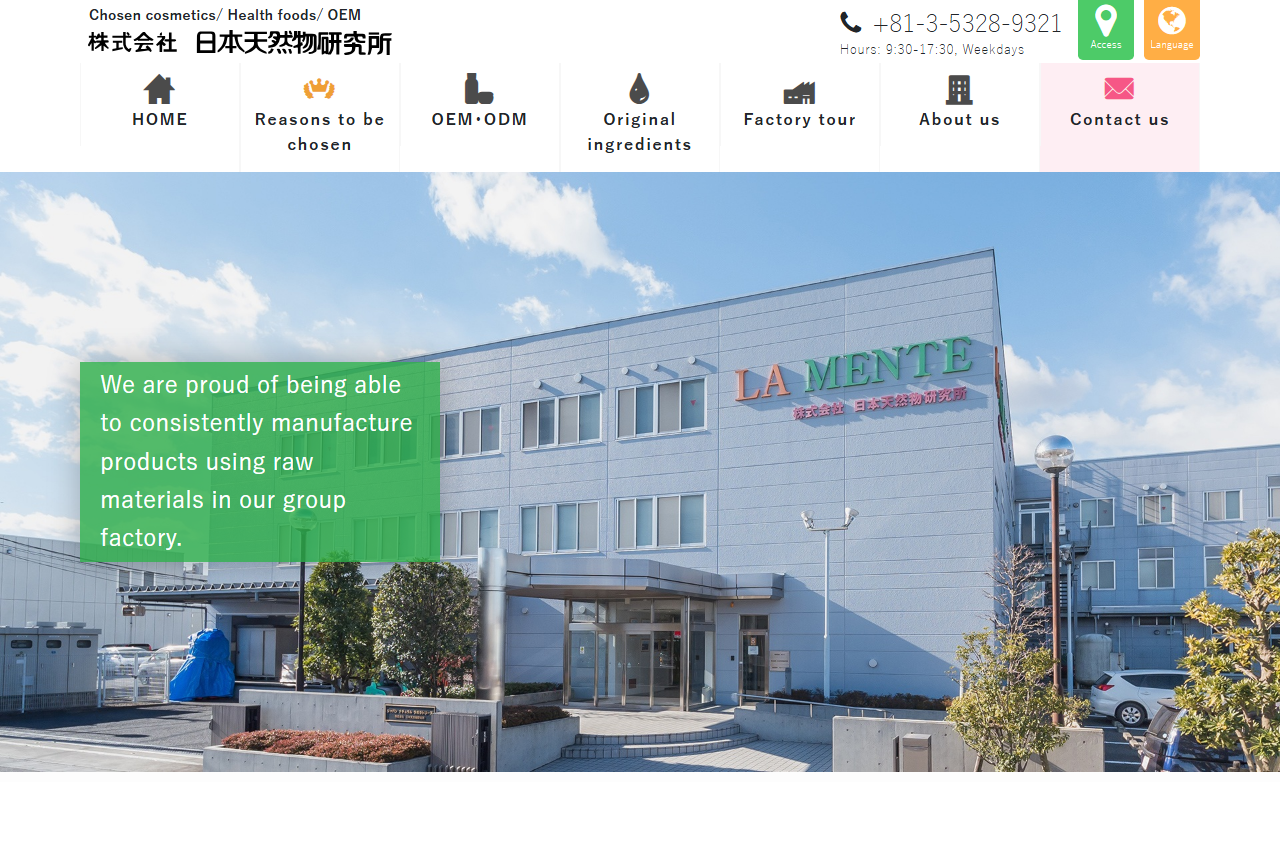
HQ: Japan · Best known for: Natural and functional skincare OEM/ODM
Japan Natural Laboratories leans into the naturals side of J-beauty, custom-formulating functional skincare for brands that want to lead with plant-based or “clean” positioning without giving up Japanese production standards. It’s set up for small-to-medium production runs, which makes it more approachable than the large conglomerates on this list.
Visit Japan Natural Laboratories →
4. Kosé
HQ: Tokyo · Founded: 1946 · Best known for: Major own-brand cosmetics manufacturer
Kosé sits among Japan’s largest cosmetics groups, with a prestige and mass-market brand portfolio built on formulation research most contract manufacturers can’t match in scale. It isn’t a contract manufacturer in the traditional sense, but its labs are a useful reference point for what “Japanese quality” is actually supposed to mean.
5. Mandom
HQ: Osaka · Founded: 1927 · Best known for: Men’s grooming and personal care
Mandom built its name on men’s grooming — the Gatsby range is a household name across Asia — backed by large-scale production spanning hair, body and skincare categories. Its scale and category focus make it a useful benchmark for brands positioning specifically in the grooming space.
6. Naris Cosmetics
HQ: Osaka · Founded: 1932 · Best known for: Long-running skincare manufacturer with ODM capacity
Naris has been producing skincare since 1932 and has kept a loyal following largely on the strength of its wipe-off cleansing lotion, a category staple in Japan for decades. Alongside its own lines, it takes on ODM work for partner brands wanting access to that same formulation heritage.
7. Shiseido
HQ: Tokyo · Founded: 1872 · Best known for: Japan’s largest cosmetics manufacturer
No list of Japanese cosmetics manufacturers is complete without Shiseido — founded in 1872 and still the largest and most internationally recognised name in the market. Its research centres and prestige skincare and makeup portfolios are effectively the reference point every other manufacturer on this list gets compared against.
8. Tokiwa
HQ: Nakatsugawa, Gifu · Founded: 1948 · Best known for: Colour-cosmetics ODM for lip, pencil and mascara
Tokiwa has quietly become one of the world’s most relied-upon colour-cosmetics ODMs, with particular depth in lipstick, cosmetic pencils and mascara — categories that demand a level of mechanical and chemical precision most general manufacturers don’t specialise in. Prestige and mass makeup brands worldwide route this specific kind of production through Tokiwa’s Japanese facilities.
9. Toyo Beauty
HQ: Osaka · Founded: 1948 · Best known for: Full-service skincare and hair-care ODM/OEM
Toyo Beauty is about as close to a one-stop shop as Japan’s contract manufacturing scene gets, covering planning, raw-material R&D, functionality testing and finished production for cleansers, toners, essences, creams and hair-care products. Brands that want a single partner to own the whole process, rather than juggling separate formulation and filling vendors, tend to gravitate here.
10. Unionsystem
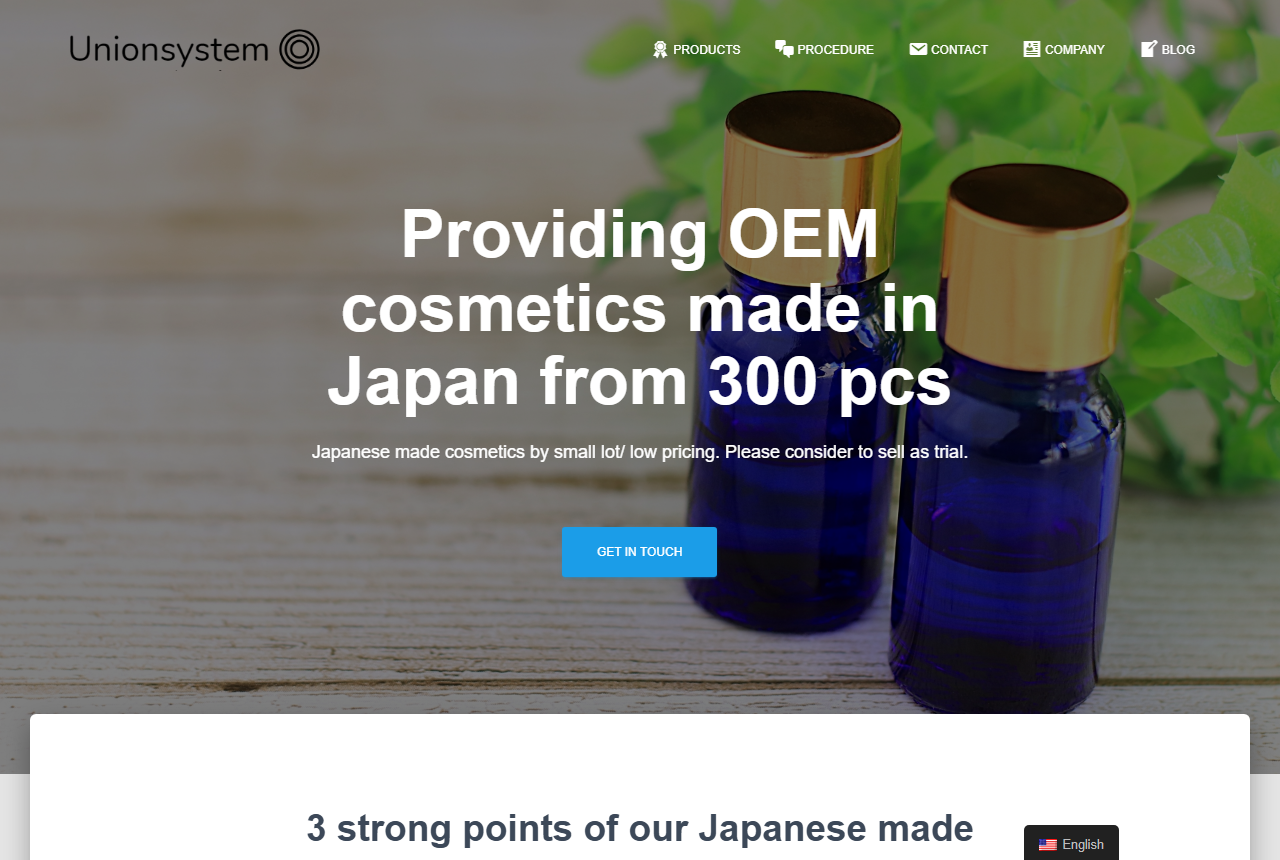
HQ: Japan · Best known for: Low-MOQ OEM from roughly 300 pieces
Japanese manufacturing has a reputation for high minimum order quantities, and Unionsystem exists largely to break that pattern — running basic skincare OEM from as few as roughly 300 units. For an indie or first-time brand that wants “made in Japan” on the label without committing to a five-figure production run, it’s usually the most realistic starting point.
Sourcing considerations
Manufacturing in Japan solves one part of the equation — formulation quality and finishing — but it doesn’t remove the compliance work waiting on the other end. A product built to Japanese standards still has to clear whatever registration process applies in the market where it will actually be sold. For a Malaysian brand, that means NPRA cosmetic notification is still required regardless of how the product was made; the same logic applies to the FDA in the US, the EU’s CPNP, or the relevant regulator in any other destination market. Manufacturing origin and market-entry compliance are two separate jobs, and skipping the second one because the first one went well is a common and avoidable mistake.
It’s also worth asking early about English-language technical support, minimum order quantities in relation to your actual sales forecast, and whether a factory’s export documentation already covers the market you’re targeting. Japanese manufacturers are generally strong on all three, but confirming it in writing before committing budget will save time later. For a broader look at how contract manufacturing actually works, see our guide to what OEM and ODM mean in practice, and browse more country profiles in our OEM Manufacturer archive.
What sets Japanese production apart
Talk to enough brand owners who have sourced from multiple countries and a pattern emerges: Japan tends to win on consistency rather than speed. Batch-to-batch variation is unusually tight, documentation is thorough by default rather than something you have to request, and stability testing is treated as a core part of development rather than a final checkbox. None of that makes Japan the fastest or cheapest option — it usually isn’t either — but it does explain why brands building a long-term, quality-led position keep coming back to it.
The trade-off worth planning for is lead time. Between formulation iteration, stability testing and production scheduling, Japanese timelines often run longer than equivalent projects in Korea or Taiwan. Building that into your launch calendar early avoids the common mistake of locking in a retail date before confirming a realistic production timeline with your chosen manufacturer.
Frequently asked questions
Is manufacturing in Japan worth the higher cost?
It depends on your positioning. If “made in Japan” is central to how you’re marketing the product, or you need formulation science that’s genuinely hard to source elsewhere, the premium is usually justified. If you’re chasing the lowest landed cost, other Asian manufacturing hubs will typically get you there faster and cheaper.
What’s the real difference between OEM and ODM here?
Under OEM, you bring a finished formula and the factory produces it to spec. Under ODM, the manufacturer develops or adapts the formula for you and you apply your own branding. Most of the contract manufacturers above — Toyo Beauty, Tokiwa, Cosmetec Japan, Cosmo Beauty and Unionsystem included — offer both models.
Which of these companies actually work with outside brands?
The contract manufacturers on this list — Toyo Beauty, Tokiwa, Cosmetec Japan, Cosmo Beauty, Japan Natural Laboratories and Unionsystem — take on third-party work as their core business. Shiseido, Kosé, Mandom and Naris are primarily manufacturer-brands and generally don’t offer contract production to outside companies.
How do I check certification and export readiness?
Ask each manufacturer directly for current ISO 22716 (cosmetic GMP) certification and whichever export documentation your target market requires. Screenshots and public claims are a starting point, not a substitute for verifying paperwork before you commit to a production run.
This article is an independent industry overview, not a paid endorsement or referral. Company details change — always verify current certifications, capabilities and MOQs directly with the manufacturer before signing a contract.
About the author
Marc Phu is a China-based professional with experience related to cosmetics and the beauty industry. His background provides an industry perspective on product development, ingredients, innovation and the evolving Chinese beauty market. LinkedIn