
By Marc Phu · Cosmetics Product Development & Ingredients · Published 09 Jun 2026
Kao Corporation takes its name from a pun: in 1890, founder Tomiro Nagase launched a soap called Kao Sekken, choosing “Kao” because it sounds like the Japanese word for “face” while the kanji characters used to write it mean “king of flowers.” That naming choice, equal parts marketing cleverness and craftsmanship pride, has anchored a company that grew from a Tokyo sundry-goods dealer founded in 1887 into a global chemical and cosmetics group with the Japanese skincare brand Sofina as one of its best-known lines.
This profile looks at how Kao expanded deliberately from soap into cosmetics decades after its founding, its approach to research-integrated manufacturing at facilities like the Wakayama plant, and what its patient, category-by-category expansion can teach other manufacturers about the risks and rewards of entering an adjacent market late.
Key takeaways
- Kao began in 1887 as Nagase Shoten, a Western sundry-goods dealer founded by Tomiro Nagase, before launching its first soap product, Kao Sekken, in 1890.
- The company’s name plays on the Japanese word for “face” while its kanji characters literally mean “king of flowers,” a deliberate branding choice from its earliest soap launch.
- Kao did not enter the cosmetics market until 1982, nearly a century after its founding, launching the Sofina line and rapidly advancing to the number two position in the Japanese cosmetics market.
- The company expanded internationally through targeted acquisitions, including Andrew Jergens Company in the United States and Goldwell AG in Europe, both in the late 1980s.
- Kao’s Wakayama plant integrates research facilities directly with production, including a public Eco-Lab Museum explaining the company’s environmental technologies.
From sundry goods to soap
Kao’s origins trace to 1887, when Tomiro Nagase established Nagase Shoten, a dealer in Western sundry goods, in Japan. Rather than launching directly into manufacturing, Nagase started as a distributor of imported goods, giving him direct exposure to Western product categories and consumer demand before he moved into producing anything himself.
Three years later, in 1890, that exposure led to Kao’s first manufactured product: Kao Sekken, a soap Nagase positioned explicitly on quality, naming it to evoke both facial care and, through its kanji, an aspirational sense of excellence. Until 1954 the company was formally known as Kao Soap Company, a name that reflected just how central that original product category remained to the business for over six decades.
A long, deliberate wait before entering cosmetics
Perhaps the most striking fact in Kao’s history is how long the company waited before entering cosmetics at all: it was not until 1982, nearly a full century after Nagase founded the original sundry-goods business, that Kao launched its Sofina cosmetics line. Once it did enter the category, the company moved quickly, advancing to the number two position in the Japanese cosmetics market within a relatively short period.
That combination, a long deliberate wait followed by rapid share gain once the company did commit, suggests Kao entered cosmetics only once it judged its underlying manufacturing and formulation capability was genuinely ready, rather than rushing into an adjacent category prematurely. For any company eyeing an adjacent market, this is a useful data point: entering late but well-prepared can outperform entering early but underprepared.
International expansion through targeted acquisition
During the 1980s, Kao pursued several joint ventures and acquisitions to establish an international footprint, most notably acquiring the Andrew Jergens Company in North America in 1988 and Goldwell AG in Europe in 1989. These acquisitions gave Kao immediate access to established distribution networks and brand recognition in markets where building from scratch would have taken considerably longer.
Pairing a newly launched domestic product line, Sofina, with international expansion through acquired Western brands, rather than attempting to export the Sofina brand itself into unfamiliar markets, reflects a pragmatic recognition that different markets sometimes call for different brand vehicles rather than a single global name.
Research integrated directly into production
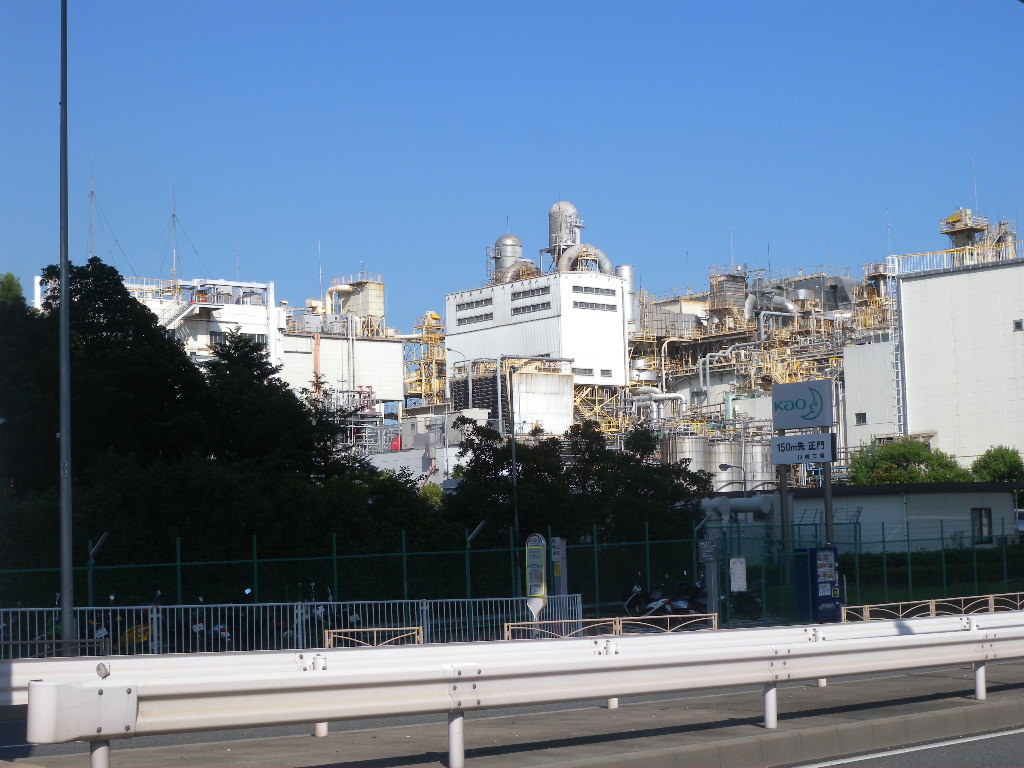
Kao’s Wakayama plant illustrates the company’s approach to combining research and manufacturing at a single site: the facility is fully integrated with research laboratories designed specifically to develop efficient, high-quality production processes for a range of chemical products, rather than treating R&D and manufacturing as separated functions coordinated only at a corporate level.
The plant also houses a public-facing Eco-Lab Museum, where visitors can learn about the environmental and ecology-conscious technologies Kao has developed. As with Amorepacific’s Osan Beauty Park and Shiseido’s Osaka Ibaraki Factory covered elsewhere in this series, Kao is another example of a manufacturer choosing to make its production facilities partly visible to the public rather than keeping them entirely closed.
Why co-locating research and manufacturing matters
Placing research laboratories physically alongside production lines, rather than in a separate corporate R&D campus, shortens the feedback loop between a formulation idea and its actual manufacturability at scale. Problems that only become apparent during real production runs can be identified and addressed by researchers working in close physical proximity to the production line, rather than discovered only after a formulation has already been finalised elsewhere.
For a smaller brand working with a contract manufacturer, the transferable question is whether that manufacturer’s formulation and production teams communicate closely, even if not literally co-located, since that coordination quality often determines how smoothly a new product moves from concept to consistent commercial-scale production.
Lessons for OEM and private label brands
Several elements of Kao’s history apply at a much smaller scale. Entering an adjacent category only once genuine capability is in place, rather than rushing to diversify prematurely, can produce faster share gains once the move is actually made. Using acquisition or partnership to enter unfamiliar international markets, rather than exporting a domestic brand name that carries no local recognition, is often a more efficient path than building brand awareness from zero. And keeping formulation and production teams closely coordinated, whether through physical co-location or simply close working relationships, tends to produce smoother, more manufacturable product development.
None of these require Kao’s century-long patience or acquisition budget. A newer brand that waits until it has genuine capability before entering an adjacent category, and prioritises close coordination between whoever designs a formulation and whoever actually produces it, is applying the same underlying discipline.
Where the company stands today
Kao Corporation remains headquartered in Tokyo, having grown from a Meiji-era sundry-goods dealer into a global chemical and cosmetics company whose Sofina line holds a leading position in the Japanese cosmetics market alongside acquired Western brands like Jergens and Goldwell. Its research-integrated manufacturing facilities, including the Wakayama plant, continue to anchor a production philosophy that treats formulation science and manufacturing as inseparable functions.
A naming choice that still does double duty
Choosing a brand name that works simultaneously as a sensory pun, sounding like the word for “face,” and a written statement of quality, meaning “king of flowers” in its kanji form, gave Kao a name capable of carrying meaning across both spoken and written Japanese from its very first soap launch in 1890. That dual-layer naming has remained legible and relevant across more than 130 years of subsequent category expansion, from soap into chemicals, hygiene products and eventually cosmetics.
For any brand choosing a name today, Kao’s example is a reminder that a name capable of carrying meaning in more than one register, whether through sound, written form, or cultural association, tends to age more gracefully across decades of category expansion than a name tied narrowly to a single original product.
Frequently asked questions
When was Kao founded and what was its first product?
Kao traces its origins to 1887, when Tomiro Nagase founded Nagase Shoten, a sundry-goods dealer. Its first manufactured product was Kao Sekken, a soap launched in 1890.
When did Kao enter the cosmetics market?
Not until 1982, nearly a century after its founding, when it launched the Sofina cosmetics line, which quickly reached the number two position in the Japanese cosmetics market.
What Western brands has Kao acquired?
Kao acquired Andrew Jergens Company in North America in 1988 and Goldwell AG in Europe in 1989, both during a period of international expansion.
What can a smaller brand learn from Kao’s approach to entering cosmetics?
That entering an adjacent category later, once genuine manufacturing and formulation capability is in place, can produce faster results than rushing to diversify before that capability is ready.
Further reading
- Kao Corporation — official global website
- Kao Corporation — Wikipedia
- Kao: The History of the Kao Group (official)
- For background on how OEM and private label brands typically get built, see our explainer on what OEM manufacturing involves.
- Our OEM Manufacturer category covers other contract manufacturers and industry leaders worth knowing.
This article is an independent editorial profile based on publicly available information. All figures should be verified against the company’s current public disclosures.
About the author
Marc Phu is a China-based professional with experience related to cosmetics and the beauty industry. His background provides an industry perspective on product development, ingredients, innovation and the evolving Chinese beauty market. LinkedIn