
By Marc Phu · Cosmetics Product Development & Ingredients · Published 04 Jul 2026
Optimum Nutrition, the maker of the widely recognised Gold Standard 100% Whey protein powder, began in 1986 as Costello’s Health Distributors, founded by brothers Michael and Tony Costello in Illinois. In 2008, the Illinois-based sports supplement company was acquired by Glanbia, an Irish dairy-nutrition group with roots in a 1997 merger of two century-old Kilkenny dairy cooperatives, for roughly €213 million. That acquisition turned a single American supplement brand into the anchor of Glanbia’s push into the North American sports nutrition market, and Optimum Nutrition later became Glanbia’s first billion-dollar brand.
This profile looks at how a small Illinois distributor became one of the most recognisable names in sports nutrition, why an Irish dairy cooperative chose to acquire it rather than build a competing brand from scratch, and what that acquisition can teach other manufacturers about entering an unfamiliar category through a proven, already-trusted brand.
Key takeaways
- Optimum Nutrition was founded in 1986 by brothers Michael and Tony Costello under the name Costello’s Health Distributors in Illinois.
- Glanbia acquired the company in 2008 for approximately €213 million, giving the Irish dairy-nutrition group a foothold in the North American sports supplement market.
- Optimum Nutrition later became Glanbia’s first billion-dollar brand, a significant milestone for an acquisition originally made to enter an unfamiliar category.
- The company operates manufacturing facilities in Aurora, Illinois; Walterboro, South Carolina; Sunrise, Florida; and Middlesbrough, UK, alongside newer international production including a facility in India.
- Glanbia’s own roots trace to a 1997 merger of Avonmore Foods and Waterford Foods, two Kilkenny, Ireland dairy cooperatives, officially adopting the Glanbia name in 1999.
Two brothers and a distribution business
Optimum Nutrition’s founding in 1986 was modest: brothers Michael and Tony Costello started Costello’s Health Distributors in Illinois, initially operating as a distributor before developing into a manufacturer in its own right. That distributor-to-manufacturer trajectory, building direct customer and market knowledge before investing in production capability, mirrors a pattern seen in several successful supplement and nutrition brands, where understanding what customers actually want precedes the capital-intensive step of building manufacturing capacity.
By the time Glanbia acquired the company in 2008, Optimum Nutrition had built enough brand recognition and manufacturing capability in the sports nutrition category to be worth roughly €213 million to a dairy-nutrition group looking to enter the North American market.
Glanbia’s dairy cooperative origins
Glanbia itself has a genuinely different origin story from the sports supplement brand it would later acquire. The company’s roots trace to a 1997 merger of Avonmore Foods and Waterford Foods, two dairy cooperatives based in Kilkenny, Ireland, with the combined entity officially adopting the Glanbia name in 1999. Its foundation in Irish dairy farming, rather than sports nutrition or supplements specifically, meant Glanbia’s core original expertise was in dairy processing and ingredients, not the sports nutrition category it would later come to dominate through Optimum Nutrition.
That gap between Glanbia’s founding dairy expertise and the sports nutrition category is precisely why acquiring an established brand, rather than attempting to build one from scratch, made strategic sense: Glanbia’s dairy processing knowledge was directly relevant to producing whey protein at scale, but it lacked the brand recognition and market position within sports nutrition specifically that Optimum Nutrition had already built.
Why acquire rather than build from scratch
Entering an unfamiliar consumer category from an adjacent industrial base is a genuinely difficult problem: a company might have relevant underlying technical capability, in Glanbia’s case, dairy and whey processing expertise, without having any brand recognition or market position within the specific category it wants to enter. Building a new brand from zero in a category as competitive as sports nutrition, against already-established names, is a slow and expensive path with uncertain odds.
Acquiring an already-successful brand with genuine customer trust, established retail relationships and manufacturing capability solves that problem directly, provided the acquiring company is willing to pay a fair premium for it. Optimum Nutrition’s subsequent growth into Glanbia’s first billion-dollar brand suggests the 2008 acquisition price, while substantial for its time, proved to be a reasonable investment in hindsight.
A multi-country manufacturing footprint
Optimum Nutrition today operates manufacturing facilities in Aurora, Illinois; Walterboro, South Carolina; and Sunrise, Florida in the United States, alongside a production facility in Middlesbrough in the United Kingdom. The Aurora, Illinois plant specifically produces protein bars and powdered products, including proteins, Essential Amino Energy and creatine, while the company has more recently commenced manufacturing in India through a partnership with Tirupati Lifescience.
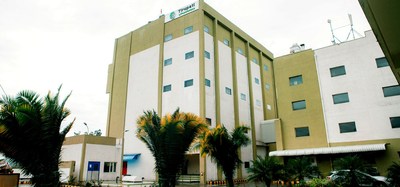
This multi-country footprint, combining wholly owned facilities in established markets with a manufacturing partnership to enter a newer market like India, reflects a pragmatic approach to international expansion: build owned capacity where the company has deep operating history, and partner locally when entering a genuinely new market where a local manufacturer’s existing infrastructure and regulatory familiarity can accelerate market entry.
Quality certification across multiple facilities
All three of Optimum Nutrition’s core manufacturing facilities hold NSF GMP for Sport certification, an athlete-focused quality standard that verifies supplement products are free from substances banned in competitive sport. Maintaining this certification consistently across multiple facilities in different states, rather than only at a single flagship plant, signals a company-wide quality standard rather than one location’s individual achievement.
For a brand targeting athletes or fitness-focused consumers specifically, this kind of third-party sport-specific certification is a meaningfully different, and generally more rigorous, quality signal than standard GMP certification alone.
Lessons for OEM and private label brands
Several elements of the Optimum Nutrition and Glanbia relationship apply at a smaller scale. Building distribution and market knowledge before investing heavily in manufacturing capability, as Optimum Nutrition did in its early distributor years, reduces the risk of building production capacity for a product the market does not actually want. Recognising when an adjacent technical capability, such as Glanbia’s dairy processing expertise, does not automatically translate into brand credibility within a new target category is an important strategic distinction. And combining owned manufacturing in established markets with local partnerships in newer ones is often a more capital-efficient path to international expansion than building owned facilities everywhere.
None of these require Glanbia’s acquisition budget. A smaller brand that validates market demand before committing to manufacturing capacity, and considers a local manufacturing partnership rather than owned facilities when entering an unfamiliar market, is applying the same underlying logic.
Where the company stands today
Optimum Nutrition remains one of the most recognisable sports nutrition brands globally, operating as Glanbia’s first billion-dollar brand and anchoring the Irish group’s position in the North American and international sports supplement market. Its manufacturing footprint spans multiple owned facilities in the United States and UK alongside newer partnership-based production in markets like India.
Preserving an acquired brand’s identity after acquisition
An easy mistake for an acquiring company to make is folding a newly purchased brand’s identity into its own corporate naming and visual style shortly after a deal closes, on the theory that consolidated branding simplifies marketing. Glanbia instead kept Optimum Nutrition operating under its own established name and visual identity for the entire period since the 2008 acquisition, rather than rebranding it toward anything resembling “Glanbia Sports Nutrition” or a similarly consolidated name.
That restraint likely mattered considerably to the brand’s subsequent growth into Glanbia’s first billion-dollar business: Optimum Nutrition’s existing customer trust and market recognition were assets built over more than two decades before the acquisition, and preserving rather than diluting that brand equity gave the acquired business room to keep growing on its own established reputation rather than starting over under an unfamiliar corporate name.
Frequently asked questions
When was Optimum Nutrition founded?
In 1986, by brothers Michael and Tony Costello under the name Costello’s Health Distributors in Illinois.
Who owns Optimum Nutrition?
Glanbia, an Irish dairy-nutrition group, acquired the company in 2008 for approximately €213 million.
Where does Optimum Nutrition manufacture its products?
Primarily at facilities in Aurora, Illinois; Walterboro, South Carolina; Sunrise, Florida; and Middlesbrough, UK, alongside a manufacturing partnership in India with Tirupati Lifescience.
What can a smaller supplement brand learn from the Glanbia-Optimum Nutrition acquisition?
That an adjacent technical capability, like dairy processing expertise, does not automatically translate into brand credibility in a new category, and that acquiring an established, trusted brand can be more efficient than building one from scratch in a competitive category.
Further reading
- Optimum Nutrition — official U.S. website
- Glanbia — official corporate website
- Glanbia — Wikipedia
- For background on how OEM and private label brands typically get built, see our explainer on what OEM manufacturing involves.
- Our OEM Manufacturer category covers other contract manufacturers and industry leaders worth knowing.
This article is an independent editorial profile based on publicly available information. All figures should be verified against the companies’ current public disclosures.
About the author
Marc Phu is a China-based professional with experience related to cosmetics and the beauty industry. His background provides an industry perspective on product development, ingredients, innovation and the evolving Chinese beauty market. LinkedIn