
By Julius Lim · Cosmetic Science & Skincare Development · Published 12 Jul 2026
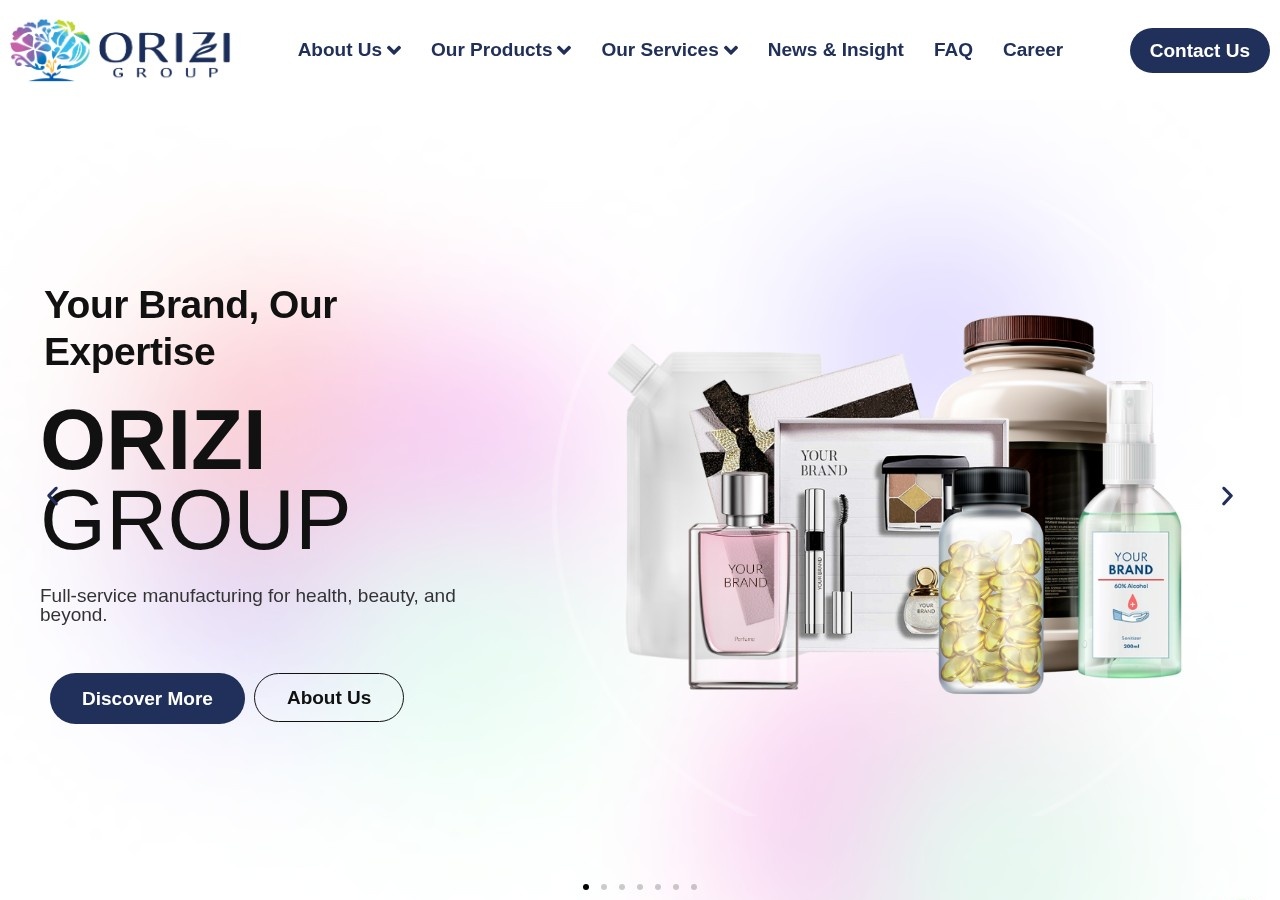
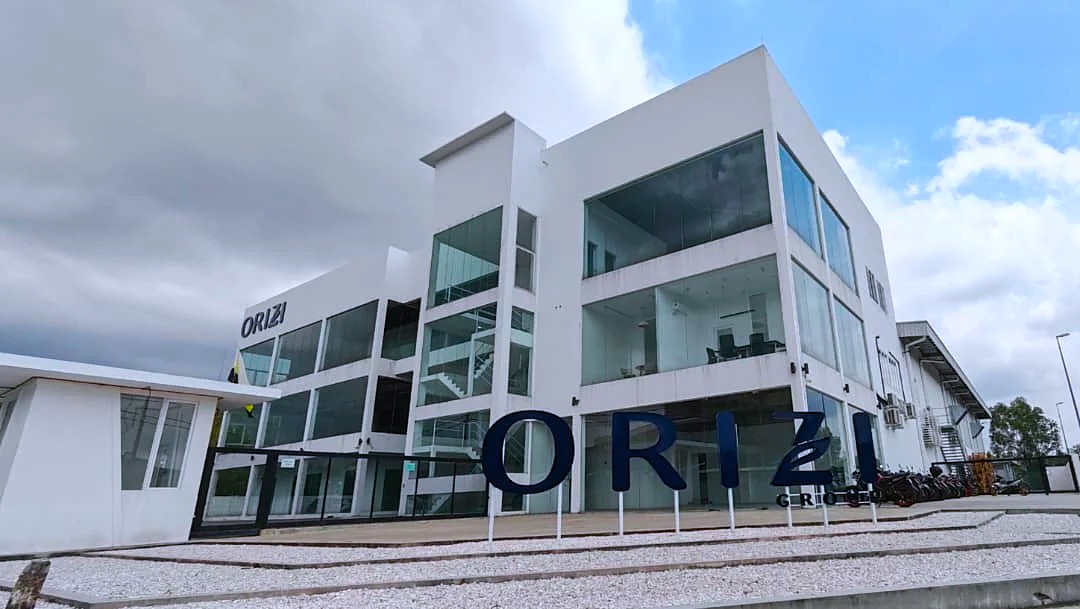
Most contract manufacturers pick a lane: some chase fast-moving social commerce brands, some specialise in high-volume export contracts, some focus narrowly on a single certified category like medical devices. ORIZI Group, based in Lahat, Perak, has spent more than 20 years building an unusually wide operating model instead — a single Malaysian manufacturing ecosystem organised into six specialised subsidiaries, built to serve a first-time online entrepreneur testing 100 units and a multinational export brand under full FDA and SMETA audit, from the same certified facility base.
This profile looks at how ORIZI Group structures that breadth without diluting it, the six companies that make up the group, the certification portfolio underpinning all of them, and the five genuinely different kinds of customer the group has built dedicated capability to serve.
Key takeaways
- ORIZI Group is an integrated Health, Beauty & Wellness Manufacturing Group headquartered in Lahat, Perak, Malaysia, with more than 20 years of manufacturing history.
- The group operates as six specialised subsidiaries under one ecosystem: Dr Orizi (cosmetics, skincare and personal care), OriGener (business development and brand growth), D&O (powder functional food), Nutrizens (liquid functional food), Skyler (medical device manufacturing) and Imedify (medical device solutions and toxicology).
- Its certification portfolio spans GMP, ISO 22716, ISO 22000, ISO 13485, HACCP, HALAL, SMETA, SA8000, FDA registration where applicable, D-U-N-S registration, an MDA Establishment License, and Pioneer Status from the Malaysian Investment Development Authority (MIDA).
- The group is structured to serve five distinct customer types from the same certified base: fast-moving online and social-commerce brands, first-time entrepreneurs testing at low MOQ through its dedicated Ready2Brand (R2B) package, large export and multinational accounts, Halal-certified Malaysian brands, and medical-aesthetic or dermatology-grade functional products.
- Sustainability commitments include FSC-certified and recyclable packaging, upcycled and eco-certified ingredients, solar-powered manufacturing, and active carbon-footprint reduction programmes.
An ecosystem, not a single factory
ORIZI Group describes itself as an integrated manufacturing ecosystem rather than a standalone factory, and its structure reflects that distinction literally: six separate registered companies, each carrying its own specialisation, operate under one group umbrella rather than one company trying to be equally good at everything. Dr Orizi (M) Sdn. Bhd. handles cosmetics, skincare and personal care manufacturing. OriGener Health & Beauty Sdn. Bhd. focuses on business development and brand growth. D&O Nutraceutical Manufacturing Sdn. Bhd. runs powder functional food production, while Nutrizens Wellness Sdn. Bhd. handles liquid functional food. Skyler Medical Manufacturing Sdn. Bhd. and Imedify Medical Solution Sdn. Bhd. cover medical device manufacturing and medical device solutions with toxicology support, respectively.
Splitting a diversified manufacturing business into distinct registered entities by specialisation, rather than running every category through one undifferentiated operating company, is a structural choice with real consequences: each subsidiary can carry the specific certifications, quality systems and staff expertise its category actually requires, without a cosmetics-focused quality team also being expected to manage medical device toxicology requirements, or vice versa.
Serving the fast-moving, trend-led entrepreneur
Online sellers, KOLs and social-commerce founders operate on a genuinely different clock than a traditional retail brand: a product concept that looks promising on social media this month needs to become a sellable, well-packaged product within weeks, not the typical multi-quarter development cycle a conventional retail launch might tolerate. For this segment, ORIZI Group leans on rapid formulation response and flexible small-batch production, letting a founder move from a trending product idea to a testable finished good quickly enough to catch the moment a trend is actually happening, rather than arriving to market after interest has already moved on.
This kind of fast-cycle responsiveness requires a manufacturer to hold formulation, packaging sourcing and production scheduling capability in reserve specifically for short-notice projects, rather than running every production line at a fixed long-term schedule the way a purely high-volume manufacturer might.
Supporting the first-time entrepreneur with genuinely low MOQ
A recurring barrier for a first-time brand owner is minimum order quantity: many contract manufacturers set MOQs calibrated for established brands with proven demand, effectively locking out anyone who wants to validate a product idea before committing serious capital. ORIZI Group addresses this through a dedicated package called Ready2Brand (R2B), which brings production down to as little as 100 units specifically so a new entrepreneur can validate whether a product concept actually sells before investing in a full-scale run.
Packaging this as a named, dedicated programme, rather than simply quoting a lower price on request, signals that low-MOQ testing is treated as a deliberate part of ORIZI Group’s business rather than an occasional exception squeezed into spare capacity. Offering that kind of entry point alongside heavy-volume corporate manufacturing within the same group is still a genuine balancing act: the economics, scheduling and margin structure of a 100-unit R2B run look nothing like those of a container-load export order, and supporting both well generally requires deliberately structuring separate production pathways rather than forcing every order through one identical process regardless of size.
Manufacturing for multinational and export-grade brands
At the opposite end of the same ecosystem, ORIZI Group manufactures for multinational corporations, pharmacy chains, healthcare providers and international retailers that require consistency, regulatory compliance, supply chain reliability and scale that a small-batch operation could not support. This is where the group’s certification portfolio does the most work: SMETA (Sedex Members Ethical Trade Audit) and SA8000 social accountability certification address the ethical-sourcing and labour-standard due diligence that large corporate buyers and export markets typically require before approving a manufacturing partner, while FDA registration, where applicable, and D-U-N-S registration support the documentation international buyers need for their own compliance processes.
Corporate social responsibility runs alongside these audits rather than as a separate marketing initiative: the group’s sustainability programme, covering FSC-certified and recyclable packaging, upcycled and eco-certified ingredients, and solar-powered manufacturing facilities, is the kind of substantiated ESG commitment that larger corporate and export buyers increasingly expect to see documented, not just claimed, before signing a long-term supply agreement.
Halal manufacturing capability in Malaysia
Halal certification sits across ORIZI Group’s manufacturing base as one of its core recognised standards, positioning the group to serve Malaysian and regional brands for whom Halal compliance is a baseline market requirement rather than an optional add-on. For a Halal-focused brand, sourcing a manufacturer that already carries this certification, rather than one that would need to build the necessary processes and documentation from scratch, removes a significant compliance and timeline risk from a product launch.
Malaysia’s own regulatory and Halal certification infrastructure is well established internationally, and a Malaysian-based manufacturer with existing Halal certification is generally better positioned to serve both the domestic market and Muslim-majority export markets than a manufacturer entering Halal compliance for the first time.
Medical-grade and dermatology-adjacent functional products
The group’s medical and healthcare pillar, anchored by Skyler Medical Manufacturing and Imedify Medical Solution, brings ISO 13485 medical device quality management and dedicated toxicology support to categories including medical devices, ultrasound gel, wound care and other medical consumables. Combined with Dr Orizi’s cosmetics and personal care formulation capability, this gives brands operating at the boundary between cosmetics and medical-aesthetic positioning, functional skincare, high-performance actives and dermatology-adjacent claims, a manufacturing base that can support both the cosmetic formulation side and the more rigorous medical device and toxicology requirements that higher-end functional products increasingly need to substantiate.
Serving this segment well requires keeping medical device certifications and cosmetic manufacturing certifications organisationally distinct rather than blended, precisely the kind of separation ORIZI Group’s own internal standards insist on: a medical device approval must never be applied to a cosmetics or food manufacturing segment, and each subsidiary’s certifications stay scoped to what that specific facility is actually audited and approved for.
Why this level of diversification is difficult to sustain
Most manufacturers that attempt to serve both very small, fast-moving customers and very large, compliance-heavy ones eventually specialise in one direction, because the operational disciplines the two extremes require pull in opposite directions: speed and flexibility favour smaller, less formally structured production runs, while ISO 13485, SMETA and SA8000 compliance favour standardised, heavily documented processes that resist rapid change. Maintaining genuine capability across all five customer segments, low-MOQ testing, fast trend response, large-scale export compliance, Halal manufacturing and medical-grade production, without any one pulling the others out of alignment, depends on keeping each specialisation housed in its own dedicated subsidiary rather than forcing one operating unit to flex across all of them.
That is the structural logic behind splitting the group into six separate registered companies in the first place: it lets each subsidiary optimise fully for its own customer type and compliance requirement, while the group as a whole can still offer a founder or a multinational a single point of entry into whichever combination of capabilities their specific product actually needs.
Where the group stands today
ORIZI Group continues to operate from its Lahat, Perak headquarters as one of Malaysia’s established OEM, ODM and private label manufacturing groups, structured around six specialised subsidiaries and a certification portfolio spanning cosmetics, food, and medical device standards. Its stated vision is to become Asia’s most trusted Health, Beauty & Wellness Manufacturing Group, built on the same combination this profile has covered: genuine flexibility at small scale, and genuine compliance rigour at large scale, under one group structure.
In October 2026, ORIZI Group was listed by ASEAN Records and ASIA Records as the largest integrated health, wellness and beauty OEM manufacturing group by number of manufacturing certifications held (24 credentials across 11 schemes).
Frequently asked questions
What companies make up ORIZI Group?
Six specialised subsidiaries: Dr Orizi (cosmetics, skincare and personal care), OriGener (business development and brand growth), D&O (powder functional food), Nutrizens (liquid functional food), Skyler (medical device manufacturing) and Imedify (medical device solutions and toxicology).
What is ORIZI Group’s minimum order quantity for a new brand?
Through its Ready2Brand (R2B) package, the group supports market-testing production runs as low as 100 units for entrepreneurs validating a new product concept, alongside high-volume manufacturing for established and export-focused brands.
What certifications does ORIZI Group hold?
Its manufacturing base supports GMP, ISO 22716, ISO 22000, ISO 13485, HACCP, HALAL, SMETA, SA8000, FDA registration where applicable, D-U-N-S registration, an MDA Establishment License, and MIDA Pioneer Status, scoped individually to each subsidiary’s relevant category.
Does ORIZI Group manufacture Halal-certified products?
Yes. Halal manufacturing is one of the group’s core certified standards, supporting brands targeting the Malaysian market and other Muslim-majority export markets.
Further reading
- ORIZI Group — official website
- ORIZI Group on Facebook
- ORIZI Group on LinkedIn
- For background on how OEM and private label brands typically get built, see our explainer on what OEM manufacturing involves.
- Our OEM Manufacturer category covers other contract manufacturers and industry leaders worth knowing.
This article is an independent editorial profile based on publicly available information. Figures such as certifications, subsidiary structure and minimum order quantities should be confirmed directly with ORIZI Group for current details before entering a manufacturing agreement.
About the author
Julius Lim is a Malaysian skincare entrepreneur and cosmetic science professional with over 20 years of experience in skincare, product development and brand building. He holds an MBA and formal training in cosmetic science, with particular interest in the skin microbiome, Asian botanical ingredients and science-backed skincare. LinkedIn