Thong Guan Industries Berhad (Bursa Malaysia: TGUAN) is a Sungai Petani, Kedah-based manufacturer of stretch film, blown film, PVC cling wrap and industrial plastic packaging whose roots go back to 1942, and which today ranks among Asia-Pacific’s largest flexible plastic packaging producers. It is on OEMReview’s Companies to Watch list because it is in the middle of a deliberate expansion — new European production lines in Kedah, a first factory in Central Java, Indonesia, and a stated goal of doubling group revenue to RM2 billion by 2027 — and because its latest results show that strategy starting to show up in profit: second-quarter FY2026 net profit rose to RM59.66 million from RM16.61 million a year earlier.
Key Takeaways
- Thong Guan Industries Berhad is a Bursa Malaysia-listed flexible plastic packaging manufacturer headquartered in Sungai Petani, Kedah, with a history dating to 1942; its core products are stretch film, blown film, PVC food wrap and industrial packaging, backed by a smaller food and beverage division.
- In 2022 management set a target of lifting group revenue to RM2 billion by 2027, from RM1.21 billion in FY2021, according to The Edge Malaysia.
- A RM40 million investment in four European blown film and stretch film lines in Kedah raised group production capacity from 230,000 to 265,000 tonnes per annum, with the lines coming onstream in 2023, as reported by The Star.
- On 3 March 2025 Thong Guan confirmed an initial US$7 million investment in its first Indonesian plant, on a 5-hectare site in the Batang Integrated Industrial Estate (KIT Batang), Central Java.
- Q2 FY2026 revenue rose 29.6% year-on-year to RM384.79 million and net profit rose about 259% to RM59.66 million, according to results reported by RTTNews on 26 August 2026.
Company Snapshot
| Company | Thong Guan Industries Berhad |
| Country | Malaysia (headquarters and main plant in Sungai Petani, Kedah) |
| Industry | Flexible plastic packaging; food & beverages (coffee and tea) |
| Business Type | Manufacturer |
| Founded | 1942 |
| Stock Listing | Bursa Malaysia Main Market, ticker TGUAN (stock code 7034) |
| Core Products | Stretch film, blown film, PVC cling/food wrap, garbage bags, industrial packaging (product series include NEXT, PRIME, Nano and Velocity) |
| Production Capacity | 265,000 tonnes per annum after the 2023 line additions (up from 230,000) |
| Export Reach | Around 80% of products exported to more than 70 countries (The Edge, 2022) |
| Revenue Target | RM2 billion by 2027 |
| Latest Quarter | Q2 FY2026: revenue RM384.79 million, net profit RM59.66 million |
| Official Website | thongguan.com |
Who Is Thong Guan Industries?
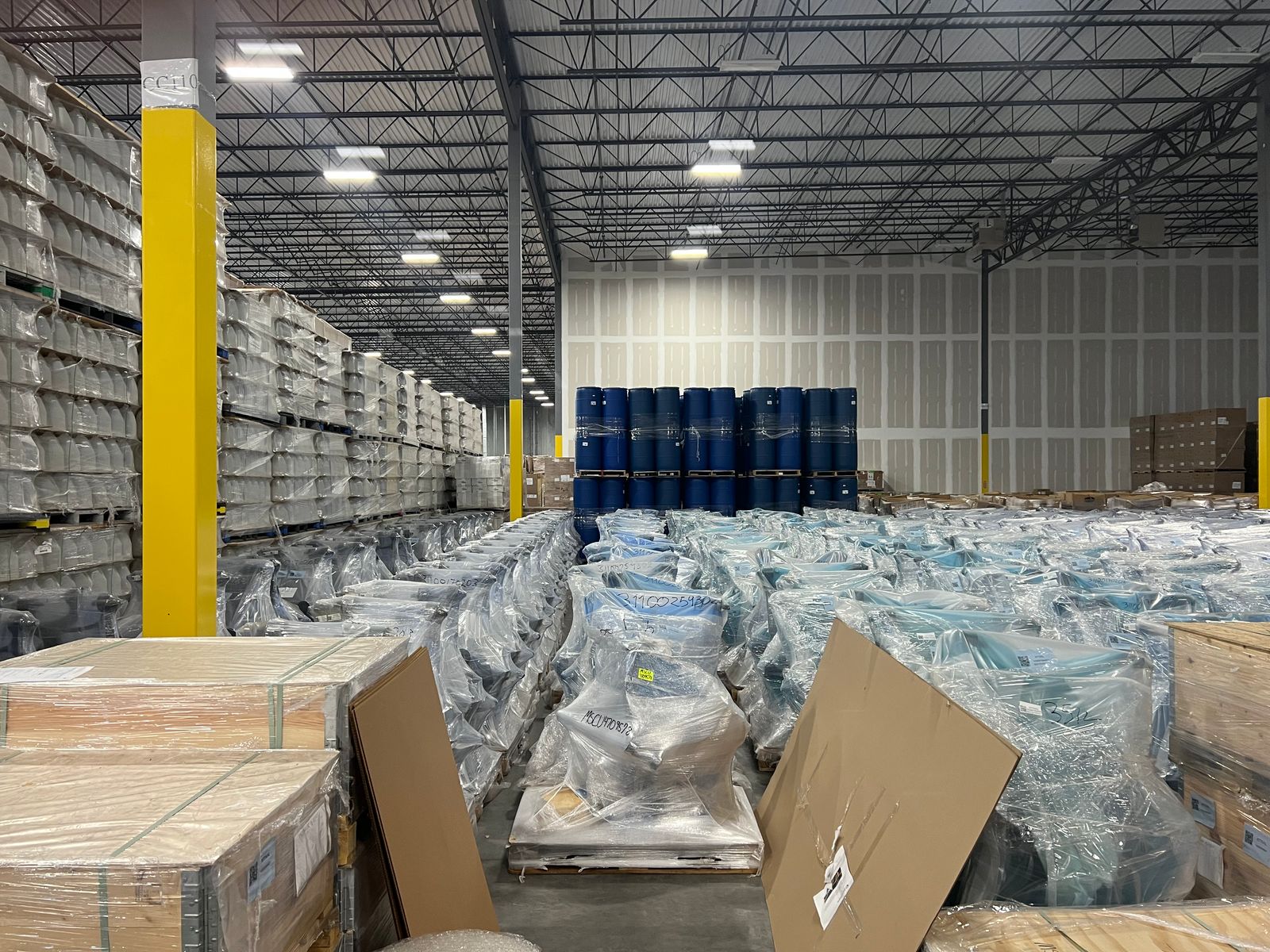
Thong Guan is one of those Malaysian manufacturers that most consumers have never heard of, yet whose products they touch every week. The company’s stretch film holds pallets together in warehouses and container yards across the world; its PVC cling film wraps food in supermarkets and kitchens; its blown film becomes garbage bags, courier bags and industrial liners. The business began in 1942 and, over eight decades, grew from a trading and household-products operation in northern Malaysia into an export-heavy industrial manufacturer centred on a large production complex in Sungai Petani, Kedah.
According to The Edge Malaysia, around 80% of Thong Guan’s output is exported to more than 70 countries, including the United States, Mexico, Australia, South Korea and Japan. That export orientation matters for how the stock should be read: Thong Guan’s earnings are driven as much by global logistics volumes, US and Asian customer demand, resin prices and the ringgit as by anything happening in the Malaysian domestic economy.
Alongside packaging, the group runs a smaller Food & Beverages and consumables division that trades and processes coffee beans and tea dust. In the first quarter of FY2026 that division generated revenue of RM44.4 million, up 7.7% year-on-year, and pre-tax profit of RM8.64 million, according to The Edge. It is a useful, steady contributor, but the investment case rests on plastic packaging.
Business Model: From Volume Film to Premium Film
Stretch film and blown film are, at the basic end, commodity products: polyethylene resin goes in, film comes out, and customers compare price per kilogram. Thong Guan’s strategy over the past several years has been to move away from that trap. Management has described the shift as going from volume-based to value-based production — investing in thinner, stronger, multi-layer “nano” stretch films and premium blown film that let customers wrap the same pallet with less plastic, which is both a cost saving and a sustainability selling point for buyers in Europe and North America.
In 2022, The Edge reported that the group operated 10 conventional stretch film lines, six nano-layer stretch film lines, three premium blown film lines, more than 200 blown film lines for garbage bags, 12 PVC food wrap lines and eight compounding lines. Executive director Alvin Ang See Ming told the paper that sales to the US market had more than quadrupled the previous year and that the group was exploring options including a US manufacturing joint venture for stretch film. His summary of the approach was blunt: once you have found the right business model, you step on the accelerator.
For brand owners and contract manufacturers reading OEMReview, the point is that secondary and tertiary packaging — the film that protects goods in transit rather than the bottle or pouch on the shelf — is increasingly specified on performance and plastic-reduction grounds, not just price. That is the segment Thong Guan is trying to own, and it links to the wider pressure on packaging we covered in how sustainability is reshaping OEM sourcing.
Why Thong Guan Is a Company to Watch
1. A public RM2 billion revenue target for 2027
In 2022 Thong Guan set out to double group revenue to RM2 billion by the end of 2027, from RM1.21 billion in FY2021. The Edge reported that management expected new premium stretch film lines to add RM400 million to RM500 million of annual revenue, ten premium blown film lines to add RM200 million to RM250 million, and a premium courier and specialty bags line to add RM200 million to RM300 million. Few Malaysian mid-cap manufacturers put a number that specific on the table, which makes the target a useful yardstick for investors: every quarterly result can be measured against it.
2. New European lines in Kedah (RM40 million, 2021–2023)
The first leg of the plan was domestic. Thong Guan invested about RM40 million in four high-capacity European blown film and stretch film lines at Sungai Petani, lifting total group production capacity from 230,000 to 265,000 tonnes per annum, as reported by The Star in February 2023. The lines came onstream in mid- and end-2023, meaning FY2024 onwards is the first period in which their full contribution should be visible.
3. A first factory in Indonesia (US$7 million, March 2025)
The second leg is geographic. On 3 March 2025, Thong Guan confirmed an initial investment of US$7 million to build a plastics facility producing wrapping plastic, garbage bags and plastic film on a 5-hectare site in the Kedungsepur (Batang) Integrated Industrial Estate in Central Java, according to Indonesia Business Post and the Jakarta Globe. It is the company’s first manufacturing base outside Malaysia.
A Kenanga Investment Bank research note from June 2025 added that the group planned to relocate part of its production to a 10-acre Special Economic Zone site in Central Java at an estimated cost of RM45 million, with operations targeted to begin in FY2026. The rationale is cost: Indonesian labour and electricity are cheaper than in Kedah, and film extrusion is an energy-hungry process where power costs flow straight into margins.
4. Profit is finally outrunning revenue
The most recent reason to pay attention is the numbers. In the first quarter of FY2026 (ended 31 March 2026), Thong Guan’s net profit rose 16% year-on-year to RM20.77 million even though revenue slipped 0.53% to RM317.32 million, according to The Edge Malaysia. The plastic packaging division’s pre-tax profit rose 19% to RM17.29 million on higher stretch film and industrial packaging volumes, and the board declared a first interim dividend of 2.5 sen per share, paid on 20 July 2026.
The second quarter was far stronger. Revenue rose to RM384.79 million from RM296.96 million a year earlier, and net profit jumped to RM59.66 million from RM16.61 million, with earnings per share of 15.14 sen versus 4.14 sen, according to RTTNews and MarketScreener. Adding the two quarters together, first-half FY2026 revenue was roughly RM702 million and net profit roughly RM80 million, compared with about RM616 million and RM34.5 million in the first half of FY2025.
Financial Snapshot: FY2026 So Far
| Period | Revenue | Net Profit | Year-on-Year |
|---|---|---|---|
| Q1 FY2026 (Jan–Mar 2026) | RM317.32 million | RM20.77 million | Revenue -0.53%; net profit +16% |
| Q2 FY2026 (Apr–Jun 2026) | RM384.79 million | RM59.66 million | Revenue +29.6%; net profit ~+259% |
| 1H FY2026 (combined) | ~RM702.1 million | ~RM80.4 million | vs ~RM616.0 million / ~RM34.5 million in 1H FY2025 |
Risks to Watch
Resin prices and the ringgit. Polyethylene resin is Thong Guan’s biggest input and is priced off global petrochemical markets, while most revenue is earned in foreign currency. Swings in either can move quarterly margins more than any operational improvement.
Is Q2 repeatable? A near-quadrupling of quarterly profit on a 30% revenue increase is exceptional. The summary reports of the Q2 FY2026 result do not break down how much came from volume, pricing, resin costs, currency or any one-off items, so investors should read the full quarterly report on Bursa Malaysia before extrapolating it.
Execution in Indonesia. Running a first overseas plant — hiring, permits, power supply, and qualifying new output with demanding export customers — is a different skill from adding lines at a home site the company has operated for decades.
Plastic regulation and trade policy. Single-use plastic rules in Europe and tariff decisions in the United States directly affect demand for film and bags. Thong Guan’s thin-gauge, plastic-reducing products are partly a hedge against regulation, but trade barriers are harder to engineer around.
How Thong Guan Fits Malaysia’s Packaging Landscape
Malaysia’s listed packaging sector has been reshaped by consolidation over the past five years, led by Scientex Berhad — see our Scientex Berhad company profile and our report on how Scientex took Scientex Packaging (SciPack) fully private for RM147.82 million. Scientex grew by buying competitors; Thong Guan, by contrast, has grown almost entirely organically, adding lines and now plants rather than acquiring companies. That makes Thong Guan one of the few remaining independent, founder-rooted flexible packaging producers of scale on Bursa Malaysia — which is exactly why it belongs on a watch list for an M&A-focused section. For more deal coverage across Malaysia and ASEAN, visit our M&A & Investment Insights hub.
My Take
My take on Thong Guan is that it is quietly doing what most Malaysian manufacturers only talk about: moving up the value chain and moving part of its cost base to where it is cheaper, at the same time. Plenty of companies announce Indonesian expansion; fewer pair it with a real product shift from commodity film to premium, plastic-reducing film that European and American buyers will pay more for. That combination — better product made at lower cost — is the only sustainable way to earn decent margins in a business where resin is the same price for everyone.
Am I convinced the RM2 billion target will be hit by 2027? Honestly, no. Annualising first-half FY2026 revenue gives roughly RM1.4 billion, so reaching RM2 billion next year would need a step-change that the Indonesian plant alone is unlikely to deliver. But I think the market would be wrong to judge Thong Guan only on the revenue target. The more important story is profit quality: Q1 showed profit rising on flat revenue, and Q2 showed profit rising far faster than revenue. If even part of that margin improvement is structural — coming from the newer European lines and the premium product mix — then a company that misses its top-line target could still beat expectations on earnings.
Who wins and who loses? Customers wrapping pallets in the US, Europe and Japan win if they get thinner film that does the same job. Smaller Malaysian film makers without the capital to buy European lines lose, because they are left competing on price in the commodity end. And in M&A terms, I would not be surprised if Thong Guan eventually becomes the kind of asset larger regional or global packaging groups look at — export-heavy, well-invested, with an Indonesian foothold. For now, the thing I would watch is simple: does the Q2 margin hold in Q3 and Q4? If it does, this is no longer a sleepy Kedah film maker; it is a proper regional packaging platform.
Frequently Asked Questions
What does Thong Guan Industries do?
Thong Guan Industries Berhad is a Malaysian manufacturer of flexible plastic packaging listed on Bursa Malaysia under the ticker TGUAN. From its main plant in Sungai Petani, Kedah, it makes stretch film, blown film, PVC cling and food wrap, garbage bags and industrial packaging, exporting around 80% of output to more than 70 countries. It also runs a smaller food and beverage division trading and processing coffee beans and tea dust.
What is Thong Guan’s revenue target for 2027?
In 2022 Thong Guan set a target of doubling group revenue to RM2 billion by 2027, from RM1.21 billion in FY2021, according to The Edge Malaysia. The plan relies on premium stretch film lines, premium blown film lines and a courier and specialty bags line.
Is Thong Guan building a factory in Indonesia?
Yes. On 3 March 2025 Thong Guan confirmed an initial US$7 million investment in a plastics plant on a 5-hectare site at the Batang Integrated Industrial Estate (KIT Batang) in Central Java. A Kenanga Investment Bank note in June 2025 said the group also planned to relocate part of its production to a 10-acre Special Economic Zone site in Central Java at an estimated RM45 million, with operations targeted for FY2026.
How much profit did Thong Guan make in Q2 2026?
For the second quarter of FY2026, Thong Guan reported revenue of RM384.79 million, up from RM296.96 million a year earlier, and net profit of RM59.66 million, up from RM16.61 million, an increase of about 259%, according to RTTNews on 26 August 2026.
What is Thong Guan’s production capacity?
After adding four European blown film and stretch film lines at Sungai Petani for about RM40 million, which came onstream in 2023, Thong Guan’s group production capacity rose from 230,000 to 265,000 tonnes per annum, as reported by The Star.
Does Thong Guan pay dividends?
Yes. Alongside its Q1 FY2026 results, Thong Guan declared a first interim dividend of 2.5 sen per share, which was paid on 20 July 2026, according to The Edge Malaysia.
Related
- M&A & Investment Insights — the full landing page for Malaysia and ASEAN consumer and packaging deals
- More Companies to Watch
- Scientex Berhad company profile — Malaysia’s acquisitive packaging-and-property group
- Scientex Completes RM147.82 Million Buyout to Take Scientex Packaging (SciPack) Fully Private
- Masan Group company profile — Vietnam’s consumer and retail conglomerate
- What Is Contract Manufacturing? A Guide
Sources
- Thong Guan Industries Berhad — official website
- The Edge Malaysia — Thong Guan Industries seeks to double revenue to RM2 bil by 2027
- The Star — Thong Guan to ramp up packaging capacity
- Jakarta Globe — Malaysian plastic giant Thong Guan to set up US$7 million factory in Central Java
- Indonesia Business Post — Thong Guan Industries confirms US$7 million investment in KIT Batang
- Kenanga Investment Bank — Thong Guan Industries company update (June 2025)
- The Edge Malaysia — Thong Guan 1QFY2026 results
- MarketScreener — Thong Guan Industries quarterly results
- RTTNews — Thong Guan Industries Berhad reports rise in Q2 profit
Disclaimer: This article is for informational and editorial purposes only. It is not a recommendation to buy or sell any securities and does not constitute investment advice.