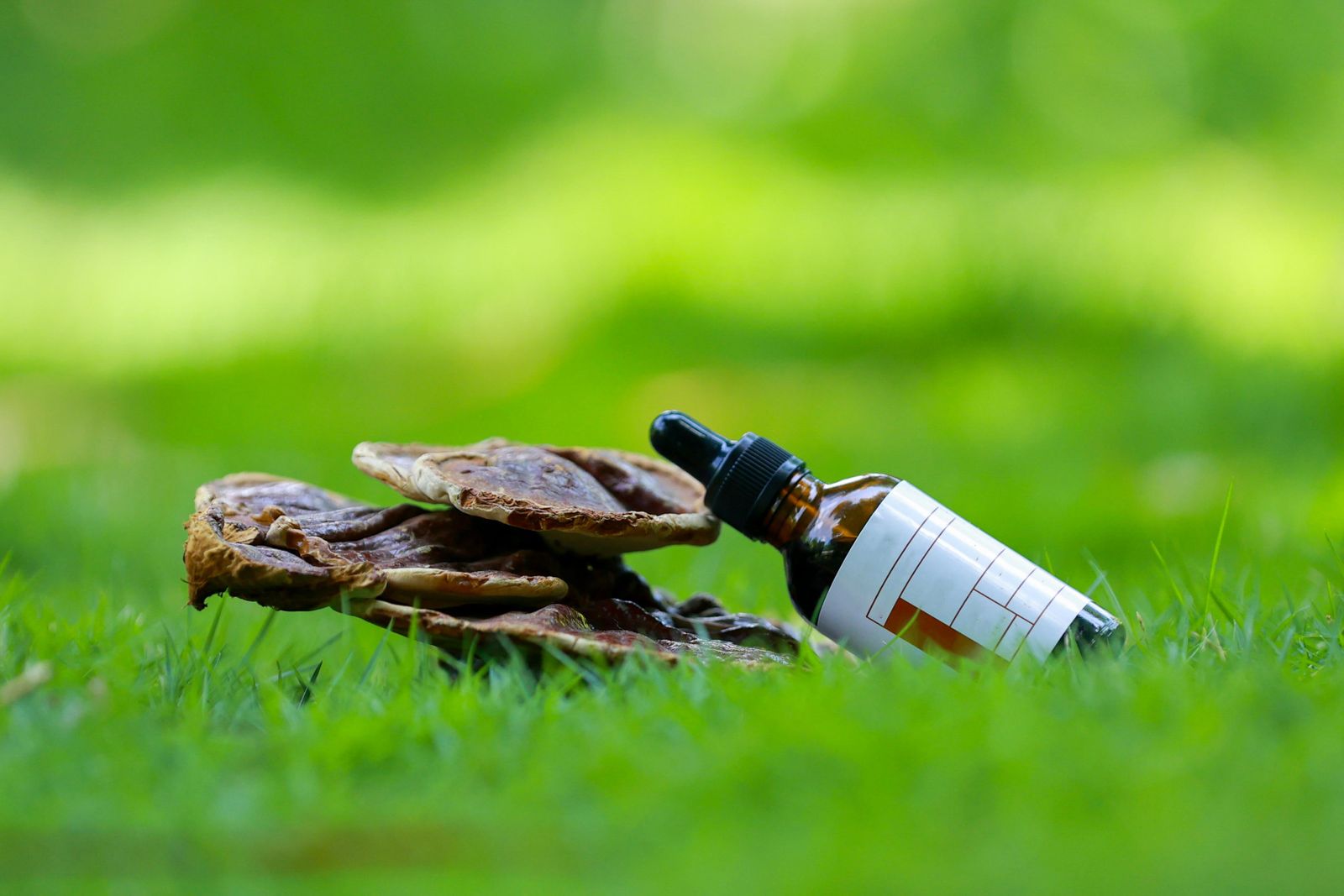
DXN Holdings Bhd (Bursa Malaysia: DXN) is the Kedah-born company that turned the Ganoderma lucidum mushroom, better known in Asia as Lingzhi or reishi, into a global direct-selling business. Founded in 1993 by Datuk Lim Siow Jin and still headquartered in Alor Setar, DXN sells Ganoderma coffee, supplements, personal care and food products through a network of distributors that reaches more than 180 countries, according to the company. It earns roughly RM1.9 billion a year in revenue, owns its plantations and factories, and returned to the Main Market of Bursa Malaysia in May 2023 after more than a decade as a private company. This Companies to Watch report explains why the next 18 months matter: DXN has just committed up to RM500 million to capital expenditure in FY2027, while its share price and recent quarterly profits have moved in the opposite direction.
Key Takeaways
- DXN Holdings Bhd is a Malaysian vertically integrated maker and direct seller of Ganoderma (Lingzhi) health products, founded in 1993 by Datuk Lim Siow Jin and re-listed on Bursa Malaysia’s Main Market on 19 May 2023 at an IPO price of 70 sen.
- For the financial year ended 28 February 2026 (FY2026), DXN reported flat revenue of about RM1.9 billion and net profit of RM271.52 million, down 17.24% from RM328.07 million, as a stronger ringgit and higher costs bit; excluding currency translation, revenue grew 12.1% (The Edge Malaysia).
- In the first quarter of FY2027 (ended 31 May 2026), revenue fell 7.5% to RM443.03 million and net profit fell 20.8% to RM58.53 million, which management and RHB Research attributed largely to distributor stock-timing and FX rather than weaker end-demand.
- DXN plans up to RM500 million of capital expenditure in FY2027 for factories in Malaysia, Brazil, Morocco, Peru and Bolivia and plantations in Bolivia, Brazil and Malaysia, including a BRL100 million (about RM77 million) plant in Ibia, Minas Gerais, due for completion in September 2029.
- Latin America generated 61.2% of DXN’s revenue, according to the New Straits Times, making the group’s growth story as much a Latin American consumer story as a Malaysian one.
Company Snapshot
| Company | DXN Holdings Bhd |
| Listing | Main Market, Bursa Malaysia (re-listed 19 May 2023; first listed 2003, privatised and delisted December 2011) |
| Founder / Executive Chairman | Datuk Lim Siow Jin |
| Group CEO | Prajith Pavithran |
| Headquarters | Alor Setar, Kedah, Malaysia |
| Business model | Vertically integrated: Ganoderma cultivation, manufacturing and direct selling (network marketing) |
| Core products | Ganoderma (Lingzhi) coffee, food and beverages, health supplements, personal care |
| FY2026 revenue | About RM1.9 billion (year ended 28 February 2026) |
| FY2026 net profit | RM271.52 million |
| Official website | dxn2u.com |
What DXN Holdings Does
DXN’s pitch is simple: it controls the Ganoderma value chain from mushroom to cup. The company cultivates Ganoderma lucidum, processes it into extracts and powders, blends it into products such as its signature Lingzhi coffee, and sells the finished goods to consumers through independent distributors who earn commissions on their own sales and on the sales of the people they recruit. That direct-selling model is the same one used by global players such as Amway, Herbalife and Shaklee, but DXN differs in one important way: it makes most of what it sells and owns much of the raw-material base behind it.
That vertical integration is the reason OEMReview tracks DXN closely. Most Malaysian supplement brands outsource production to contract manufacturers (see our explainer on what a supplement OEM manufacturer does). DXN is the opposite case: a brand owner that built its own factories, first in Malaysia and then in markets including China, India, Dubai and Mexico, where new plants began commercial production in calendar 2023, according to the Malaysian Investment Development Authority (MIDA). Facilities in Nepal and Bangladesh followed. The closest comparison in our coverage is Amway and its Nutrilite farms, another direct seller that decided owning the farm was a competitive advantage.
From private company back to Bursa
DXN was first listed on Bursa Malaysia in 2003. Founder Lim Siow Jin took it private in 2011, and the company spent the next twelve years expanding overseas outside the public eye. It returned to the Main Market on 19 May 2023 with an IPO priced at 70 sen per share; the Malaysian public portion was oversubscribed 3.2 times, The Star reported. The shares opened at 69 sen on debut, one sen below the IPO price, which in hindsight was an early signal that investors would price DXN more cautiously than its earnings record suggested.
Financial Track Record: Record Highs, Then a Currency Headwind
DXN’s numbers before FY2026 were the kind that earn a company a reputation for consistency. For the financial year ended 28 February 2025 (FY2025), DXN reported record revenue of RM1.9 billion, up 5.8% from RM1.8 billion, and record net profit of RM329 million, up from RM310.9 million, according to The Star. It declared a fourth interim dividend of 1.0 sen per share, worth RM49.7 million, and Executive Chairman Datuk Lim Siow Jin described the year as another set of record-breaking results. The group also made its debut on Fortune’s inaugural Southeast Asia 500 list at number 491.
The first half of FY2026 kept that momentum. Revenue for the six months to 31 August 2025 rose 9.2% to RM963.5 million, driven by Latin America, India and Turkiye, The Exchange Asia reported, and second-quarter net profit rose 6.5% year-on-year to RM70.3 million with an EBITDA margin of 28.3%.
The second half was harder. For the full FY2026 (year ended 28 February 2026), revenue was flat at about RM1.9 billion and net profit fell 17.24% to RM271.52 million, The Edge Malaysia reported on 29 April 2026. The company blamed a stronger ringgit, which shrinks overseas sales when translated back into Malaysian currency, along with higher production and marketing costs and a weaker performance in Morocco. Stripping out currency translation, revenue would have grown 12.1%. DXN also cut its third interim dividend for the year to 0.7 sen from 1.0 sen.
| Period | Revenue | Net profit |
|---|---|---|
| FY2025 (to 28 Feb 2025) | RM1.9 billion (+5.8%) | RM329 million (record) |
| FY2026 (to 28 Feb 2026) | ~RM1.9 billion (flat; +12.1% ex-FX) | RM271.52 million (-17.24%) |
| 1QFY2027 (to 31 May 2026) | RM443.03 million (-7.5%) | RM58.53 million (-20.8%) |
1QFY2027: a weak quarter with an explanation
The latest reported quarter is the reason DXN is on our watch list rather than simply our profile list. For the three months ended 31 May 2026, revenue fell 7.5% year-on-year to RM443.03 million from RM479.06 million, and net profit fell 20.8% to RM58.53 million from RM73.91 million, The Star reported. The company pointed to lower exports to the Middle East, where it sells exclusively through an external distribution agency whose restocking fell outside the quarter, plus softer conditions in Africa. Customers had also built inventory ahead of price increases in major markets.
RHB Research kept a buy call but cut its target price to 55 sen from 60 sen and trimmed FY2027 to FY2029 earnings forecasts by 14%, 10% and 7% respectively, The Star reported. The first-quarter result met only 18% of RHB’s full-year estimate and 17% of consensus. RHB said distributor orders started picking up in June and expects an average price increase of about 10% to help revenue from the second quarter onward. DXN still paid a first interim dividend of 0.60 sen per share (about RM29.8 million) on 28 August 2026.
The RM500 Million Expansion Plan
The strategic news came alongside the weak quarter. On 27 July 2026, Group CEO Prajith Pavithran said DXN would deploy up to RM500 million in planned capital expenditure for FY2027 to strengthen what he called its vertically integrated global platform, according to The Star. The plan has three parts:
- Manufacturing capacity in Malaysia, Brazil, Morocco, Peru and Bolivia, so that more product is made inside the markets where it is sold.
- Plantations in Bolivia, Brazil and Malaysia to secure raw materials (Ganoderma and coffee) and reduce cost volatility. Alongside its FY2026 results, DXN also highlighted a 60-year lease on 26.6 acres of industrial land in Bukit Kayu Hitam, Kedah, for RM27.8 million (The Edge Malaysia).
- Market development in new and under-penetrated markets, particularly Africa and Europe.
The first big project has already been named. DXN is investing at least BRL100 million (about RM77 million) over five years in a new facility on a 100,745-square-metre site in Ibia, Minas Gerais, which will become its largest manufacturing presence in Latin America, the New Straits Times reported on 1 September 2026. Construction is targeted for completion in September 2029, with production starting by the end of 2029. The site will process Arabica coffee from DXN’s 155.8-hectare Brazilian plantation and is expected to create 200 to 250 direct and indirect jobs.
Why Brazil? Because that is where DXN’s customers are. The NST report noted that Latin America accounted for 61.2% of group revenue, or roughly RM1.2 billion a year, with established markets in Peru, Bolivia and Mexico and newer growth in Brazil and Argentina. Focus Malaysia summarised the analyst view: the near-term weakness is temporary, but new factories typically need two to three years to reach profitability, so the spending will weigh on margins before it pays off.
Why DXN Is a Company to Watch
1. A Malaysian brand with a Latin American engine
Few Bursa-listed consumer companies earn most of their money in South America. That gives DXN growth that domestic consumer stocks cannot match, but it also explains the FY2026 profit drop: when the ringgit strengthens against the Peruvian sol, Bolivian boliviano or Mexican peso, every sale is worth less in ringgit. Investors watching DXN are effectively watching Latin American consumer demand and currency trends.
2. Vertical integration as a moat, or a cost burden
Owning plantations and factories gives DXN control over quality and supply, which matters in a category where raw Ganoderma quality varies widely. The trade-off is a high fixed-cost base. RHB flagged operating leverage as the reason a 7.5% revenue drop became a 20.8% profit drop in 1QFY2027. Brands weighing the same build-or-outsource question can see the trade-offs in our guide to working with a nutraceutical contract manufacturer in Malaysia.
3. A cash-rich balance sheet behind the spending
DXN funds its expansion largely from operating cash flow. The company reported net operating cash flow of RM74.3 million for 1QFY2027, up 36% year-on-year, and a net cash position of RM421.2 million at 31 May 2026 in its quarterly results release. That cushion is why the board can keep paying dividends while committing up to RM500 million to capex, but the RM500 million figure is larger than the current net cash pile, so execution discipline matters.
4. The valuation gap
At 46.5 sen in late April 2026, DXN’s shares traded about a third below the 70-sen IPO price, giving a market capitalisation of about RM2.32 billion (The Edge Malaysia). That is a modest valuation for a company that still earned more than RM270 million in a down year. The market is discounting either the direct-selling model, the currency exposure, or both.
Risks to Monitor
- Currency translation: a strong ringgit directly reduces reported revenue and profit from Latin America and other overseas markets.
- Distributor concentration: the Middle East is served through a single external agency, so its ordering pattern can swing a whole quarter.
- Execution on new plants: five manufacturing projects and three plantation programmes running at once raise the risk of cost overruns and a longer path to profitability.
- Direct-selling regulation and reputation: network marketing faces tighter scrutiny in many markets, and any regulatory change in a major country would hit volumes.
- Morocco and Africa: both were called out as weak spots in FY2026 and 1QFY2027, yet Africa is a priority growth market in the FY2027 plan.
My Take
My opinion: DXN is one of the most misunderstood companies on Bursa Malaysia. People look at the Lingzhi coffee sachets and the multi-level marketing model and file it under “MLM stock”, then stop thinking. What they miss is that DXN is a genuinely vertically integrated manufacturer that has quietly built a billion-ringgit business in Latin America, a region almost no other Malaysian consumer company has cracked. If a Malaysian F&B brand opened 20 outlets in Peru, it would be front-page news. DXN has been doing the equivalent for years.
That said, I don’t think the FY2026 profit drop is purely a currency story, and I would be cautious of anyone who says it is. Yes, the ringgit hurt. But higher production costs, heavier marketing spend and a weaker Morocco are operating problems, not accounting ones. And the 1QFY2027 explanation, that distributors front-loaded orders ahead of price increases, cuts both ways: it means some of FY2026’s revenue was pulled forward, which flatters last year as much as it hurts this one.
The RM500 million capex plan is the real test. I like the logic. Making coffee in Brazil for Brazilians, rather than shipping it from Kedah, cuts freight and tariff costs and turns DXN into a local player in its biggest region. Plantations in Bolivia, Brazil and Malaysia reduce raw-material risk. But this is a lot of concrete for a company whose profits are currently shrinking, and RHB itself says new factories take two to three years to turn profitable. For the next two years, I expect DXN’s margins to look worse before they look better.
Who wins? Long-term shareholders who believe the Latin American franchise is durable, because they are being paid a dividend to wait while the company builds a cheaper, more local supply chain. Who loses? Anyone expecting a quick rerating back to the 70-sen IPO price. The share price will not move meaningfully until DXN shows two or three consecutive quarters of profit recovery.
For Malaysian supplement brand owners, DXN signals something useful: Malaysian manufacturers can compete globally in functional food and wellness if they own the ingredient story. Ganoderma is DXN’s moat in the same way that ingredient provenance is the moat for the best brands in our functional food and supplements category. My verdict: DXN is a company to watch, not yet a turnaround to celebrate. The quarters ending August and November 2026 will tell us whether 1QFY2027 was a blip or the start of a trend.
Related Coverage on OEMReview
- Investment Insights: Malaysian and ASEAN M&A, profiles and companies to watch
- Thong Guan Industries: Why Malaysia’s Stretch Film Maker Is a Company to Watch in 2026
- Amway and Nutrilite: The Supplement Giant That Owns Its Own Farms
- ZUS Coffee Raises RM250 Million from KV Asia, KWAP and Kapal Api
Frequently Asked Questions
What does DXN Holdings do?
DXN Holdings Bhd is a Malaysian company, founded in 1993 by Datuk Lim Siow Jin and headquartered in Alor Setar, Kedah, that cultivates Ganoderma lucidum (Lingzhi or reishi mushroom) and manufactures and sells Ganoderma coffee, supplements, food and personal care products through a direct-selling network that reaches more than 180 countries.
Is DXN Holdings listed on Bursa Malaysia?
Yes. DXN Holdings returned to the Main Market of Bursa Malaysia on 19 May 2023 with an IPO price of 70 sen per share. It had previously been listed from 2003 until it was privatised and delisted in December 2011.
What were DXN Holdings’ FY2026 results?
For the financial year ended 28 February 2026, DXN reported revenue of about RM1.9 billion, flat year-on-year, and net profit of RM271.52 million, down 17.24% from RM328.07 million. Excluding foreign currency translation effects, revenue grew 12.1%.
Why did DXN’s profit fall in 1QFY2027?
In the quarter ended 31 May 2026, DXN’s net profit fell 20.8% to RM58.53 million on revenue of RM443.03 million (down 7.5%). The company cited lower exports to the Middle East due to its distribution agency’s restocking timing, softer conditions in Africa and customers buying ahead of price increases; RHB Research also pointed to unfavourable FX and a high fixed-cost base.
How much is DXN investing in expansion?
DXN plans up to RM500 million of capital expenditure in FY2027 for manufacturing in Malaysia, Brazil, Morocco, Peru and Bolivia, plantations in Bolivia, Brazil and Malaysia, and market development in Africa and Europe. This includes at least BRL100 million (about RM77 million) for a new plant in Ibia, Minas Gerais, Brazil, targeted for completion in September 2029.
Which market is most important to DXN Holdings?
Latin America. According to the New Straits Times, the region accounted for 61.2% of DXN’s revenue, or about RM1.2 billion a year, led by Peru, Bolivia and Mexico, with newer growth in Brazil and Argentina.
Sources
- DXN Holdings, official website (dxn2u.com)
- The Star, DXN posts record RM329mil net profit for FY25 (29 Apr 2025)
- The Edge Malaysia, DXN 4QFY2026 and full-year FY2026 results (29 Apr 2026)
- The Star, DXN earmarks RM500mil capex for FY27 expansion (27 Jul 2026)
- The Star, New markets to drive DXN Holdings recovery (29 Jul 2026)
- Focus Malaysia, DXN RM500mil expansion plan signals confidence beyond short-term weakness (28 Jul 2026)
- New Straits Times, DXN invests RM77mil to expand Brazil manufacturing hub (1 Sep 2026)
- The Exchange Asia, DXN records 9.2% revenue increase to RM963.5 million
- MIDA, DXN sustains growth momentum, driven by expansion in key markets
- The Star, DXN IPO oversubscribed 3.2 times (12 May 2023)
Disclaimer: This article is for informational and editorial purposes only. It is not a recommendation to buy or sell any securities and does not constitute investment advice.