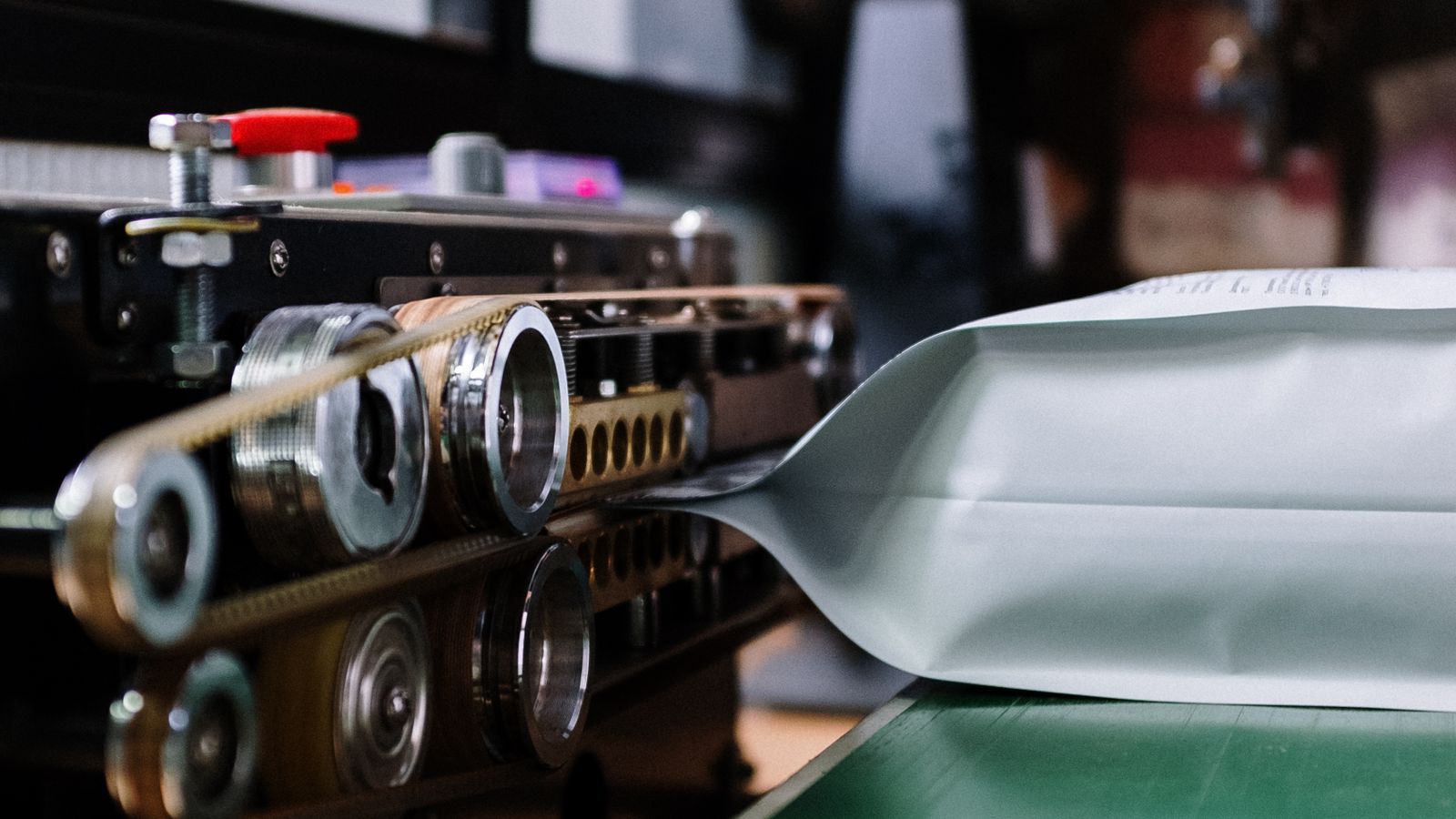
On 13 September 2021, Scientex Berhad (Bursa: SCIENTX) offered RM2.70 per share and RM0.32 per warrant in cash for everything it did not already own in Daibochi Berhad, the Melaka-based flexible packaging converter that prints and laminates the snack wrappers, sachets and pouches used by multinational food and consumer brands. The offer was worth RM345.3 million (about US$82 million) and was meant to take Daibochi off Bursa Malaysia by the fourth quarter of 2021. It did not. This Deal Retrospective looks back at a privatisation that stalled at roughly 72%, was blocked by two patient fund managers, and was only finished four and a half years later, at a much lower price, through a different legal route.
Key Takeaways
- On 13 September 2021, Scientex Berhad offered RM2.70 per share and RM0.32 per warrant for the 38.12% of Daibochi Berhad shares and 95.75% of warrants it did not own, a total of RM345.3 million, according to Scientex’s press release.
- The RM2.70 offer was a 17.39% premium to Daibochi’s three-month VWAP and 221.43% above its net assets of RM0.84 per share as at 30 April 2021.
- The offer lifted Scientex’s stake from 61.88% to about 71.89% but fell short of the 90% needed to delist, because minority shareholders Apollo Asia Fund and Samarang Ucits-Samarang Asian Prosperity, holding a combined 14.63%, did not sell (The Edge).
- Daibochi was renamed Scientex Packaging (Ayer Keroh) Berhad (SciPack) in December 2021 and stayed listed until Scientex completed a RM1.50-per-share selective capital reduction; SciPack was removed from Bursa Malaysia on 25 March 2026.
- Minority shareholders who rejected RM2.70 in 2021 were eventually taken out at RM1.50 per share, about 44% less.
Deal Snapshot
| Target | Daibochi Berhad (later Scientex Packaging (Ayer Keroh) Berhad, Bursa: SCIPACK, stock code 8125) |
| Target business | Flexible plastic packaging converter (printing, laminating and pouch-making) serving food and beverage and FMCG brands |
| Acquirer | Scientex Berhad, Malaysian flexible plastic packaging manufacturer and property developer (scientex.com.my) |
| Announced | 13 September 2021 |
| Structure | Unconditional voluntary take-over offer, cash |
| Offer price | RM2.70 per share; RM0.32 per warrant |
| Securities sought | 124,784,759 shares (38.12%) and 26,137,985 warrants (95.75%) |
| Total value | RM345.3 million (about US$82 million) |
| Funding | Internally generated funds and bank borrowings |
| Outcome | Stake rose to about 71.89%; below the 90% delisting threshold, so Daibochi stayed listed |
| Final take-private | RM1.50-per-share selective capital reduction proposed 12 September 2025; delisted 25 March 2026 |
Background: How Scientex Ended Up Controlling Daibochi
Scientex, founded in 1968, built its packaging business on making film: stretch film, polyethylene, BOPP and CPP films, agricultural film and strapping. In its own description, it is the largest stretch film producer in Asia. What it lacked until 2019 was a converting business, the step where plain film is printed, laminated and formed into the branded pouches and wrappers that consumers actually see on shelves. Daibochi, based in Ayer Keroh, Melaka, did exactly that for multinational food and consumer-goods companies.
Scientex bought its way in through a share swap. In November 2018 it agreed to buy a controlling block from Daibochi’s individual shareholders for RM222.5 million, equivalent to RM1.60 per Daibochi share, paid in new Scientex shares at one Scientex share for every 5.535 Daibochi shares, the New Straits Times reported. The block, about 42.5% of Daibochi, changed hands in February 2019 and triggered a mandatory general offer at RM1.59 cash (or the same share swap). When that offer closed in April 2019, Scientex held 61.89% of Daibochi, according to The Edge. Scientex’s 2021 press release describes this as the acquisition that expanded its scope into film converting, allowing the group to supply high-value packaging to multinational F&B and FMCG customers.
For readers who have followed our Scientex Berhad company profile, this is the deal that turned Scientex from a film maker into a supplier that can sell finished printed packaging directly to brand owners.
The September 2021 Offer: Terms and Rationale
Two and a half years after taking control, Scientex moved to buy out the rest. According to Scientex’s 13 September 2021 press release, the offer covered 124,784,759 Daibochi shares, or 38.12% of the issued shares excluding treasury shares, and 26,137,985 warrants, or 95.75% of those outstanding. The RM2.70 offer price represented a 17.39% premium over the three-month volume-weighted average price up to 10 September 2021 and a 221.43% premium over Daibochi’s unaudited net assets of RM0.84 per share as at 30 April 2021. The warrant price of RM0.32 was a 100% premium over the warrants’ three-month VWAP.
Against the last traded price, the premium was smaller. The Edge reported that RM2.70 was 12.97% above Daibochi’s RM2.39 close on 10 September 2021, which valued the company at RM783.73 million before the offer. Scientex said it did not intend to maintain Daibochi’s listing and would fund the purchase with internal cash and bank borrowings.
Why Scientex wanted 100%
Scientex CEO Lim Peng Jin framed the deal around the pandemic. He said Covid-19 had shown the need for companies to react quickly to external shocks, and that this mattered especially for Daibochi because it serves the supply chains of essential F&B and FMCG products. The press release listed four practical benefits of full ownership:
- Integration: streamlining Daibochi’s production, supply chain, business development and administration with the wider Scientex group.
- Scale: giving Daibochi access to Scientex’s factories in Malaysia, other Southeast Asian countries and the United States, which helps meet the business-continuity demands of multinational customers.
- Capital: letting Daibochi use Scientex’s larger balance sheet to upgrade its converting capabilities.
- Flexibility: removing the constraints of running a listed subsidiary with outside shareholders.
That last point is the real story. While Daibochi had minority shareholders, every intra-group transfer, shared contract and capital decision between Scientex and Daibochi was a related-party transaction requiring disclosure and, often, independent approval. Full ownership removes that friction.
What Went Wrong: The 90% Problem
Under Bursa Malaysia’s listing rules, an offeror that wants to delist a company through a take-over offer generally needs to reach 90% of the shares. Daibochi’s register made that hard from day one. The Edge Malaysia Weekly reported in its 27 September to 3 October 2021 issue that Apollo Asia Fund, a Daibochi shareholder since 2010, held 9.38% before the offer and bought another 524,300 shares at RM2.69 on 15 September, taking its stake to 9.54%. Samarang Ucits-Samarang Asian Prosperity, a substantial shareholder since 2017, also bought more, lifting its stake to 5.095%. Together they held 14.63%, enough on their own to keep Scientex below 90%.
Their argument was not that the price was too low for a quick exit. Apollo Asia’s Claire Barnes told The Edge that she agreed with Scientex that Daibochi represented “excellent value at RM2.70” and that she hoped the company would remain listed, adding that threats of delisting force many investors to sell when they do not want to. In other words, the holdouts wanted to stay invested in Daibochi’s long-term growth rather than take a 13% premium and leave.
Scientex did buy aggressively in the market, raising its stake from 61.88% to 66.02% within days by acquiring 13.55 million shares at RM2.69 to RM2.70, The Edge reported. When the offer closed in November 2021, Scientex held about 71.89%, according to The Edge, giving it firm control but not the right to delist. Daibochi’s share price was RM2.39 at the close of the offer on 8 November 2021. The company was renamed Scientex Packaging (Ayer Keroh) Berhad in December 2021 and carried on as a listed subsidiary.
The Sequel: RM1.50 and a Selective Capital Reduction
Scientex returned on 12 September 2025, almost exactly four years later, with a different tool. Instead of another take-over offer, it proposed a selective capital reduction and repayment (SCR) under the Companies Act 2016: SciPack would cancel the shares held by everyone except Scientex and pay them RM1.50 cash each, roughly RM147.82 million in total, The Edge reported. An SCR does not need 90% acceptances. It needs approval by at least 75% of the votes cast by the disinterested shareholders at a general meeting, with no more than 10% of them voting against, plus High Court confirmation.
By then the holdouts had softened. The Edge reported that Samarang had been gradually selling its SciPack shares and ceased to be a substantial shareholder, and that on 12 September 2025 Apollo Asia sold 7 million shares, cutting its stake to 8.307%. Scientex bought 10 million shares the same day, lifting its stake to 74.75% and reducing the SCR cash bill to about RM132.83 million. The Edge also noted that RM1.50 was a 5.86% to 8.89% premium to SciPack’s five-day to six-month VWAPs but a 5.84% discount to its one-year VWAP. SciPack’s net profit for the year ended July 2025 was RM26.88 million, down 17.4%, on revenue of RM712.19 million.
Shareholders approved the SCR on 24 November 2025, trading was suspended from 27 February 2026, and Bursa Securities removed SciPack from the Official List on 25 March 2026, according to the delisting announcement. We covered that final step in detail in Scientex Completes RM147.82 Million Buyout to Take Scientex Packaging (SciPack) Fully Private.
The Price Path: RM1.60, RM2.70, RM1.50
| Date | Event | Price per Daibochi / SciPack share | Scientex stake after |
|---|---|---|---|
| Feb 2019 | Purchase of controlling block (share swap) | RM1.60 (implied) | About 42.5% |
| Apr 2019 | Mandatory general offer closes | RM1.59 cash alternative | 61.89% |
| Sep to Nov 2021 | Voluntary take-over offer | RM2.70 | About 71.89% |
| Sep 2025 | Market purchase of 10 million shares | Not disclosed | 74.75% |
| Sep 2025 to Mar 2026 | Selective capital reduction | RM1.50 | 100% |
The table tells the whole retrospective in five rows. Scientex paid RM1.60 in 2019, offered RM2.70 in 2021, and finished at RM1.50 in 2026, below what it paid to gain control in the first place. Shareholders who accepted the 2021 offer received 80% more per share than those who waited for the 2026 SCR.
Why This Deal Still Matters for Malaysian Packaging
The Daibochi saga is a useful case study for three groups. For listed groups with controlling stakes in listed subsidiaries, it shows that a voluntary offer is the riskiest route to delisting when a few long-term funds sit on the register, and that the SCR is now the preferred tool once the parent has around 75%. For minority investors, it is a reminder that refusing an offer is a bet on the business outperforming, not a guarantee of a better price later. And for brand owners buying packaging, it confirms that Malaysia’s flexible packaging supply base is consolidating into larger, vertically integrated groups that make the film and convert it under one roof, much like the strategy we described in our look at Thong Guan Industries.
For brands, that consolidation cuts both ways. A larger converter offers better business-continuity planning and a broader material range, which is exactly what Scientex pitched to multinationals in 2021. But fewer independent suppliers also means less pricing leverage for small and mid-sized brands. If you are choosing packaging for a new product, our guide to choosing the right packaging for your formula covers the technical questions to ask before you sign with any converter.
My Take
My opinion: the 2021 Daibochi offer is the clearest lesson I know of in Malaysian M&A about what a minority “no” really costs. Apollo Asia and Samarang were not wrong about Daibochi being a good business, and they were not wrong to say that delisting threats push small investors to sell. But they were wrong about the price. They turned down RM2.70 in 2021, the shares drifted lower for four years, and the remaining minorities were cashed out at RM1.50 anyway. Principle is expensive when the controlling shareholder can simply wait.
I also think Scientex played this better than the failed headline suggests. It already controlled the board and the operations after 2019. Missing the 90% threshold in 2021 meant some extra listing costs and related-party paperwork, but the integration went ahead regardless: Daibochi was renamed Scientex Packaging (Ayer Keroh) within weeks. Then Scientex used the time to wait for the holdouts to tire, bought at the margin, and switched to an SCR that only needed 75% of disinterested votes. The final cheque, about RM133 million, was far smaller than the roughly RM240 million those same minority shares would have cost at RM2.70 (an OEMReview estimate based on The Edge’s share figures). Patience saved Scientex real money.
Who won? Scientex, clearly, and the Daibochi shareholders who accepted RM2.70 in 2021, the best exit price in this company’s recent history. Who lost? Minorities who held on for a better offer that never came, and the Bursa Main Market, which lost another mid-cap industrial name. The Daibochi saga follows the same pattern as F&N’s Cocoaland privatisation: a controlling shareholder deciding a listed subsidiary is worth more inside the group than on the exchange.
What does it signal? I expect more parent-subsidiary clean-ups in Malaysia, and I expect most of them to use the SCR route rather than voluntary offers. If you hold a listed subsidiary where the parent already owns 70% or more, my practical advice is to treat any cash offer as the best price you may see, not an opening bid. The Daibochi minority shareholders learned that the hard way.
Related Coverage on OEMReview
- Investment Insights: Malaysian and ASEAN M&A, profiles and companies to watch
- Scientex Completes RM147.82 Million Buyout to Take Scientex Packaging (SciPack) Fully Private
- Scientex Berhad: Company Profile of Malaysia’s Packaging and Property Conglomerate
- Thong Guan Industries: Why Malaysia’s Stretch Film Maker Is a Company to Watch in 2026
- Deal Retrospective: F&N’s RM488 Million Cocoaland Privatisation and Its Halal Snack Bet
Frequently Asked Questions
Did Scientex take Daibochi private in 2021?
No. Scientex Berhad’s RM345.3 million voluntary take-over offer, announced on 13 September 2021 at RM2.70 per share and RM0.32 per warrant, raised its stake in Daibochi Berhad to about 71.89%, short of the 90% needed to delist. Daibochi stayed listed and was renamed Scientex Packaging (Ayer Keroh) Berhad in December 2021.
Why did the Scientex offer for Daibochi fail to delist the company?
Two long-term minority shareholders, Apollo Asia Fund (9.54%) and Samarang Ucits-Samarang Asian Prosperity (5.095%), held a combined 14.63% and did not accept the offer, according to The Edge. That kept Scientex below the 90% threshold required under Bursa Malaysia rules to delist a company through a take-over offer.
How much did Scientex pay for Daibochi in total?
Scientex paid RM222.5 million in new Scientex shares (an implied RM1.60 per share) for about 42.5% of Daibochi in February 2019, then raised its stake through a 2019 mandatory offer at RM1.59, a 2021 offer at RM2.70 and market purchases. It finished the buyout with a selective capital reduction at RM1.50 per share proposed in September 2025, valued at about RM147.82 million and later about RM132.83 million after further share purchases.
When was Scientex Packaging (Ayer Keroh) delisted from Bursa Malaysia?
Scientex Packaging (Ayer Keroh) Berhad, formerly Daibochi Berhad, was removed from the Official List of Bursa Malaysia at 9.00 a.m. on 25 March 2026, after shareholders approved Scientex’s RM1.50-per-share selective capital reduction on 24 November 2025.
What does Daibochi make?
Daibochi, based in Ayer Keroh, Melaka, is a flexible plastic packaging converter. It prints, laminates and forms packaging film into pouches, sachets and wrappers for multinational and local food and beverage and fast-moving consumer goods brands. It became Scientex’s film converting arm after Scientex took control in 2019.
What is a selective capital reduction in Malaysia?
A selective capital reduction (SCR) under Malaysia’s Companies Act 2016 lets a company cancel the shares held by selected shareholders and repay them in cash, leaving the major shareholder with 100%. It needs approval from at least 75% of the votes of disinterested shareholders at a general meeting, with no more than 10% voting against, plus High Court confirmation, rather than 90% acceptances in a take-over offer.
Sources
- Scientex Berhad, official website (scientex.com.my)
- Scientex Berhad, Scientex offers RM2.70 per share to take Daibochi private (press release, 13 Sep 2021)
- The Edge, Scientex pays RM2.70 per share, 32 sen per warrant to privatise Daibochi (13 Sep 2021)
- The Edge Malaysia Weekly, Differing views on Daibochi’s proposed privatisation (27 Sep to 3 Oct 2021)
- New Straits Times, Scientex to merge with Daibochi via share swap (Nov 2018)
- The Edge, Scientex proposes selective capital reduction for Scientex Packaging (12 Sep 2025)
- The Edge Malaysia Weekly, SciPack privatisation: second attempt at RM1.50 (29 Sep to 5 Oct 2025)
- Bursa Malaysia via KLSE Screener, Scientex Packaging (Ayer Keroh): Delisting of Securities (Mar 2026)
Disclaimer: This article is for informational and editorial purposes only. It is not a recommendation to buy or sell any securities and does not constitute investment advice.