By Kawee Chong · Commercialisation & Sourcing · Published 08 May 2026
American cosmetic manufacturing doesn’t get the same spotlight as Korea’s innovation cycle or Italy’s luxury pedigree, but the US contract manufacturing bench is deep — and for brands that want domestic production, FDA-aligned quality systems and shorter shipping lines, it’s often the more practical choice. The range runs from century-old, vertically integrated factories to newer clean-beauty labs built specifically for small first orders. The same caution applies to ranked supplier lists anywhere: before acting on one, see how we fact-checked four Malaysian manufacturer rankings against the registries.
Below we profile ten OEM/ODM cosmetic manufacturers actually operating in the United States, covering what each specialises in, roughly where it’s based, and a link to its official site so you can do your own follow-up.
Key takeaways
- For general-purpose skincare development, Cosmetic Solutions, Voyant Beauty and Allure Beauty Concepts are strong first calls.
- Mana Products and HCT Group lead on colour cosmetics and packaging-driven product development.
- Lady Burd and Innacos are the more accessible options for indie brands needing lower minimum order quantities.
- Twincraft Skincare (bar formats) and Federal Package (lip care) are worth knowing specifically if you’re building in those categories.
How we chose this list
Inclusion here required a genuine, verifiable US production footprint, an established track record in the industry, and a live corporate website we could confirm directly. Companies appear in alphabetical order, not ranked by preference. Use it as a research starting point, not a final decision.
1. Allure Beauty Concepts (Allure Labs)
HQ: Hayward, California · Founded: 2003 · Best known for: Science-led skincare and personal care
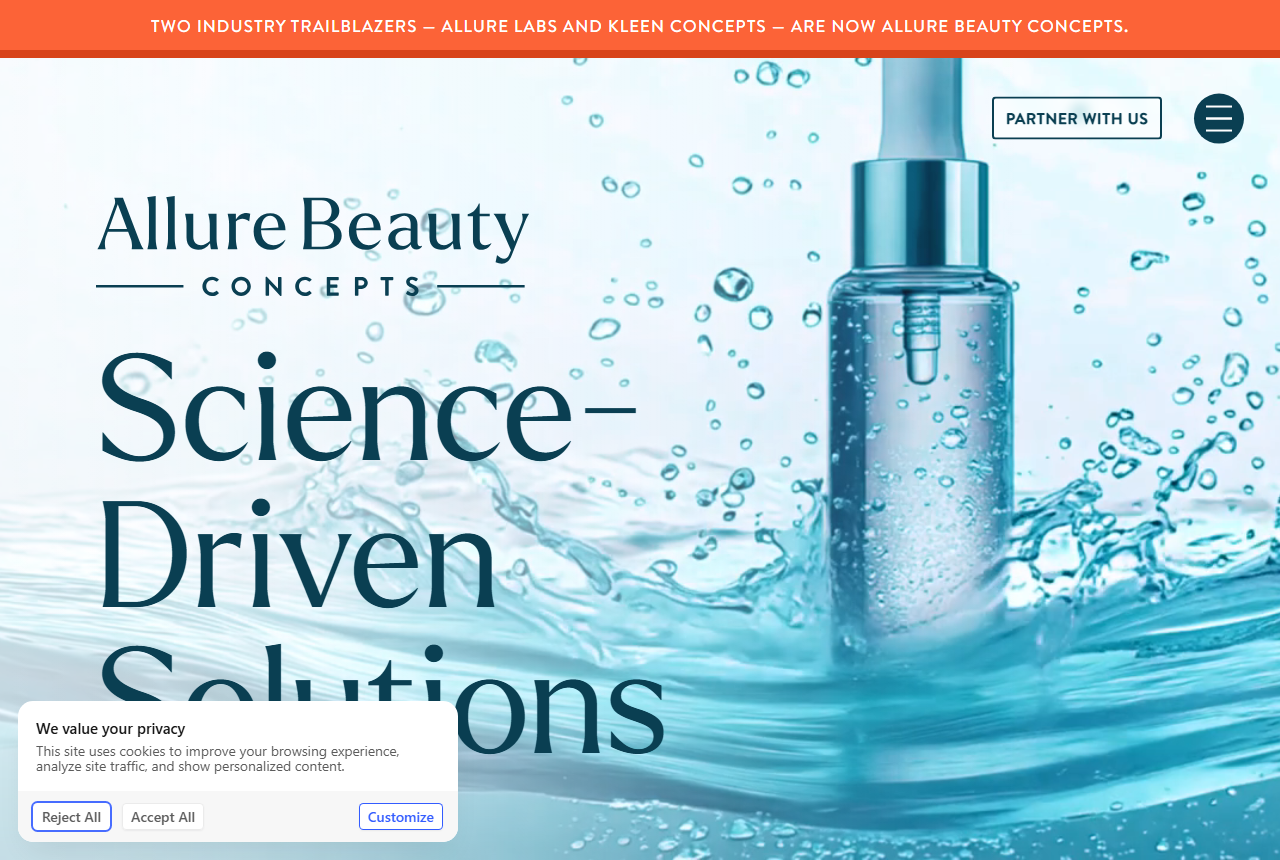
Formed through the merger of Allure Labs and Kleen Concepts, Allure Beauty Concepts leans on formal R&D to develop clean, efficacious skincare and personal-care formulas. It handles both custom formulation and full-scale production, which makes it a reasonable fit for brands still refining their formula direction.
Visit Allure Beauty Concepts →
2. Cosmetic Solutions
HQ: Boca Raton, Florida · Founded: 2001 · Best known for: Clinically-oriented skincare ODM/OEM
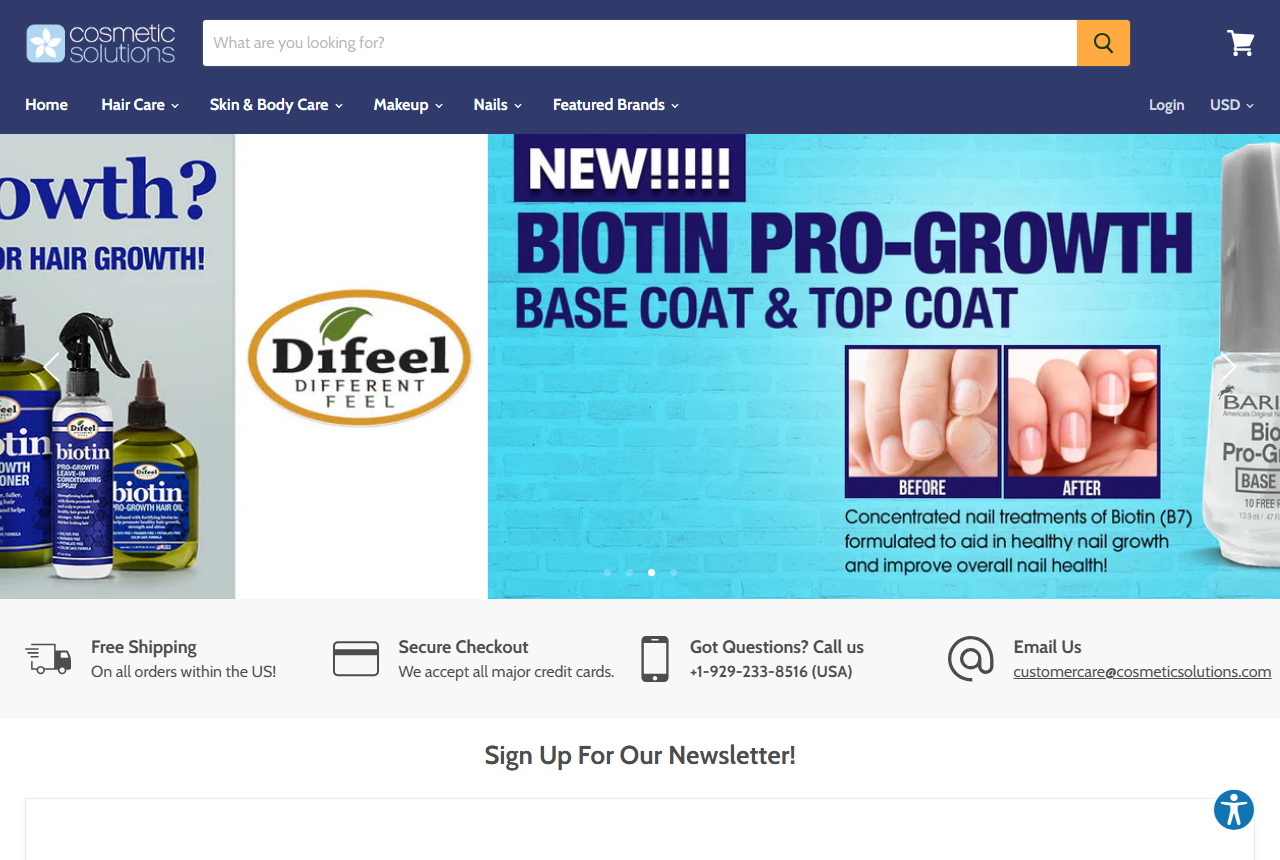
Cosmetic Solutions has built a name around clinically-backed serums, moisturisers, cleansers and treatment products, supported by its own in-house research team. It’s also known for keeping minimum order quantities relatively approachable, which is part of why it shows up so often as a first manufacturing partner for growth-stage indie brands.
3. Federal Package (FP Labs)
HQ: Chanhassen, Minnesota · Founded: 1928 · Best known for: Vertically integrated lip care and skincare
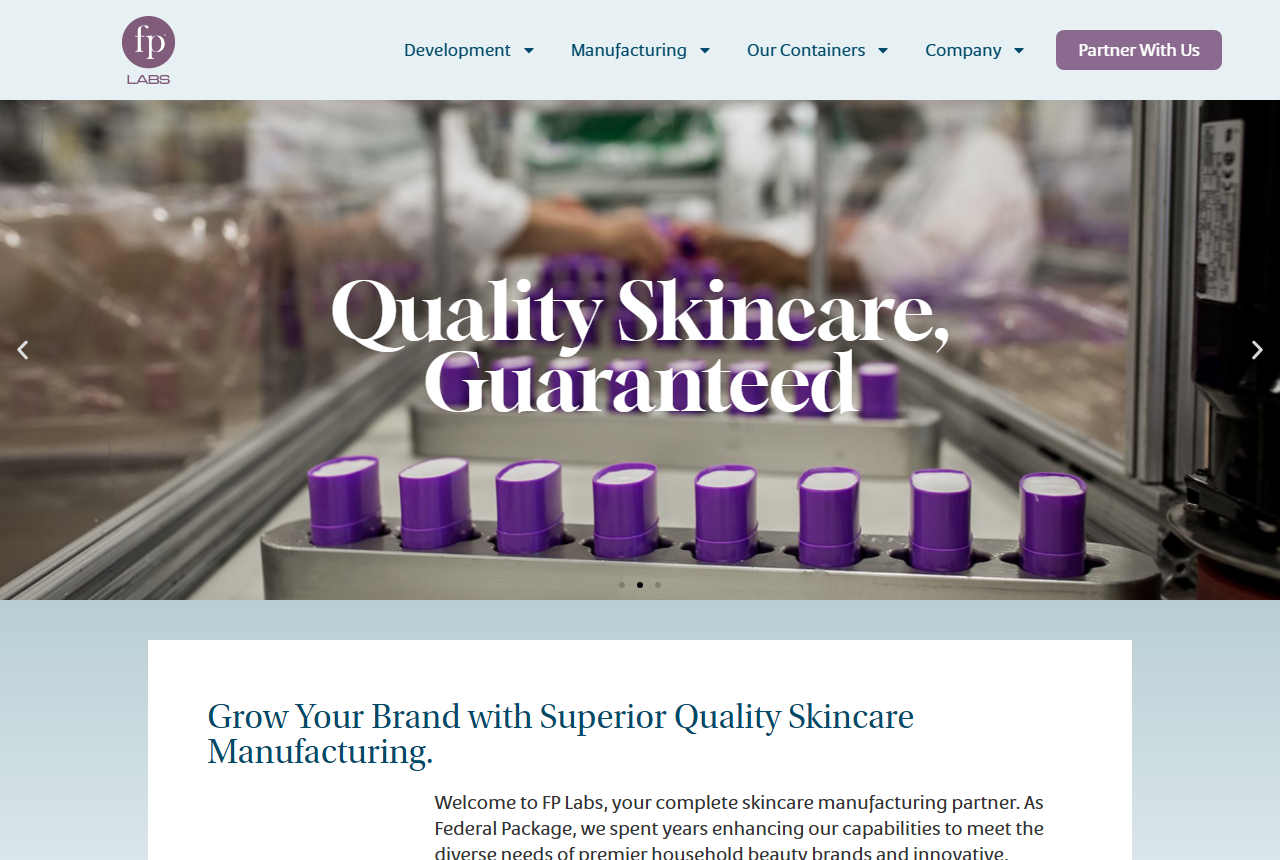
Trading as FP Labs, Federal Package has been in operation since 1928 and built its specialism around lip balm and lip-care production, alongside broader skincare work. Because it owns its own packaging capability as well as formulation and filling, brands working with FP Labs can often keep the whole product build under one roof.
4. GAR Laboratories
HQ: Buena Park, California · Founded: 1979 · Best known for: Hair and skin care contract manufacturing
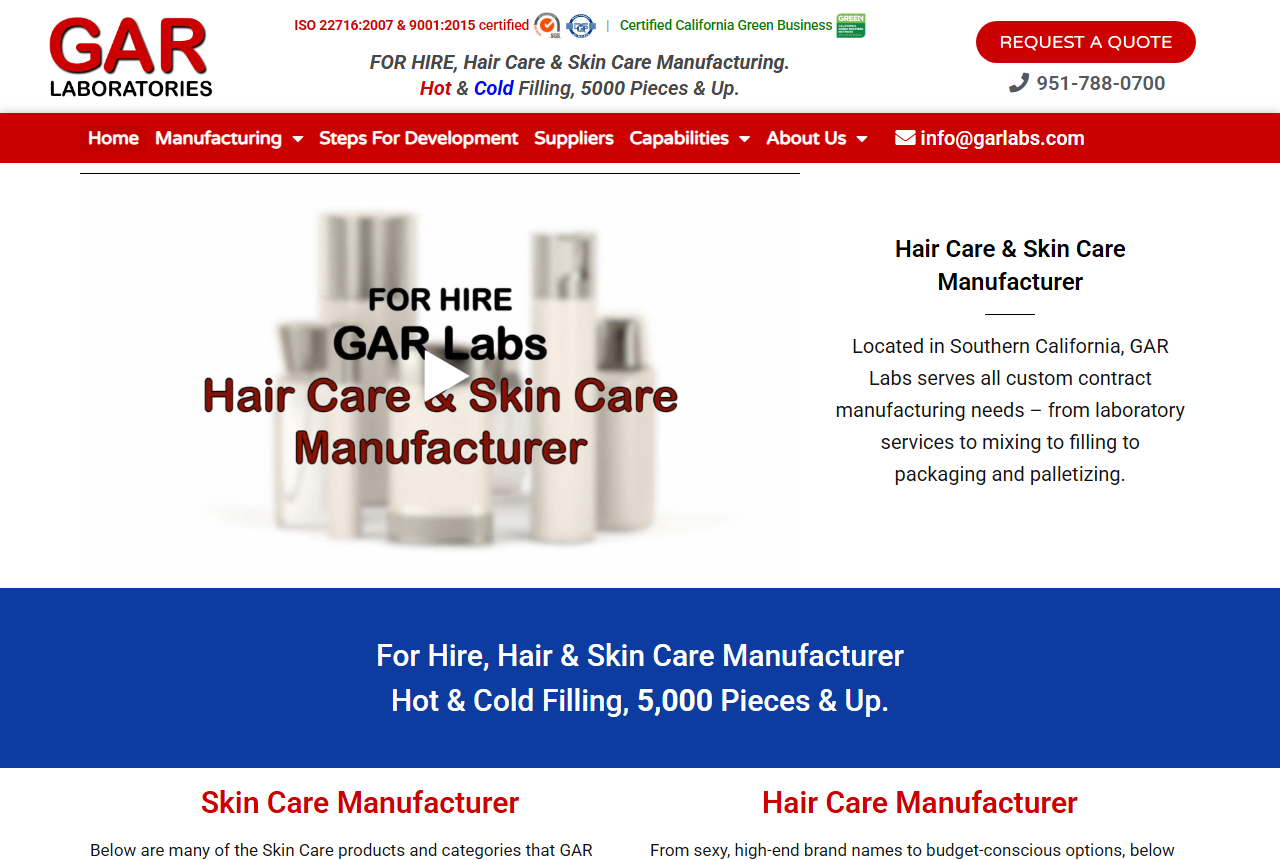
GAR Laboratories runs both hot-fill and cold-fill production lines out of Southern California, covering formulation through to filling, packaging and palletising for hair and skin care brands. Production generally starts around 5,000 units, which puts it a step above the smallest indie-focused labs on this list in terms of scale.
5. HCT Group
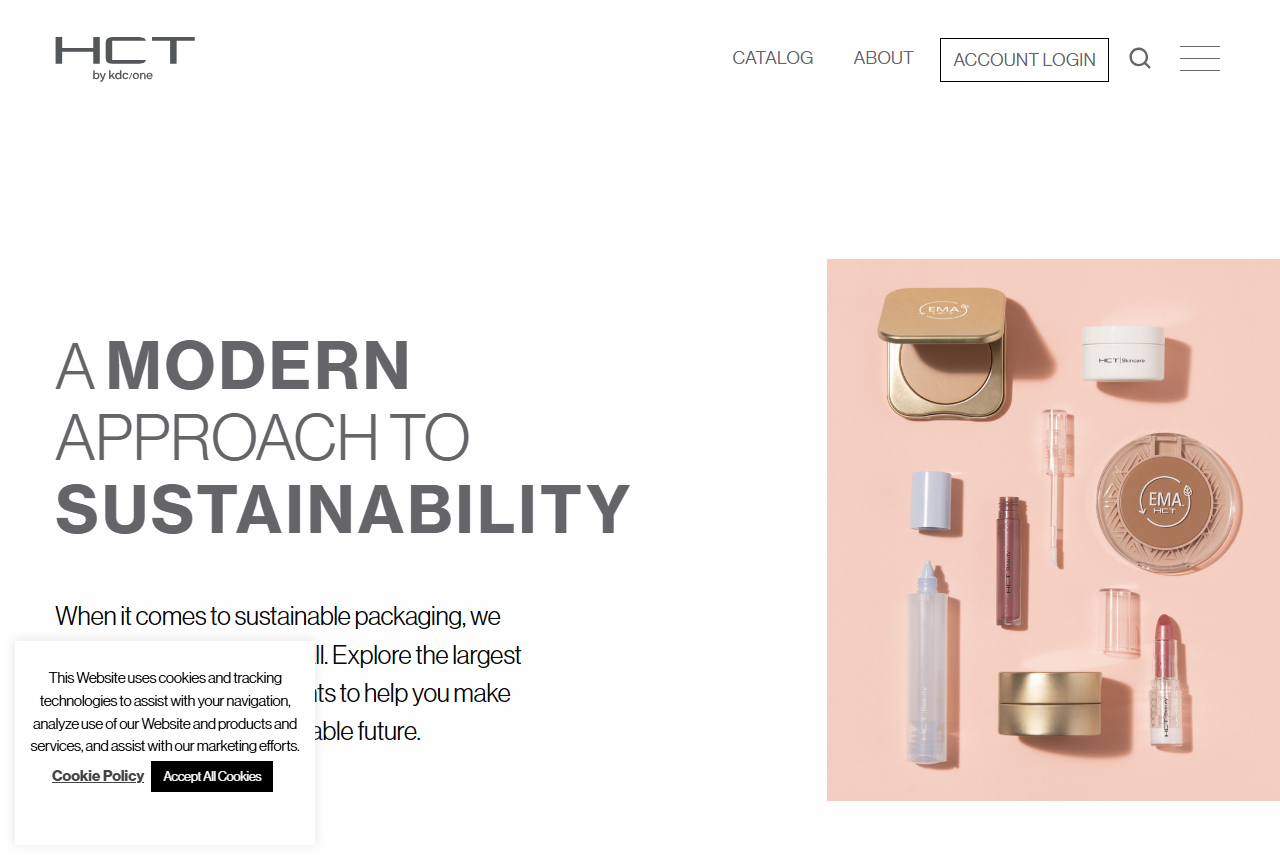
HQ: Valencia, California (global) · Founded: 1991 · Best known for: Product and packaging development combined
HCT Group’s distinguishing feature is that it treats product formulation and packaging design as one connected job rather than two separate vendors’ problem — useful if applicator design or sustainable packaging is central to your product concept. Now part of the kdc/one network, it covers colour cosmetics, skincare and beauty tools at a genuinely global scale.
6. Innacos (formerly Genie Supply)
HQ: Indianapolis, Indiana · Founded: 2017 · Best known for: Low-MOQ private-label lab built around sustainability
Innacos positions itself squarely at first-time founders, offering ready-to-launch skincare, body and colour formulations at minimum order quantities that don’t require a five-figure upfront commitment. The sustainability angle runs through its formulation choices as well as its packaging recommendations, which is worth knowing if that’s part of your brand story.
7. Lady Burd Exclusive Private Label Cosmetics
HQ: Farmingdale, New York · Founded: 1981 · Best known for: Private-label colour cosmetics and skincare
Lady Burd has been in the private-label business since 1981 and carries an unusually broad stock catalogue of colour cosmetics and skincare that brands can select from and rebrand without starting formulation from scratch. That ready-to-brand approach, paired with low minimums, is exactly why it turns up so often on new brand founders’ shortlists.
8. Mana Products
HQ: Long Island City, New York · Founded: 1975 · Best known for: Colour cosmetics and skincare at scale
Mana Products is one of the largest vertically integrated manufacturers in the country, running its own R&D, production and packaging under one operation since 1975. Its client roster leans toward established prestige and mass beauty brands, which tells you something about the scale it’s built to serve.
9. Twincraft Skincare
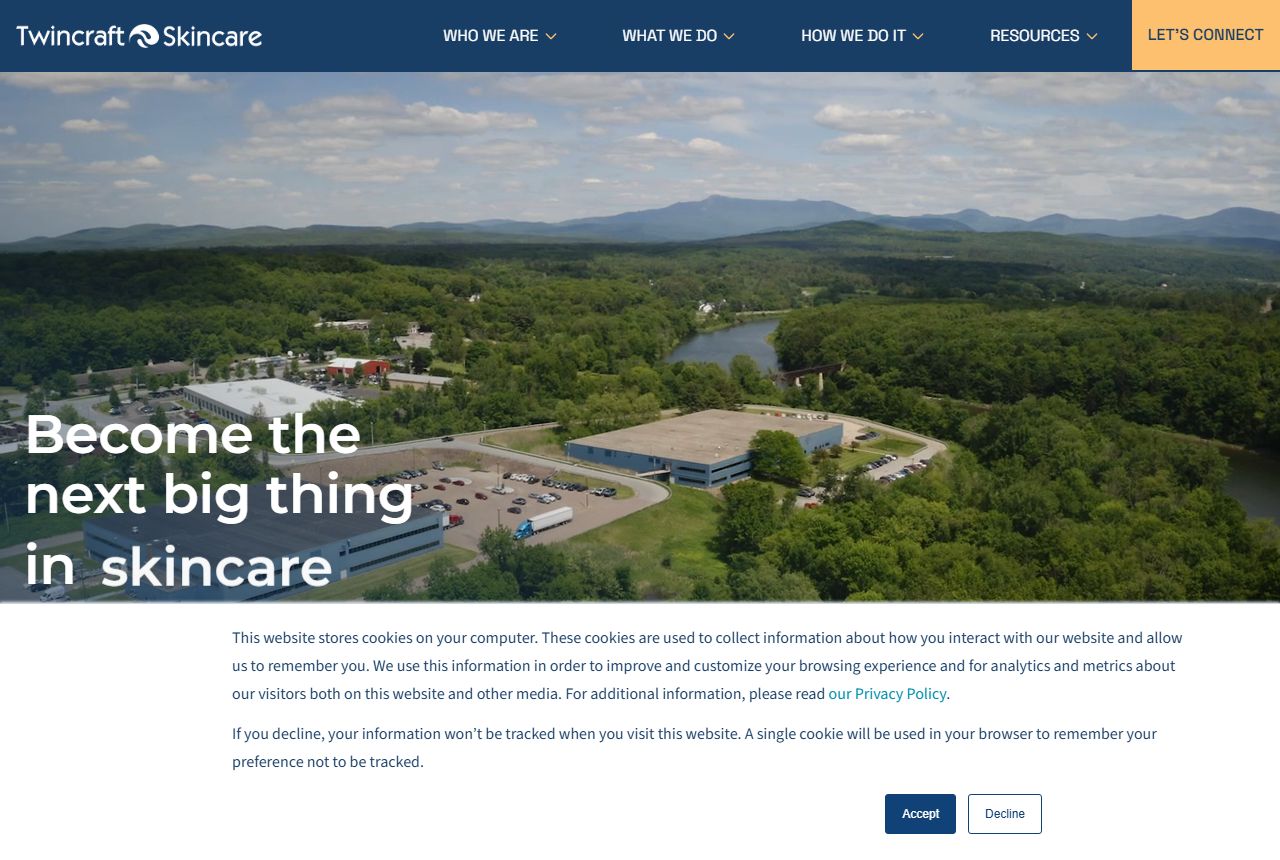
HQ: Winooski, Vermont · Founded: 1973 · Best known for: Bar soap and liquid personal care
Twincraft is a Certified B Corporation with a specific strength in syndet and soap bars, alongside liquid skincare and personal-care formats — a category most general-purpose manufacturers don’t focus on as closely. Its client base runs from prestige to clean-beauty indie brands, and its B Corp status is a genuine differentiator for brands prioritising sustainable manufacturing.
10. Voyant Beauty
HQ: Elgin, Illinois · Founded: 1986 · Best known for: Large-scale, full-service contract manufacturing
Formerly known as Vee Pak, Voyant Beauty runs multiple US facilities covering skincare, hair care, colour and OTC personal-care production end-to-end. It’s built for scale, which makes it a natural fit once a brand has outgrown smaller contract manufacturers and needs consistent, high-volume production.
Sourcing considerations
US-based production simplifies some things — shorter freight times, easier factory visits, and a manufacturing base that already operates under FDA cosmetic and OTC drug rules — but it doesn’t remove the need to register or notify your product wherever you actually plan to sell it. A brand exporting from the US into Malaysia, for example, still needs NPRA cosmetic notification before the product can be sold there, exactly as if it had been manufactured locally. The same logic holds for any other export market: manufacturing compliance and market-entry compliance are separate steps, and the second one doesn’t happen automatically just because the first one did.
Worth confirming directly with any shortlisted manufacturer: current cGMP or ISO 22716 status, realistic lead times against your launch date, and whether their production minimums actually match your sales forecast rather than your ambitions. For more on how contract manufacturing works in general, see our explainer on what OEM and ODM actually mean, and browse other country guides in the OEM Manufacturer section, including our look at cosmetic suppliers in Germany.
What makes US manufacturing a practical choice
Distance is the underrated factor in contract manufacturing decisions, and it’s where domestic US production quietly wins. Being able to visit a factory floor, walk a production run in person, or get a same-week answer to a formulation question changes how a brand can operate day to day — especially in the first year, when problems tend to surface that no amount of email correspondence resolves as fast as an in-person visit. Freight timelines are shorter too, which matters more than it sounds like once you’re managing inventory against a real sales forecast rather than a launch-day guess.
The trade-off is usually cost per unit, particularly against Asian manufacturing hubs running at higher volumes. For brands prioritising speed to market, regulatory familiarity and lower operational friction over the lowest possible landed cost, that trade-off is generally worth making — but it’s worth running the numbers explicitly rather than assuming domestic production is automatically the pricier option in every category.
Frequently asked questions
What’s the practical difference between OEM and ODM in the US market?
OEM means you supply the formula and the manufacturer produces it as-is. ODM means the manufacturer develops or customises the formula for you, and you apply your branding. Most companies on this list, including Cosmetic Solutions and Voyant Beauty, offer both.
Which of these manufacturers work best for a first-time, low-volume brand?
Cosmetic Solutions, Lady Burd and Innacos are generally the most approachable for small or first production runs, thanks to lower minimum order quantities and semi-custom or stock formulation options. Larger operators like Voyant Beauty and Mana Products typically expect bigger volume commitments.
Are US cosmetic manufacturers automatically FDA compliant?
Reputable ones operate under FDA cosmetic and OTC drug rules and typically follow cGMP or ISO 22716 standards, but “compliant” isn’t a fixed label — always ask for current documentation and testing records rather than assuming based on reputation alone.
Does manufacturing in the US mean I skip regulatory steps for other markets?
No. If you plan to sell outside the US, your product still needs to clear that market’s own regulatory process — cosmetic notification, safety documentation, or equivalent — regardless of where it was made.
Considering other manufacturing regions?
Brands shortlisting United States contract manufacturers often price the same brief against factories in other regions before committing, because minimum order quantity, unit cost and lead time vary widely between manufacturing bases. The guides below cover the other major cosmetic manufacturing bases in the same format as this article: who the established OEM/ODM plants are, what they specialise in, and what they typically expect from a first order.
| Manufacturing base | Guide | What it covers |
|---|---|---|
| South Korea | South Korean skincare OEM/ODM makers: 10 factories compared | Skincare-led ODM houses, their specialisations and sourcing notes for brand owners |
| South Korea (private label) | 10 private label cosmetics partners in South Korea | Certifications, minimum order quantities and formulation specialisms across skincare and colour cosmetics |
| Japan | Japan’s top cosmetic manufacturing partners | Contract manufacturers and manufacturer-brands behind Japan’s cosmetics industry, with official links |
| China | Top 12 OEM/ODM sunscreen manufacturers in China | Sunscreen-specific OEM factories, company-stated certifications and published minimums |
| Thailand | Thailand’s leading cosmetic OEM/ODM partners | Korean-backed ODMs, biotech and clean-beauty specialists, with profiles and official websites |
| Vietnam | Vietnam’s top cosmetic OEM/ODM suppliers | Kolmar-network factories and established exporters working under ASEAN-CGMP |
| Indonesia | 8 cosmetic OEM/ODM factories leading Indonesia’s beauty market | Low-MOQ “maklon” contract manufacturers through to the largest domestic manufacturer-brands |
| Malaysia | Malaysia’s skincare OEM factories, all 355 assessed | Evidence-based scoring of every NPRA-registered skincare OEM on halal output, verifiable certificates, plant size and track record |
| Malaysia (halal-certified) | 8 halal-certified cosmetics manufacturers in Malaysia | Halal-ready production, from low-MOQ private label factories to large export-grade plants |
| India | 10 cosmetic OEM/ODM suppliers shaping India’s beauty industry | Ayurveda-rooted houses, dermatologist-led labs and large private-label exporters |
For a side-by-side view of these regions on minimum order quantity, cost, lead time and certification systems, see our comparison of where to manufacture cosmetics across the US, Europe and Asia.
This article is an independent industry overview, not a paid endorsement or referral. Company details change — always verify current certifications, capabilities and MOQs directly with the manufacturer before signing a contract.
About the author
Kawee Chong is a Singapore-based health, wellness and consumer-product business executive with extensive experience in commercialisation, international sales, sourcing and business growth. His career spans finance, product sourcing, distribution and the development of health and beauty businesses across Asian markets. LinkedIn