By Kawee Chong · Commercialisation & Sourcing · Published 20 June 2026
Germany is Europe’s largest cosmetics market, and its contract manufacturers are among the most respected in the world. For brand owners weighing an overseas OEM or private-label partner — whether you are based in Malaysia, elsewhere in Asia, or building an international line — a “Made in Germany” supplier offers rigorous quality systems and direct access to the EU market. This independent guide profiles six established German OEM/ODM and private-label cosmetic manufacturers, with a screenshot of each company’s official site and a short, fair overview.
German manufacturers operate under the EU Cosmetics Regulation (EC) No 1223/2009 and the CPNP notification system, so compliance is built into their process rather than bolted on. Use this list as a starting point for your own due diligence — then verify current capabilities, certifications and minimums directly with each company.
Key takeaways
- Germany combines strong regulatory rigour (EU 1223/2009, CPNP) with deep formulation and turnkey expertise.
- The six manufacturers below span skincare, hair care, colour cosmetics and full-service private label.
- Minimum order quantities vary widely — some accommodate start-ups from as few as 100 units per SKU.
- “Made in Germany” positioning can add real perceived value for premium and export-focused brands.
- Always confirm certifications, lead times and MOQs directly; this guide is a research shortcut.
How we chose this list
We looked for established German manufacturers with a clear OEM, ODM or private-label offering, a working official website, and a verifiable specialisation. Each entry below is an independent profile; we do not sell ranking positions, and inclusion is not a recommendation over any company not listed. The screenshots show each manufacturer’s own website at the time of research.
Listed alphabetically-adjacent to their market focus, the profiles are intended to help you shortlist candidates worth contacting. Your final choice should rest on your product type, target market, budget and the outcome of your own supplier evaluation.
1. Cosmetic Service GmbH
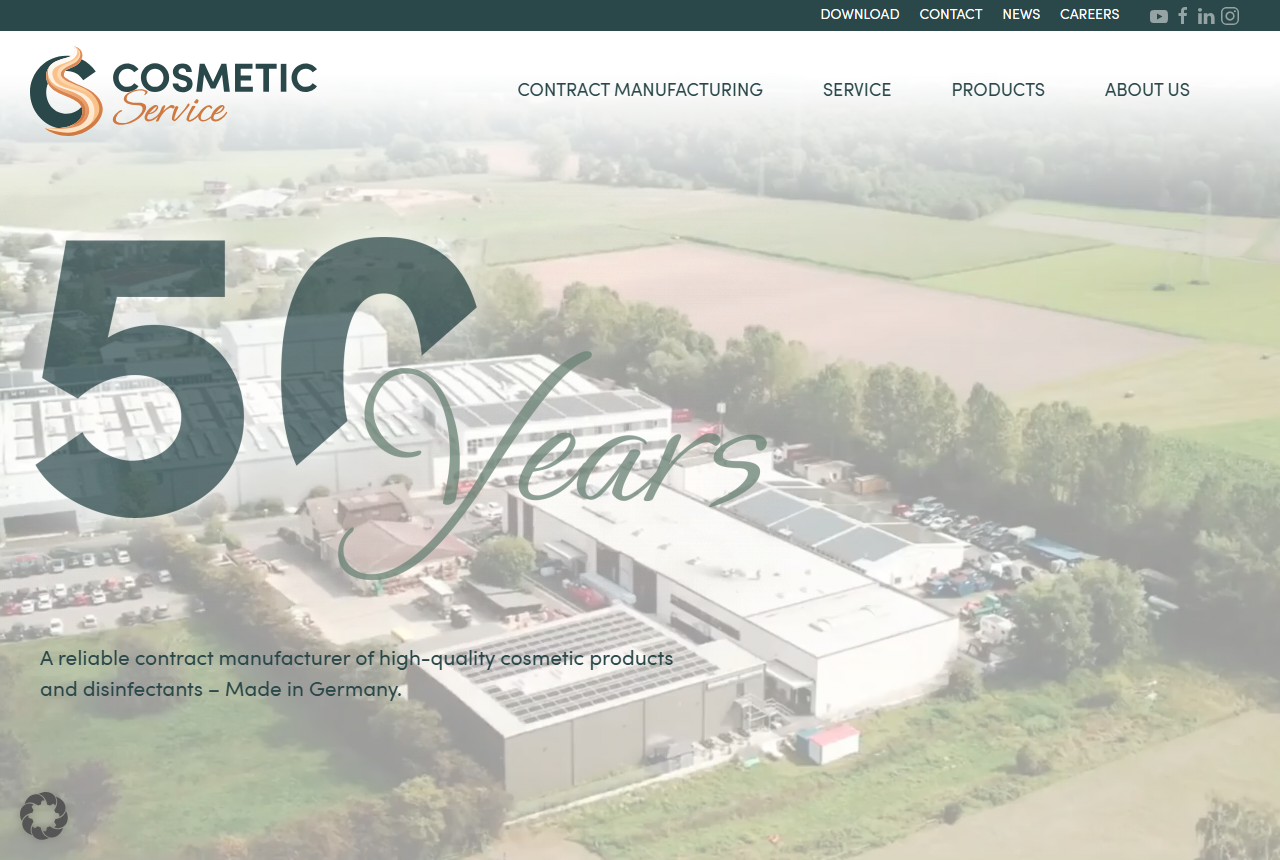
HQ: Germany · Type: Contract developer, manufacturer & filler · Best known for: Skincare, body care & in-house CPNP regulatory support
One of Germany’s longest-established contract developers, Cosmetic Service GmbH has been formulating and filling skincare and body-care products since the 1970s. The company is ISO 9001 and ISO 22716 (GMP) certified and keeps dermatological testing, safety assessments, stability studies and CPNP notification in-house.
That single-window setup is its main appeal: a brand can move from initial brief to an EU-compliant, shelf-ready product without stitching together separate labs and regulatory consultants. It suits brand owners who want a partner to shoulder the compliance workload as well as the manufacturing.
2. Individual Cosmetics (IC) GmbH
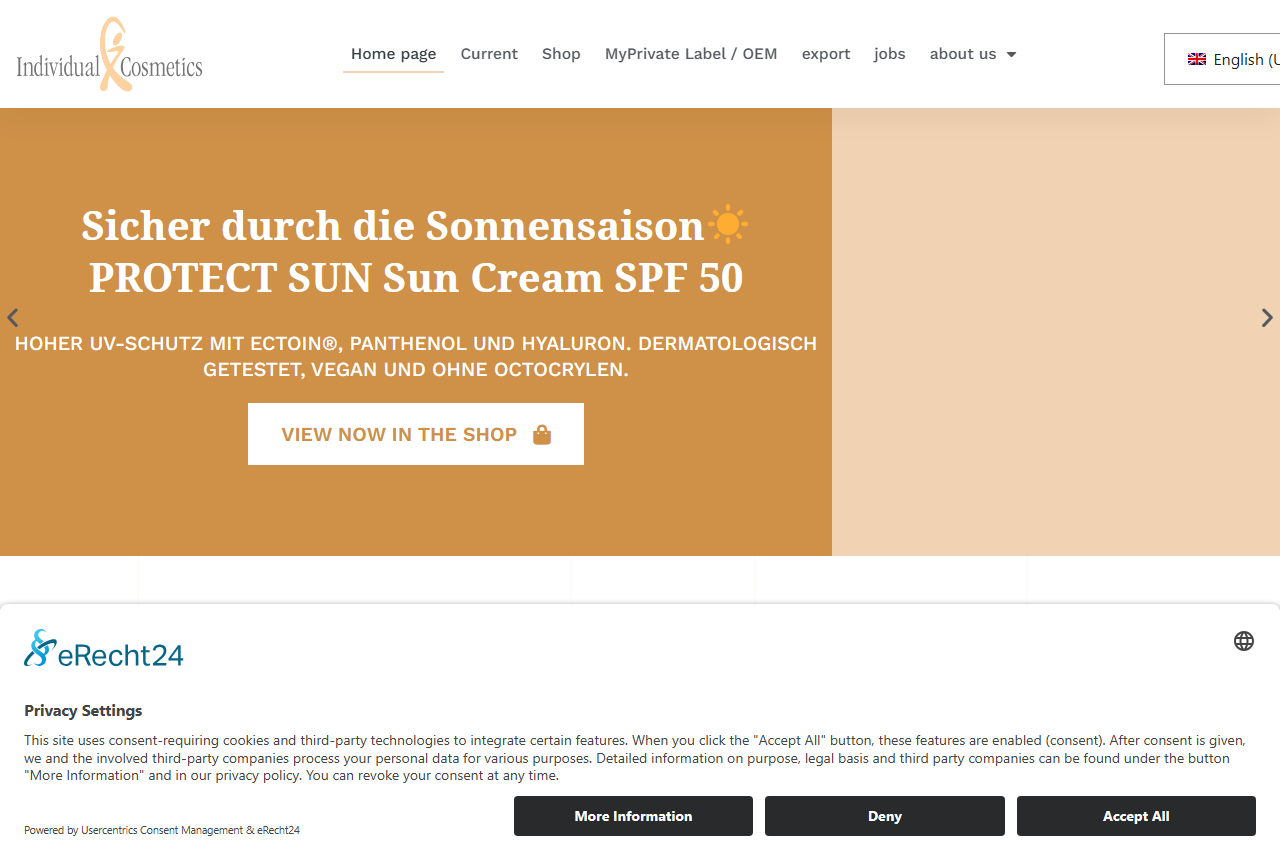
HQ: Knüllwald-Remsfeld, Hesse · Type: OEM / private label (skincare specialist) · Best known for: Creams, lotions & serums with low MOQs
IC Individual Cosmetics is a Hesse-based skincare OEM with more than two decades of experience and a firm “Made in Germany” positioning. Its private-label programme is notably accessible, reportedly starting from as few as 100 units per SKU.
That low entry point makes it one of the more start-up-friendly options on this list, particularly for founders launching a focused range of face creams, body lotions or serums. Smaller brands testing a premium European-made line will find the barrier to entry unusually manageable.
3. MAG Cosmetics GmbH
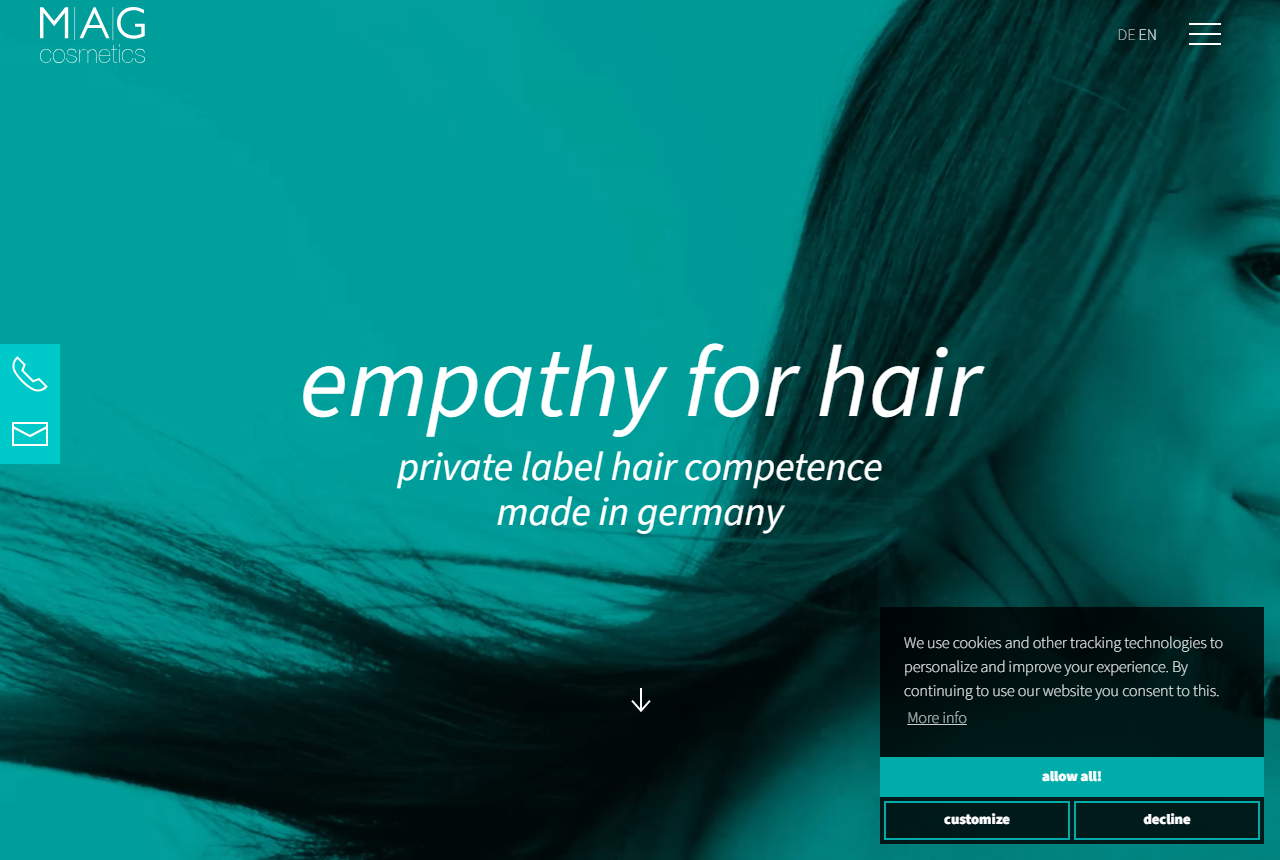
HQ: Bietigheim-Bissingen, Baden-Württemberg · Type: Private label specialist (hair & personal care) · Best known for: Deep hair-care formulation library & aerosols
Operating since the mid-1980s, MAG Cosmetics has built one of Germany’s deepest hair-care formulation libraries — a catalogue running into thousands of recipes across shampoos, conditioners, scalp treatments and colourants. The company handles fully customised private-label production from brief to labelled goods.
Its less common strength is aerosol expertise, including sprays and mousses, which many contract manufacturers do not offer in-house. Brands building a hair-care or personal-care range with technical formats will find that specialisation genuinely differentiating.
4. Private Label Cosmetic Company (PLCC) GmbH
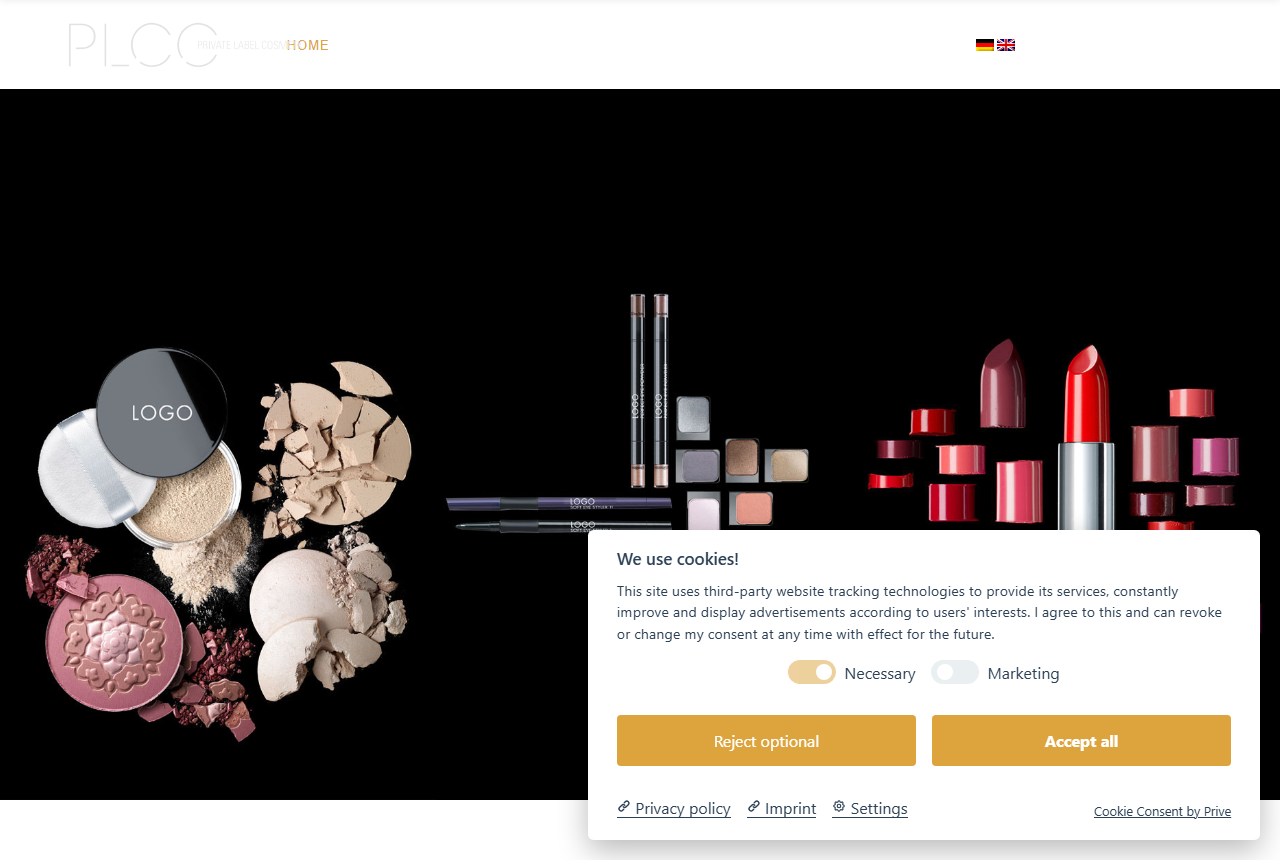
HQ: Karlsfeld, Bavaria · Type: Private label colour cosmetics & skincare · Best known for: Very large SKU portfolio; decorative cosmetics at scale
Part of the Artdeco Cosmetic Group, PLCC has delivered private-label decorative cosmetics and skincare for over twenty years from its facility near Munich. Its portfolio reportedly exceeds 25,000 product lines, serving retailers, perfumeries and beauty brands that need EU-compliant colour cosmetics in volume.
In-house quality and product-safety teams manage compliance across that catalogue, which is what makes scale workable rather than risky. It is a strong fit for brands that want breadth of decorative options and the backing of an established cosmetics group.
5. Skinovators GmbH
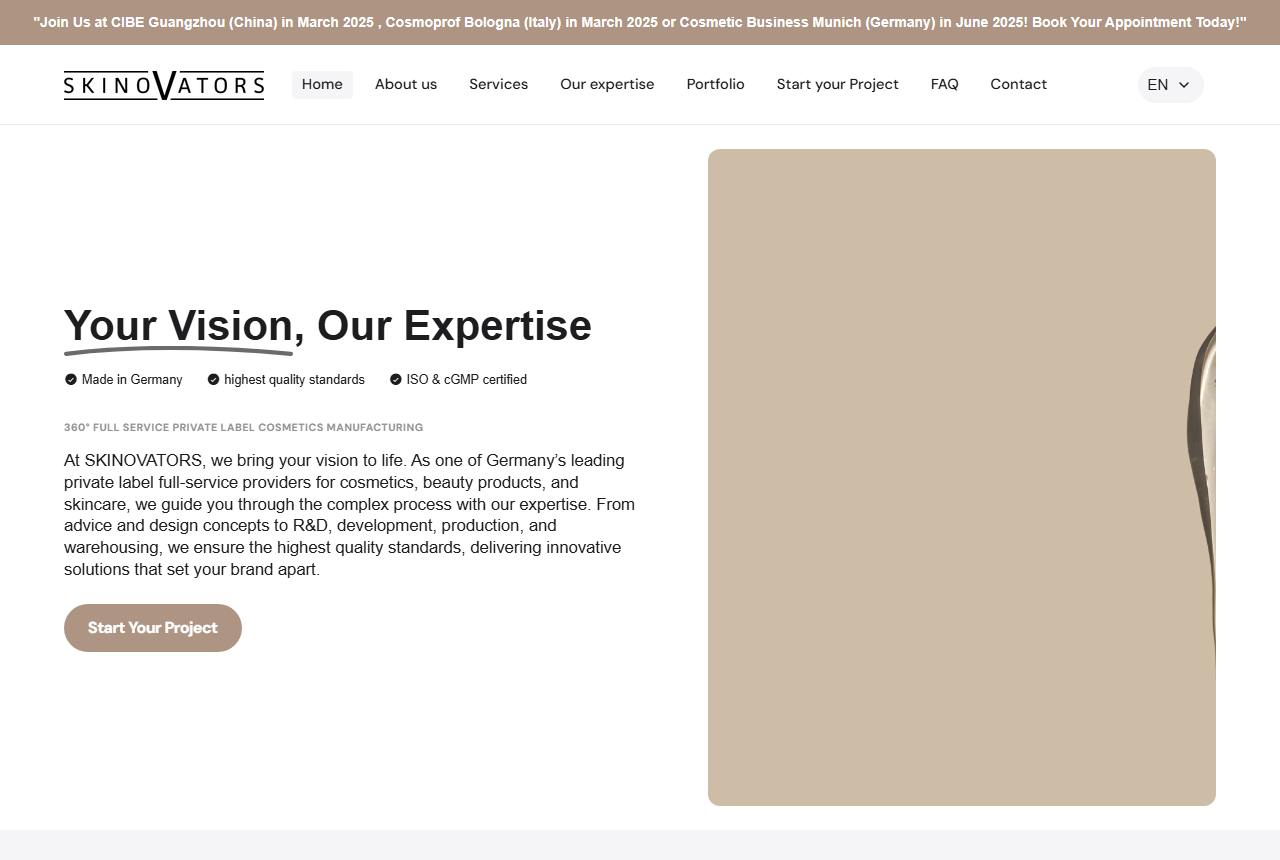
HQ: Bavaria (KLAPP Group) · Type: Private label full-service · Best known for: High-tech serums, ampoules & smart-ageing treatments
Backed by the KLAPP Group’s long heritage in professional skincare science, Skinovators is a Munich-region private-label provider with an ISO- and cGMP-certified facility and a library of several hundred white-label formulas. Its clear strength is high-potency skincare — serums, ampoules and smart-ageing treatments.
The company promotes a full 360-degree service, from concept and R&D through production and branding, which suits brands that want an active-led range without building their own formulation team. It is a considered choice for premium, results-focused skincare positioning.
6. Weckerle Cosmetics GmbH
HQ: Eislingen, Baden-Württemberg · Type: Contract manufacturer (colour cosmetics) · Best known for: Full-turnkey lip & colour cosmetics
Weckerle Cosmetics is an internationally recognised contract manufacturer of colour cosmetics, managing the full cycle from concept and formulation through packaging development and bulk filling. It is best known for turnkey lip and colour products for leading global beauty brands.
The company sits within the wider Weckerle group, which also builds precision filling machinery and sustainable packaging — unusual vertical depth that can help with complex or novel formats. Brands with ambitious colour-cosmetics projects will value that end-to-end capability.
Sourcing from Germany: what to weigh
German manufacturing brings strong quality systems and EU compliance, but it also carries considerations for buyers outside Europe: freight cost and lead time, minimum order quantities, and the fact that EU-compliant does not automatically mean compliant in your own market. If you intend to sell in Malaysia, for example, your product still needs local notification with the relevant authority regardless of where it was made.
Weigh the “Made in Germany” premium against these practicalities. For some premium and export-focused lines it is clearly worth it; for price-sensitive or fast-turnaround products, a regional manufacturer may serve you better. The right answer depends on your positioning and margins.
Questions to ask a German OEM before you commit
Before signing with any of these manufacturers, put the same core questions to each one so you can compare like with like. Ask for current ISO 22716 and ISO 9001 certificates and confirm their scope covers your exact product format; ask what the realistic minimum order quantity is for your SKU count; and ask for a full costed quotation that includes formulation, testing, packaging and regulatory support rather than a bare per-unit price. The clarity and speed of these answers is often a good early signal of how the working relationship will feel.
It is also worth asking about lead times and shipping, sample availability before a full run, and who owns the formulation if you later part ways. For buyers outside the EU, confirm whether the manufacturer can supply the documentation you will need for notification in your own market. A manufacturer that answers these openly is one worth shortlisting; evasiveness on certificates, IP or costs is a reason to keep looking, however impressive the “Made in Germany” label may be.
Frequently asked questions
Are German cosmetic manufacturers suitable for small brands?
Some are. A few German OEMs accommodate low minimums — one on this list reportedly starts from around 100 units per SKU — while others focus on large-scale production. Confirm MOQs directly with each company.
Do products made in Germany still need registration in my country?
Yes. EU compliance covers the EU market. To sell elsewhere — such as in Malaysia under the NPRA — you must still meet local notification and labelling requirements. Verify current rules with your own regulator.
What certifications should I look for?
ISO 22716 (Cosmetics GMP) and ISO 9001 are common quality benchmarks, alongside EU 1223/2009 compliance and CPNP notification support. Always ask to see current certificates relevant to your product.
How do I shortlist the right manufacturer?
Match the manufacturer’s specialisation to your product, confirm MOQs and lead times, request samples, and clarify who owns the formulation. For more on this, see our guides in the OEM Manufacturer section.
Considering other manufacturing regions?
Brands shortlisting German OEMs often price the same brief against factories in other regions before committing, because minimum order quantity, unit cost and lead time vary widely between manufacturing bases. The guides below cover the other major cosmetic manufacturing bases in the same format as this article: who the established OEM/ODM plants are, what they specialise in, and what they typically expect from a first order.
| Manufacturing base | Guide | What it covers |
|---|---|---|
| South Korea | South Korean skincare OEM/ODM makers: 10 factories compared | Skincare-led ODM houses, their specialisations and sourcing notes for brand owners |
| South Korea (private label) | 10 private label cosmetics partners in South Korea | Certifications, minimum order quantities and formulation specialisms across skincare and colour cosmetics |
| Japan | Japan’s top cosmetic manufacturing partners | Contract manufacturers and manufacturer-brands behind Japan’s cosmetics industry, with official links |
| China | Top 12 OEM/ODM sunscreen manufacturers in China | Sunscreen-specific OEM factories, company-stated certifications and published minimums |
| Thailand | Thailand’s leading cosmetic OEM/ODM partners | Korean-backed ODMs, biotech and clean-beauty specialists, with profiles and official websites |
| Vietnam | Vietnam’s top cosmetic OEM/ODM suppliers | Kolmar-network factories and established exporters working under ASEAN-CGMP |
| Indonesia | 8 cosmetic OEM/ODM factories leading Indonesia’s beauty market | Low-MOQ “maklon” contract manufacturers through to the largest domestic manufacturer-brands |
| Malaysia | Malaysia’s skincare OEM factories, all 355 assessed | Evidence-based scoring of every NPRA-registered skincare OEM on halal output, verifiable certificates, plant size and track record |
| Malaysia (halal-certified) | 8 halal-certified cosmetics manufacturers in Malaysia | Halal-ready production, from low-MOQ private label factories to large export-grade plants |
| India | 10 cosmetic OEM/ODM suppliers shaping India’s beauty industry | Ayurveda-rooted houses, dermatologist-led labs and large private-label exporters |
For a side-by-side view of these regions on minimum order quantity, cost, lead time and certification systems, see our comparison of where to manufacture cosmetics across the US, Europe and Asia.
Details such as certifications, MOQs and capabilities change over time — verify current information directly with each manufacturer and with the relevant authorities before making sourcing decisions. Company website screenshots reflect each site at the time of research. See also our primers on what OEM means and what ODM means.
About the author
Kawee Chong is a Singapore-based health, wellness and consumer-product business executive with extensive experience in commercialisation, international sales, sourcing and business growth. His career spans finance, product sourcing, distribution and the development of health and beauty businesses across Asian markets. LinkedIn